Josh McCown leaves Buffalo Bills visit without a contract, according to report

Orchard Park, N.Y. — The Buffalo Bills don’t have a new quarterback just yet.

A few hours after the team announced it was hosting former Buccaneers and Bears quarterback Josh McCown on a free-agent visit, the 35-year-old left without a contract, according to Vic Carucci of the Buffalo News.

McCown and the Bills reportedly didn’t talk contract numbers. The veteran still has at least one visit lined up with another team.

After being the most sought-after quarterback on the free-agent market last offseason, McCown lasted just one year in Tampa Bay and the Buccaneers released him shortly after the season. He completed 56 percent of his passes for just over 2,200 passing yards, 11 touchdowns and 14 interceptions in 11 games with Tampa Bay. The year before with the Chicago Bears, McCown played eight games, completed 66 percent of his passes and threw for just over 1,800 yards to go along with 13 touchdowns and one interception.

At this point, McCown is gauging his worth before unrestricted free agency opens on March 10 and other quarterbacks hit the open market. According to Carucci, McCown is open to competing for a starting job or being a backup. Right now, EJ Manuel and Jeff Tuel are the only quarterbacks the Bills have under contract, and general manager Doug Whaley has stressed the need to bring in competition this offseason.

Tagged with:

Winter storm ices South, dumps snow on East Coast

(CNN)There’s no doubt that Boston owns the bragging rights for the winter of 2015.

Still, that’s little comfort to the folks in Kentucky, Tennessee, North Carolina and Virginia, where ice and snow were glazing roads and knocking down power lines Tuesday.

States of emergency were in place across across all four states.

Your photos of winter weather

“Please do not travel unless you have to,” Nashville Mayor Karl Dean said. “We need to be attentive to our own safety and our own health but also to the safety of our neighbors and our friends.”

Sometimes just staying on the road was a challenge. Some highways were no better than skating rinks.

    More than 50,000 power customers were without power, according to Tennessee Emergency Management Agency.

    In Kentucky, Monday was one of the snowiest days on record — between 7 and 14 inches was common.

    In Lexington, the 10.1 inches that fell made it the fourth snowiest calendar day on record, CNN affiliate WLEX-TV reported.

    Iced up

    Ice was the main culprit from middle Tennessee into neighboring North Carolina.

    “Many surfaces have over one half inch of ice,” the National Weather Service said.

    The Charlotte area struggled with accumulations expected to approach four-tenths of an inch.

    “It’s dangerously cold,” Washington Mayor Muriel Bowser told CNN’s “The Situation Room,” warning that the nation’s capital was bracing for up to 8 inches of snow and below-freezing temperatures.

    Federal government offices in the area were closed Tuesday.

    Colder than normal

    The storm system quickly took its toll on the power grid, knocking about 200,000 customers off-line in Georgia and the Carolinas.

    Temperatures across the eastern half of the United States will be below average for the entire week.

    Not just cold, but bitter cold was the rule in New England, where overnight lows plunged into single digits and below zero.

    In New York City, lows were in the teens.

    Back in Boston

    In Boston, where 95 inches of snow have already been recorded this year, the latest storm was expected to skirt by and bring a few more inches, the forecast said.

    Still, February 2015 is the city’s snowiest month ever.

    Frank Ippolito, the owner of a snow removal business operating in Boston, said his staff was weary from lack of sleep.

    At this point, his snowplow drivers are putting snow “anywhere and everywhere there’s an open piece of land that won’t obstruct the view safely of the driver or prevent someone from getting out of a doorway or moving a car,” he said.

    Snow rage

    Mounting “snow rage” is pitting drivers and neighbors against each other as the winter weather shows no sign of letting up, CNN affiliate WFXT-TV reported.

    “We’ve been noticing a little frustration out there on the roads,” Massachusetts State Police trooper Kathryn Downey said. “I think people are getting pushed to their limits.”

    Keeping it sane

    Margo Souza of Charlestown, Massachusetts, told CNN’s iReport she was trying to take the snow in stride, even though it has doubled her commute. Her golden retrievers, Logan and Copley, love to bound around in it.

    Margo Souza and her pup, Logan, overlook Boston Harbor on Monday. The top layer of the bay is frozen.

    Still, she said she was hoping players from her city’s baseball team might bring something with them when they head south for spring training.

    “Send the snow to Florida,” she said, “along with the Red Sox equipment.”

    One New Yorker, Max Guliani, posted photos on Twitter of the frozen fountain at Bryant Park in New York City.

    A pipe burst at the city’s iconic Empire State Building, forcing one of its observatories to shut down, a spokeswoman said.

    In Ithaca, in upstate New York, temperatures have gotten so cold that even the city’s tourism website is telling people to head to the Sunshine State.

    “That’s it. We surrender,” the website says. “Winter, you win. Key West anyone?”

Tagged with:

NY tourism website urges visitors to visit Florida instead

c 2014, WLOS ABC 13 | Portions are Copyright 2014 Associated Press. All rights reserved. This material may not be published, broadcast, rewritten, or distributed.

WLOS News 13 provides local news, weather forecasts, traffic updates, notices of events and items of interest in the community, sports and entertainment programming for Asheville, NC and nearby towns and communities in Western North Carolina and the Upstate of South Carolina, including the counties of Buncombe, Henderson, Rutherford, Haywood, Polk, Transylvania, McDowell, Mitchell, Madison, Yancey, Jackson, Swain, Macon, Graham, Spartanburg, Greenville, Anderson, Union, Pickens, Oconee, Laurens, Greenwood, Abbeville and also Biltmore Forest, Woodfin, Leicester, Black Mountain, Montreat, Arden, Weaverville, Hendersonville, Etowah, Flat Rock, Mills River, Waynesville, Maggie Valley, Canton, Clyde, Franklin, Cullowhee, Sylva, Cherokee, Marion, Old Fort, Forest City, Lake Lure, Bat Cave, Spindale, Spruce Pine, Bakersville, Burnsville, Tryon, Columbus, Marshall, Mars Hill, Brevard, Bryson City, Cashiers, Greer, Landrum, Clemson, Gaffney, and Easley.

Tagged with:

Sprout Pharmaceuticals Resubmits Flibanserin New Drug Application For The …


RALEIGH, N.C., Feb. 17, 2015 /PRNewswire/ — Sprout Pharmaceuticals announced today that it has resubmitted a New Drug Application (NDA) to the U.S. Food and Drug Administration (FDA) for flibanserin, an investigational, once-daily, non-hormonal pill for Hypoactive Sexual Desire Disorder (HSDD) in premenopausal women. If approved, flibanserin will be the first and only FDA-approved treatment for HSDD.


“This NDA resubmission marks the completion of the additional clinical studies requested by FDA,” said Cindy Whitehead, CEO of Sprout Pharmaceuticals. “The FDA has devoted significant resources to understand HSDD and the need for medical treatment. I believe that the Agency’s efforts to bring together panels of patients and clinical experts will prove to be a significant step in bringing about a solution for women with HSDD to market. This year, I am optimistic that women and their partners affected by the life impact of HSDD will have their first potential medical solution.”

Brain imaging shows a fundamental difference in prefrontal brain circuitry response to sexual stimuli between women with HSDD and those without.


Flibanserin helps restore prefrontal cortex control over the brain's motivation/reward pathways that enable sexual desire. This is thought to be accomplished by the rebalancing of neurotransmitters that influence sexual desire. Flibanserin increases dopamine, or DA, and norepinephrine, or NE, (both responsible for sexual excitement) while transiently decreasing serotonin, or 5-HT (responsible for sexual satiety/inhibition).
Flibanserin helps restore prefrontal cortex control over the brain’s motivation/reward pathways that enable sexual desire. This is thought to be…


Brain imaging shows a fundamental difference in prefrontal brain circuitry response to sexual stimuli between women with HSDD and those without.


The resubmission comes after Sprout received a Complete Response Letter from the FDA for flibanserin in 2013. Sprout appealed the FDA’s decision, and at the request of the Agency, completed a Phase 1 pharmacokinetic study and a Phase 1 driving study. Results from these studies were included in the resubmission package.


“The brain plays an important role in regulating a woman’s sexual desire, and one of the root causes of persistent and recurrent low sexual desire, or HSDD, stems from an imbalance of neurotransmitters in the brain,” said Stephen Stahl, Adjunct Professor of Psychiatry, University of California San Diego, School of Medicine. “Flibanserin is believed to work by correcting this imbalance and providing the appropriate areas of the brain with a more suitable mix of brain chemicals to help restore sexual desire.”     


Flibanserin was evaluated in three pivotal Phase 3, randomized, double-blind, placebo-controlled, parallel-group North American studies of premenopausal women with a mean age of 36 years. In all trials, flibanserin demonstrated a statistically significant difference compared to placebo on three key endpoints: an increase of sexual desire; a decrease in distress from the loss of sexual desire; and an increase in the frequency of satisfying sex.


The flibanserin safety profile has been well characterized in clinical trials. The most common side effects observed were dizziness, nausea and sleepiness.


About Hypoactive Sexual Desire Disorder (HSDD)
HSDD is the most commonly reported form of female sexual dysfunction. HSDD has been medically recognized for more than 30 years and is defined as a persistent or recurrent deficiency or absence of sexual fantasies and desire for sexual activity that causes marked distress or interpersonal difficulty, and which is not better accounted for by a medical, substance-related, psychiatric (e.g., depression) or other sexual condition.


About Flibanserin
Flibanserin is a novel, non-hormonal drug that has been clinically studied in over 11,000 women. Flibanserin is a Multifunctional Serotonin Agonist Antagonist (MSAA) and, if approved, would be the first and only post-synaptic 5HT1A receptor agonist and 5HT2A receptor antagonist available to prescribers for the treatment of premenopausal women with HSDD. It is believed that flibanserin helps restore prefrontal cortex control over the brain’s motivation/rewards structures enabling sexual desire to manifest. This is thought to be accomplished by the rebalancing of neurotransmitters that influence sexual desire. Specifically, flibanserin increases dopamine and norepinephrine (both responsible for sexual excitement) while transiently decreasing serotonin (responsible for sexual satiety/inhibition) in the brain’s prefrontal cortex. This is likely accomplished by reduced glutamate transmission. In clinical studies, flibanserin was evaluated for its ability to increase the frequency of satisfying sexual events, increase the intensity of sexual desire and decrease the associated distress women feel from its loss.


About Sprout Pharmaceuticals
Sprout Pharmaceuticals is passionate about women’s sexual health. With a breakthrough concept for women, the company “sprouted” out of Slate Pharmaceuticals in 2011. Based in Raleigh, NC, the company is focused solely on the delivery of a treatment option for the unmet need of women with HSDD. Sprout is pursuing the FDA approval of flibanserin to treat HSDD in premenopausal women, for which there is currently no FDA-approved treatment.


For more information or the latest news about Sprout Pharmaceuticals, visit www.sproutpharma.com.


Media Contact: 
Geoff Curtis 
312-233-1253 (o)
312-550-8138 (c)
geoff.curtis@edelman.com


SOURCE Sprout Pharmaceuticals

Related Links

http://www.sproutpharma.com

Tagged with:

Concord-made moonshine to hit shelves soon

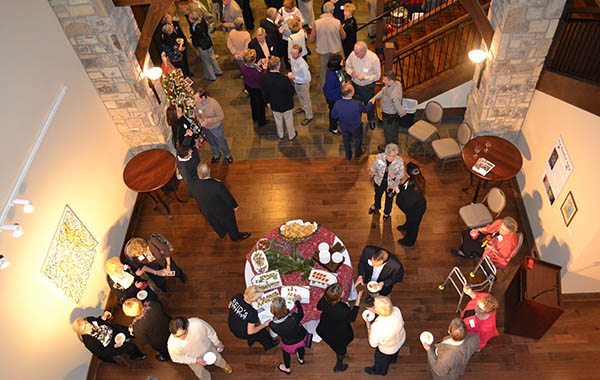
CHARLOTTE, NC (Lukas Johnson/The Charlotte Observer) – Concord-based Southern Grace Distilleries offered free samples of its 130-proof moonshine during the Jan. 30 art walk.

More than 250 people visited the company’s downtown tasting room on Cabarrus Avenue to sample multiple products, including food, made using the moonshine.

Fans of moonshine can look for the company’s Sun Dog 130 to hit local ABC stores in a few weeks. Its Party Jug blended fruit and whiskey is due out in a few months and its aged whiskey will be out within the year.

The founders include Concord’s Leanne Powell, president; Perry Morris, distiller; and Thomas Thacker, operations manager. The three met while working for former Eighth District U.S. Rep. Larry Kissell, D-N.C., and eventually learned they shared a passion for good whiskey.

“It was an amazing show of support,” Powell said. “We had more than 200 RSVPs and had nearly 260 folks come through the door. What stood out was how surprised folks were that they could drink something 130 proof and have it not be harsh.

“Most people were interested in how the 130 could be used in a cocktail and what it would mix well with,” Powell continued. “A lot of people, who are not generally high-proof or even distilled drinkers actually took to the 130 and were surprised that it doesn’t burn the way many up-proofed spirits can.”

Southern Grace Distilleries became Cabarrus County’s first legal moonshine distillery in October 2014, when Concord Mayor Scott Padgett turned on the still in the former Warren C. Coleman Mill.

The company searched the Southern Piedmont region for a former mill building. The 2,800-square-foot space in the former Warren C. Coleman Mill eventually beat out spots in Anson, Mecklenburg and Stanly counties.

Southern Grace Distilleries will hand-bottle and hand-number three products: a 130-proof white whiskey/moonshine called Sun Dog 130; Party Jug: a less potent, fruit-infused product; and an oak-barrel-aged, 90-proof white whiskey. The formula is an adapted version of distiller Morris’ grandfather’s family recipe from Texas.

The company eventually will distribute in Louisiana, Maryland, Mississippi, South Carolina and Washington, D.C.

The company site also on Cabarrus Avenue also houses offices and a future tasting room. The tasting room, which is expected to open in a few months, has to be licensed by the state.

Once open, guests can watch a video that explains the moonshine-making process and look at artifacts tied to the local moonshine history.

“We are a craft distillery,” Powell said. “We take great pride in making sure every bottle is something we’d be proud to serve in our own homes. We also believe we can do good as a corporation and that is why we contribute money to local charities for every bottle we sell.”

Donna Hunt Carpenter, president and CEO of the Cabarrus County Convention and Visitors Bureau, said there are less than 20 distilleries in North Carolina and they draw thousands of visitors each year.

“Southern Grace Distilleries adds an all new genre to our already diverse tourism assets in Cabarrus County,” she said. “Food and drink are so often at the heart of what gives a destination character, and Sun Dog 130 will help visitors experience our story in a new way.”

Concord resident Dick Winfield, who visited the tasting event with his wife, said the taste brought him back to his college days.

“It’s very good stuff and I’m glad to see it’s going to be on the market, especially that it’s going to be local,” he said.

Diane Young, the executive director of the Concord Downtown Development Corporation, said distilleries are the next big thing.

“And to have Cabarrus County’s first in downtown Concord is huge,” she said. “It shows a desire by entrepreneurs to locate cutting-edge businesses in downtown Concord.”

Tagged with:

It’s the South’s turn for a taste of foul winter weather

(CNN)Wintry weather is a relative thing.

The Northeast is on alert — urging drivers to stay off roads — as the fourth storm in three weeks drops snow that in Boston has exceeded 45 inches in February alone.

It takes a fraction of that to get residents in the South into emergency mode. Sometimes, it doesn’t even have to snow — just the possibility of wintry weather is enough for a partial shutdown.

“Wintry precipitation possible” early this week, the National Weather Service in Atlanta said.

The Weather Service issued a winter storm watch for northern Georgia, warning of potential snow and ice accumulation on the roads.

This is likely all it will take to send shoppers to grocery stores, with memories of snow events a year ago in Atlanta and Birmingham, Alabama, that caused major headaches for residents.

    Temperatures dropped in the Atlanta area on Sunday, and even though the forecast suggests the snow/ice mix will likely fall farther north, some school districts closed out of an abundance of caution.

    Also out of an abundance of caution, Georgia Gov. Nathan Deal declared a state of emergency for 15 northern Georgia counties and asked state workers in those areas not involved in emergency response to work from home.

    NY tourism site: Don’t come here, go to Florida

    Last year, it took less than 3 inches of snow to paralyze Atlanta, with motorists stranded for more than 20 hours in some cases.

    CNN meteorologist Michael Guy explained the weather: “An area of low pressure will pick up Gulf moisture and collide with the cold air for a major winter event over the next couple of days for areas from Arkansas through Kentucky and Tennessee,” he said.

    While last year’s debacle has Atlanta’s preparations in the spotlight, other parts of the South are bracing for worse weather in the next day or two.

    “We have a difficult task ahead of us over the next 24 hours. Our crews will be out in force, and our primary focus initially will be on the interstate system. We will begin clearing secondary routes as quickly as we can. We will work until the job is done, but this will likely be a sustained effort through Monday into Tuesday. We ask motorists to please limit travel during this period,” said Heather Jensen, a spokeswoman with the Tennessee Department of Transportation.

    In New Orleans, authorities announced Mardi Gras parades scheduled for Monday would begin earlier in anticipation of the bad weather.

    Some areas in Kentucky could receive upwards of 10 to 12 inches of snow, Guy said.

    The North Carolina Zoo in Asheboro closed because of “heavy wind damage to trees throughout the park.”

    The wind knocked down two trees at the zoo, spokesman Gavin Johnson told CNN.

    “No animals were injured and no buildings or exhibits were damaged,” he said.

    Boone, North Carolina, resident Lee Davis reported 2 to 3 inches of snow in his town, via Twitter. The self-described “weather freak” warned followers to heed warnings.

    Residents in other Southern states made preparations, too, from raiding the bread aisles at supermarkets to buying ice melt.

Tagged with:

BRAHM Hosts Winter Exhibition Celebration Feb. 13


Feb. 5, 2015. The Blowing Rock Art and History Museum (BRAHM) invites the community to celebrate the opening of four brand new exhibitions on Friday, Feb. 13, at 5:30-7 p.m. As part of the event, the museum will provide free admission, refreshments and live music by Robert Steadman Jr. throughout the evening.

“This will be our first major reception celebrating multiple exhibitions simultaneously,” said BRAHM’s Interim Executive Director, Bob McCammon.

“We’re excited to be honoring all of them alongside members of our community.”

exhibitcelebrationThe Museum is presenting its four latest exhibitions, including Selections from the Collection, Ruined Landscapes: Paintings of the Balkan War Zone, on loan from the Turchin Center for the Visual Arts, a gift of Hugh and Jane Spratt McColl, Jerry Burns: Through the Lens, and Recent Works by Students of Watauga High School.

Selections from the Collection (on view through April 4) features over one-hundred paintings, drawings, prints, glass, ceramic, and mixed media pieces from the Museums permanent collection. Viewers will be able to experience the work of Elliott Daingerfield, Philip Moose, Andrew Wyeth, Philip Leslie Hale, Walter Schofield, William Charles Anthony Frerichs, Herb Cohen, Everett Shinn, Jose Fumero, and many others. A separate gallery also features a collection of twenty-five etchings of landmarks around North Carolina by Louis Orr.

Ruined Landscapes: Paintings of the Balkan War Zone depicts forty-two paintings of crumbling architecture and war-laden landscapes by Laura Buxton. These works are an important component of the Turchin Center for the Visual Arts permanent collection, and are being loaned for display through March 28. The collection was generously gifted to the Turchin Center in 2011 by Hugh and Jane Spratt McColl.

Jerry Burns: Through the Lens (on view through April 25) commemorates the longtime editor of Blowing Rock’s local newspaper, the Blowing Rocket. His name was Jerry Burns, but he was more popularly known as “Mr. Blowing Rock,” for his honorable citizenry and dedication to the village. Nearly two hundred of Jerry’s own and collected photographs will be on display, mirroring his story with the history of the town. The exhibition is made possible in collaboration with the Blowing Rock Historical Society.

Recent Works by Students of Watauga High School is the Museum’s third annual exhibition of artwork created by Senior level students. Led by arts educator Lori Hill, these students put together their first exhibition in a public venue and received awards for their creative achievements. The exhibit is graciously supported by guest juror, Mona Lisa McGrew, along with sponsors Blowing Rock Frameworks and Cheap Joes Art Supplies. The exhibit is open through February 28.

General admission to the Blowing Rock Art History Museum is $7 for adults and $6 for students, seniors, active military, and children ages 5 and up. Donations are accepted for admission to the Museum on Thursdays. Located at 159 Chestnut Street on the corner of Chestnut and Main in Blowing Rock, NC, the Museum is open 10 a.m.-5 p.m. Tuesday and Wednesday, 10 a.m.-7 p.m. Thursday, and 10 a.m.-5 p.m. Friday and Saturday (closed on Sunday and Monday). For more information, please call (828) 295-9099 or visit www.blowingrockmuseum.org.

Comments

comments

Tagged with:

Weekly Book List, February 20, 2015

ANTHROPOLOGY

The Land of Weddings and Rain: Nation and Modernity in Post-Socialist Lithuania by Gediminas Lankauskas (University of Toronto Press; 352 pages; US$85 hardcover, US$36.95 paperback). Discusses both civil and religious ceremonies in a study of changes in weddings in the wake of Westernization and heightened consumerism.

Unsettling India: Affect, Temporality, Transnationality by Purnima Mankekar (Duke University Press; 301 pages; $94.95 hardcover, $26.95 paperback). Draws on fieldwork in Delhi and the San Francisco Bay Area in a study of the construction of ideas of India and Indian culture in films, television, advertising, and other realms.

ARCHAEOLOGY

Emergence and Diversity of Modern Human Behavior in Paleolithic Asia edited by Yousuke Kaifu and others (Texas AM University Press; 580 pages; $65). Writings by anthropologists and archaeologists on South Asia, Southeast Asia, East Asia, and Siberia, as well as Australia; pays particular attention to the Japanese archipelago.

ART AND ARCHITECTURE

Impossible Heights: Skyscrapers, Flight, and the Master Builder by Adnan Morshed (University of Minnesota Press; 296 pages; $112.50 hardcover, $37.50 paperback). Writings on the aesthetic impact of aerial perspective and movement on the visual culture of the interwar period.

The Urban Scene: Race, Reginald Marsh, and American Art by Carmenita Higginbotham (Penn State University Press; 211 pages; $79.95). Examines representations of blacks in the Depression-era work of the “urban realist” Marsh and his contemporaries.

BUSINESS

Morality, Competition, and the Firm: The Market Failures Approach to Business Ethics by Joseph Heath (Oxford University Press; 412 pages; $65). New and previously published writings on the moral obligations of private actors in a market economy.

CLASSICAL STUDIES

Ex Oriente Lex: Near Eastern Influences on Ancient Greek and Roman Law by Raymond Westbrook, edited by Deborah Lyons and Kurt Raaflaub (Johns Hopkins University Press; 288 pages; $59.95). Edition of writings by the American scholar (1946-2009).

Shaping Ceremony: Monumental Steps and Greek Architecture by Mary B. Hollinshead (University of Wisconsin Press; 208 pages; $50). Explores ritual, biomechanical, political, and other aspects of the steps found in ancient Greek monuments; focuses on 38 sites from the sixth through the second centuries BC.

CULTURAL STUDIES

When the Devil Knocks: The Congo Tradition and the Politics of Blackness in Twentieth-Century Panama by Renee Alexander Craft (Ohio State University Press; 240 pages; $69.95). Offers an ethnographic perspective on the Afro-Latin carnival tradition of “Congo” as enacted in the Panamanian town of Portobelo.

ECONOMICS

The Disintegration of Production: Firm Strategy and Industrial Development in China edited by Mariko Watanabe (Edward Elgar Publishing; 260 pages; $145). Includes case studies from the electronics, automotive, coal, pharmaceutical, and other industries.

The Rise and Fall of Neoliberal Capitalism by David M. Kotz (Harvard University Press; 270 pages; $39.95). Argues that the economic crisis that began in 2008 is a structural crisis of the neoliberal form of capitalism and ultimately cannot be resolved within the current system.

ENVIRONMENTAL STUDIES

Black Hills Forestry: A History by John F. Freeman (University Press of Colorado, distributed by University of Oklahoma Press; 246 pages; $34.95). Uses a history of the Black Hills National Forest to examine land management by the U.S. Forest Service.

FILM STUDIES

Adaptation, Authorship, and Contemporary Women Filmmakers by Shelley Cobb (Palgrave Macmillan; 176 pages; $95). Examines female filmmakers’ adaptations, since 1990, of works that foreground a female authorial figure; examples discussed include Sally Potter’s Orlando.

The Disney Fetish by Sean J. Harrington (John Libbey Publishing, distributed by Indiana University Press; 234 pages; $30). Applies Lacanian, post-Marxist, and other theory in a study of the Disney company and its products, with particular attention to its classic films.

HISTORY

Battleground New Jersey: Vanderbilt, Hague, and Their Fight for Justice by Nelson Johnson (Rutgers University Press; 259 pages; $29.95). Draws on previously untapped sources to trace the clash between Arthur T. Vanderbilt, chief justice of the State Supreme Court, and Frank Hague, mayor of Jersey City, over efforts to reform the legal system.

Between Two Worlds: How the English Became Americans by Malcolm Gaskill (Basic Books; 484 pages; $35). Documents the experiences of 17th-century colonists as they were thwarted in their efforts to recreate England in America.

Civil War Canon: Sites of Confederate Memory in South Carolina by Thomas J. Brown (University of North Carolina Press; 376 pages; $39.95). Discusses Fort Sumter and other prominent sites in a study of commemoration as a dynamic, adaptive process.

Daughters of the Trade: Atlantic Slavers and Interracial Marriage on the Gold Coast by Pernille Ipsen (University of Pennsylvania Press; 269 pages; $49.95). Examines five generations of cassare or “keeping house” marriages between African women and Danish men in the 18th and 19th centuries, with a focus on Fort Christiansborg in what is now Accra, Ghana.

Designing Dixie: Tourism, Memory, and Urban Space in the New South by Reiko Hillyer (University of Virginia Press; 280 pages; $45). Describes how boosters, entrepreneurs, and architects in the cities of St. Augustine, Richmond, and Atlanta used historical imagery to attract investors and tourists.

Feeding Barcelona, 1714-1975: Public Market Halls, Social Networks, and Consumer Culture by Montserrat Miller (Louisiana State University Press; 400 pages; $39.95). Explores the social networks and other factors that have sustained the vibrancy and abundance of the city’s food markets since the 18th century.

Lives in Common: Arabs and Jews in Jerusalem, Jaffa and Hebron by Menachem Klein, translated by Haim Watzman (Oxford University Press; 336 pages; $30). Draws on memoirs, diaries, and other sources in a history of interactions in the three cities over the past 150 years.

The Longest Afternoon: The 400 Men Who Decided the Battle of Waterloo by Brendan Simms (Basic Books; 208 pages; $24.99). Discusses the key role played by the Second Light Battalion, King’s German Legion, in the June 18, 1815, battle.

Making Money in Sixteenth-Century France: Currency, Culture, and the State by Jotham Parson (Cornell University Press; 336 pages; $59.95). Examines the expanding powers of the royal Cour des Monnaies.

Mobilizing Zanzibari Women: The Struggle for Respectability and Self-Reliance in Colonial East Africa by Corrie Decker (Palgrave Macmillan; 272 pages; $90). A study of women’s education, professionalization, and political mobilization under Arab and later British rule in the Zanzibar archipelago in what is now Tanzania.

Obama’s Time: A History by Morton Keller (Oxford University Press; 327 pages; $27.95). Discusses the president’s persona, leadership style, and policies during his first term.

Prep School Cowboys: Ranch Schools in the American West by Melissa Bingmann (University of New Mexico Press; 230 pages; $45). Discusses boarding schools in Arizona and other Western states and their appeal to wealthy parents in the East and elsewhere seeking to cultivate traditional values and self reliance in their sons.

The Radical King by Martin Luther King Jr., edited by Cornel West (Beacon Press; 300 pages; $26.95). Thematic edition of writings by the civil-rights leader that document his radical politics, including opposition to imperialism and the Vietnam War.

Rethinking British Romantic History, 1770-1845 edited by Porscha Fermanis and John Regan (Oxford University Press; 333 pages; $99). Essays that document how aesthetic innovations in the literature of the period overlapped with developments in history writing; topics include James Mill’s History of British India and the poetics of Benthamite historiography.

Seeking Our Eden: The Dreams and Migrations of Sarah Jameson Craig by Joanne Findon (McGill-Queen’s University Press; 240 pages; US$34.95). Examines the life and travels of a Canadian woman (1840-1919) who hoped to found a utopian community grounded in alternative medicine and women’s equality—notably “dress reform” along the lines of her own short dress over trousers.

“Settling the Peace of the Church”: 1662 Revisited edited by N.H. Keeble (Oxford University Press; 270 pages; $100). Essays on the Act of Uniformity in the established Church of England, passed on May 19, 1662, and the subsequent “Great Ejection” of dissenters on St. Bartholomew’s Day (August 24).

Sex, Money and Personal Character in Eighteenth-Century British Politics by Marilyn Morris (Yale University Press; 257 pages; $85). Shows how the Anglo-American concern with politicians’ private lives today is a legacy of 18th-century preoccupations with the sexual, financial, and other imprudence of royal and other elites.

HISTORY OF SCIENCE

From Sight to Light: The Passage From Ancient to Modern Optics by A. Mark Smith (University of Chicago Press; 457 pages; $45). Discusses the history of optic theory in terms of a “Keplerian turn” with the German astronomer’s theory of retinal imaging in 1604.

LAW

The Force of Law by Frederick Schauer (Harvard University Press; 239 pages; $35). Argues that coercion is central to law’s effectiveness.

The Legacy of Ruth Bader Ginsburg edited by Scott Dodson (Cambridge University Press; 336 pages; $29.99). Essays by scholars and others on the U.S. Supreme Court Justice; topics include Ginsburg’s “reconstructive feminism.”

LIBRARY SCIENCE

Indexing It All: The Subject in the Age of Documentation, Information, and Data by Ronald E. Day (MIT Press; 170 pages; $30). Focuses on the documentary index and ideas and uses of “indexicality” since the early 20th century; draws on the French documentalist Suzanne Briet.

LINGUISTICS

A Grammar of the Seneca Language by Wallace Chafe (University of California Press; 250 pages; $65). A study of an indigenous language of the Northern Iroquoian branch of the Iroquoian family.

Regional Language Policies in France during World War II by Aviv Amit (Palgrave Macmillan; 196 pages; $90). Offers a historical and sociolinguistic analysis of how efforts to preserve the languages of Brittany, Corsica, and other French regions became more political during the wartime occupation.

LITERATURE

The Archpoet and Medieval Culture by Peter Godman (Oxford University Press; 280 pages; $110). Explores the intellectual history of the 12th century through a study of a German writer known by the pseudonym the Archpoet and his patron, Archchancellor Rainald of Dassel.

Classical Traditions in Science Fiction edited by Brett M. Rogers and Benjamin Eldon Stevens (Oxford University Press; 380 pages; $99 hardcover, $35 paperback). Topics include Virgil in Verne’s Journey to the Center of the Earth, time and self-referentiality in the Iliad and Dune, and refiguring the Roman Empire in The Hunger Games trilogy.

Food and the Literary Imagination by Jayne Elisabeth Archer, Richard Marggraf Turley, and Howard Thomas (Palgrave Macmillan; 248 pages; $90). Focuses on Chaucer’s Canterbury Tales, Shakespeare’s King Lear, Keats’s “To Autumn,” and Eliot’s The Mill on the Floss.

The Geopoetics of Modernism by Rebecca Walsh (University Press of Florida; 201 pages; $74.95). Explores links between American modernism and geographic discourse, including in the work of Walt Whitman, Langston Hughes, H.D., and Gertrude Stein.

Idleness, Indolence and Leisure in English Literature edited by Monika Fludernik and Miriam Nandi (Palgrave Macmillan; 328 pages; $95). Writers discussed include the late medieval Ricardian poets, Thomas Deloney, Thomas Dekker, Richard Brinsley Sheridan, and Oscar Wilde.

A Kiss from Thermopylae: Emily Dickinson and Law by James R. Guthrie (University of Massachusetts Press; 272 pages; $80 hardcover, $24.95 paperback). Considers how legal language and reasoning influenced the work of the poet, who was born into a family of lawyers.

Literati Storytelling in Late Medieval China by Manling Luo (University of Washington Press; 240 pages; $50). Examines narrative poems, “tales of the marvelous,” and other forms of storytelling that shed light on the changing role of China’s literati with the shift away from a hereditary aristocracy.

Relics of Death in Victorian Literature and Culture by Deborah Lutz (Cambridge University Press; 260 pages; $90). Uses Bronte’s Wuthering Heights, Dickens’s Great Expectations, Tennyson’s “In Memoriam,” Hardy’s Far From the Madding Crowd, and other works to explore Victorians’ practice of treasuring locks of hair and other objects associated with their dead.

Taking Liberties: Gender, Transgressive Patriotism, and Polish Drama, 1786–1989 by Halina Filipowicz (Ohio University Press; 408 pages; $90 hardcover, $35 paperback). Explores Polish plays and political writings in a study of “non-nationalist patriotism.”

A Temporary Future: The Fiction of David Mitchell by Patrick O’Donnell (Bloomsbury Academic; 216 pages; $100 hardcover, $29.95 paperback). A critical study of the English novelist (b. 1969), whose works include number9dream and Cloud Atlas.

Words Like Daggers: Violent Female Speech in Early Modern England by Kirilka Stavreva (University of Nebraska Press; 202 pages; $55). Draws on letters, legal documents, ballads, dramas, and other sources in a study of women’s curses, prophecies, scolding, and other subversive speech from the 1590s to the 1660s.

MUSIC

Arranging Gershwin: “Rhapsody in Blue” and the Creation of an American Icon by Ryan Paul Banagale (Oxford University Press; 209 pages; $99 hardcover, $21.95 paperback). Draws on newly discovered manuscripts in a study that discusses Rhapsody in Blue as an arrangement rather than a composition.

PHILOSOPHY

Emotion and Value edited by Sabine Roeser and Cain Todd (Oxford University Press; 258 pages; $65). Essays by philosophers on such topics as emotions as unitary states, emotion as agency, emotion, evaluative perception, and epistemic justification, and self-empathy and moral repair.

Kant and Colonialism edited by Katrin Flikschuh and Lea Ypi (Oxford University Press; 255 pages; $74). Writings on the German philosopher’s position on colonialism within the parameters of his “Eurocentric cosmopolitanism”; topics include conquest and settlement within the limits of Kant’s international right.

Levinas’s Existential Analytic: A Commentary on “Totality and Infinity” by James R. Mensch (Northwestern University Press; 248 pages; $79.95 hardcover, $27.95 paperback). A study of the Lithuanian-born French philosopher’s 1961 masterwork.

The Political Philosophy of Francis Bacon: On the Unity of Knowledge by Tom van Malssen (State University of New York Press; 321 pages; $95). Topics include the English thinker’s distinction between philosophy and inspired theology, and his turn to political thought in De Sapientia Veterum.

The Question of Peace in Modern Political Thought edited by Toivo Koivukoski and David Edward Tabachnick (Wilfrid Laurier University Press; 326 pages; US$48.99). Essays on Martin Luther, Spinoza, Hobbes, Vattel, Locke, Rousseau, Hegel, Kant, Thoreau, Heidegger, Benjamin, Arendt, Derrida, and Habermas.

Space, Geometry, and Kant’s Transcendental Deduction of the Categories by Thomas C. Vinci (Oxford University Press; 251 pages; $74). Argues, among other things, that the ultimate goal of the “Deduction of the Categories” in the Critique of Pure Reason is to demonstrate two versions of idealism, one for laws of nature and one for objects of empirical intuition.

The Sublime Seneca: Ethics, Literature, Metaphysics by Erik Gunderson (Cambridge University Press; 240 pages; $99). Explores the issue of ethics in literature in a study of Seneca’s Moral Letters, Natural Questions, Dialogues, and poetry.

POLITICAL SCIENCE

Busted Sanctions: Explaining Why Economic Sanctions Fail by Bryan R. Early (Stanford University Press; 275 pages; $90 hardcover, $29.95 paperback). A study of 60 years of U.S. economic sanctions that links their more-than two-thirds failure rate to third-party nations, often close allies, who act as sanction busters.

Civil Disabilities: Citizenship, Membership, and Belonging edited by Nancy J. Hirschmann and Beth Linker (University of Pennsylvania Press; 307 pages; $65). Essays on symbolic representations of what it means to “belong” as a disabled person in a Western society’s political culture.

Federalism on Trial: State Attorneys General and National Policymaking in Contemporary America by Paul Nolette (University Press of Kansas; 296 pages; $37.50). A study of coordinated policy-linked lawsuits brought by state attorneys-general over such issues as drug pricing, environmental policy, and health-care reform.

Syria from Reform to Revolt, Volume 1: Political Economy and International Relations edited by Raymond Hinnebusch and Tina Zintl (Syracuse University Press; 348 pages; $49.95). Writings on Bashar al-Asad’s first decade of rule, after assuming power in July 2000, following the death of his father.

US Foreign Policy and Defense Strategy: The Evolution of an Incidental Superpower by Derek S. Reveron, Nikolas K. Gvosdev, and Mackubin Thomas Owens (Georgetown University Press; 262 pages; $49.95 hardcover, $29.95 paperback). Topics include the interrelationship of America’s foreign policy, defense strategy, and commercial activities.

The Uses and Misuses of Human Rights: A Critical Approach to Advocacy edited by George Andreopoulos and Zehra Arat (Palgrave Macmillan; 232 pages; $105). Essays on actions taken by human-rights advocates that, for example, undermine the well-being of beneficiaries or otherwise cause harm.

POSTCOLONIAL STUDIES

Freedom Time: Negritude, Decolonization, and the Future of the World by Gary Wilder (Duke University Press; 384 pages; $99.95 hardcover, $28.95 paperback). Examines French decolonization from the perspectives of Aime Cesaire in Martinique and Leopold Senghor in Senegal

POPULAR CULTURE

Boys Love Manga and Beyond: History, Culture, and Community in Japan edited by Mark McLelland and others (University Press of Mississippi; 304 pages; $65). Essays on a genre in manga, anime, and games celebrating “beautiful boys” that first emerged in the 1970s aimed at a largely female audience.

RELIGION

The Correspondence of Pope Julius I translated by Glen L. Thompson (Catholic University of America Press; 288 pages; $39.95). Translation, with commentary and facing Greek and Latin texts, of letters written by or to the fourth-century bishop of Rome.

The Fate of Earthly Things: Aztec Gods and God-Bodies by Molly H. Bassett (University of Texas Press; 283 pages; $60). Topics include ways in which gods could be embodied through sacred bundles of precious objects or a priest wearing the skin of a sacrificial victim.

Karl Barth and the Making of “Evangelical Theology”: A Fifty-Year Perspective edited by Clifford B. Anderson and Bruce L. McCormack (Wm. B. Eerdmans Publishing; 237 pages; $34). Writings on the Swiss theologian’s two-month trip to the United States in 1962, which was his sole visit to America and the occasion of lectures that became the basis for Evangelical Theology: An Introduction.

Patrick N. Lynch, 1817-1882: Third Catholic Bishop of Charleston by David C.R. Heisser and Stephen J. White Sr. (University of South Carolina Press; 271 pages; $39.95). A biography of the Irish-born South Carolina prelate and staunch Confederate.

Psalm Studies, Volume 1 by Sigmund Mowinckel, translated by Mark E. Biddle (Society of Biblical Literature; 491 pages; $79.95 hardcover, $59.95 paperback). First English translation of six studies by the Norwegian biblical scholar (1884-1965).

Psalm Studies, Volume 2 by Sigmund Mowinckel, translated by Mark E. Biddle (Society of Biblical Literature; 424 pages; $73.95 hardcover, $53.95 paperback). Continues a translation of the Norwegian biblical scholar’s writings on the Psalter.

The Writings and Later Wisdom Books edited by Christl M. Maier and Nuria Calduch-Benages (Society of Biblical Literature; 333 pages; $59.95 hardcover, $44.95 paperback). Focuses on women in essays on the third section of the Hebrew Bible known as the Ketuvim or Writings, and in such wisdom books as Ben Sira and the Wisdom of Solomon.

SOCIOLOGY

The Cultural Matrix: Understanding Black Youth edited by Orlando Patterson with Ethan Fosse (Harvard University Press; 675 pages; $45). Interdisciplinary writings on the interplay of cultural, structural, and environmental forces in shaping the lives of black youth.

From Cuba With Love: Sex and Money in the Twenty-First Century by Megan Daigle (University of California Press; 276 pages; $65 hardcover, $29.95 paperback). Documents the experiences and self-perceptions of Cuban women who date tourists, and examines their punitive treatment by authorities.

Songs of the Factory: Pop Music, Culture, and Resistance by Marek Korczynski (ILR Press/Cornell University Press; 240 pages; $75 hardcover, $24.95 paperback). Explores worker agency through a study of how employees of a British window-blind factory made their assembly-line jobs better through music on the shopfloor.

THEATER

Oliver! A Dickensian Musical by Marc Napolitano (Oxford University Press; 287 pages; $35). Examines the origins, development, and reception of Lionel Bart’s musical version of Oliver Twist and the impact of the musical on perceptions of the novel.

Performance and Identity in Irish Standup Comedy: The Comic “I” by Susanne Colleary (Palgrave Macmillan; 224 pages; $90). Examines the work of such comedians as Tommy Tiernan, Dylan Moran, and Maeve Higgins.

WOMEN’S STUDIES

Black Female Sexualities edited by Trimika Melancon and Joanne M. Braxton (Rutgers University Press; 229 pages; $90 hardcover, $28.95 paperback). Interdisciplinary writings on expressions and representations of black female sexuality, including in literature, cinema, and music; topics include black teenage girls, body size, and sexuality.

HISTORYMUSIC

Holy Treasure and Sacred Song: Relic Cults and Their Liturgies in Medieval Tuscany by Benjamin Brand (Oxford University Press; 296 pages; $55). Discusses music composed as part of the devotions aimed at honoring local saints and martyrs at Arezzo, Florence, Lucca, and other Tuscan dioceses.

Tagged with:

Bracketology: Weekend risers and decliners, plus Monday’s games that matter

Every weekday from now until Selection Sunday (and every day in March) will feature analysis of the previous night plus a quick look at games with the potential to impact the final NCAA tournament field of 68.

Davidson: The Wildcats (17-6, 8-4 Atlantic 10) quietly added a victory of modest value, upending La Salle 77-69 on the road. In a week that so many borderline tournament teams slid backwards, Davidson improved its position simply by winning games against George Mason and La Salle.

Michigan State: The Spartans (17-8, 8-4 Big Ten) had to love Denzel Valentine’s game-winner against Ohio State. Michigan State is only 3-6 against the top 50 even with the victory over the Buckeyes, but it still has a profile that wouldn’t have it on the edge of the field if the season ended today.

N.C. State: And there’s the signature road victory the Wolfpack (15-11, 6-7 ACC) needed. N.C. State handled Louisville 74-65, and its path back to a fourth consecutive NCAA tournament became far less narrow as a result. The Wolfpack still needs to win more games, and another high-level victory would be nice. But it closed one of the big holes left on its profile.

Pittsburgh: The Panthers (17-9, 6-6 ACC) still have a bunch of work to do away from the Pete, but their throttling of North Carolina brings them back into the postseason conversation.

St. John’s: Proof that a three-game winning streak can do wonders for a borderline tournament team, the Red Storm (17-8, 6-6) won at Xavier on Saturday. It’s far from a sure thing, but St. John’s looks much better compared to the edge of the field than a week ago.

UCLA: The Bruins (16-10, 8-5 Pac-12) snagged a season split with Oregon and a weekend sweep of the Pac-12’s Oregon schools. Steve Alford’s bunch still has work to do, but that was an impressive week against two schools knocking on the door of postseason contention.

Boise State: The Broncos (18-7, 8-4 Mountain West) lost at Fresno State, which sits outside the top 200 of the RPI. Not a good idea, especially for a team with limited opportunities to improve its profile the rest of the way.

Cincinnati: Losing at home to Tulane isn’t as horrific as some folks might suggest, but it certainly isn’t the way the Bearcats (17-8, 8-5 American) are going to improve their seeding. Nonetheless, it would still take a fairly notable collapse for Cincinnati to fall out of the field.

George Washington: The Colonials (17-8, 7-5 Atlantic 10) have dropped four of five, including Saturday’s home loss against Virginia Commonwealth. George Washington could theoretically re-emerge as an at-large possibility, but it doesn’t have many chances at high-value victories the rest of the way. Its margin of error is gone.

Georgia: The Bulldogs (16-8, 7-5 SEC) lost at home to Auburn, which is not the sort of thing a team destined for the NCAA tournament typically does. But here’s some credit for Bruce Pearl and the Tigers, who also beat Louisiana State in Baton Rouge earlier this season.

Iowa: Somebody decent was eventually going to lose to Northwestern, which had dropped a bunch of close games while going 0-12 against the top 100. That somebody decent is Iowa (15-10, 6-6 Big Ten), which capped a brutal week that began with a home loss to Minnesota with an overtime setback in Evanston.

Old Dominion: There’s nothing inherently wrong with losing at Texas-El Paso, but the Monarchs (18-6, 7-5 Conference USA) are effectively done as an at-large candidate after dropping two games in three days during a Texas road trip.

Miami at Boston College (3, ESPNU): The game was postponed a day, but the stakes remain the same for Miami, which simply cannot afford a loss against the ACC’s last-place team, even on the road.

Clemson at Georgia Tech (7, ESPNU): If the Tigers (15-10, 7-6 ACC) are going to make a surprising resurgence into the NCAA conversation, they pretty much have to beat the reeling Yellow Jackets (11-14, 2-11). The good news? Clemson has won 10 in a row against Georgia Tech, one shy of its most ever against an ACC team.

Pittsburgh at Virginia (7, ESPN): The Panthers (17-9, 6-6 ACC) direly need a quality road victory. This trip to Virginia (23-1, 11-1) provides a chance to get about as good a win as anyone has (besides Duke, which also won in Charlottesville last month).

Seton Hall at Villanova (7, Fox Sports 1): Hard as it is to believe now, Seton Hall actually won the first meeting between the teams back on Jan. 3. The Wildcats (23-2, 10-2 Big East) are 10-1 since then, while the Pirates (15-10, 5-8) have dropped eight of 11 in the interim. Seton Hall’s at-large hopes continue to wither, though a triumph in Philadelphia would certainly help.

Kansas at West Virginia (9, ESPN): The Mountaineers (19-6, 7-5 Big 12) are in no imminent danger of teetering on the edge of the field of 68. Still, they’ve lost three of four and haven’t beaten a likely NCAA tournament team since Jan. 13. Bob Huggins’ bunch could use a good result.

Contact Patrick Stevens anytime: Email | Twitter

Tagged with:

Krispy Kreme Challenge fills hearts and stomachs

About 7,000 participants showed up in sub-freezing weather Saturday morning to start their Valentine’s Day off with a daunting test of their gastrointestinal fortitude. 

The Krispy Kreme Challenge is an annual event, now in its 11th year, put together by students to raise money for the North Carolina Children’s Hospital in Chapel Hill.

This year the event raised an estimated $195,000 for the hospital, which is less than the estimated $200,000 the event raised last year. The committee paid more than $20,000 to the Krispy Kreme on North Person Street for the 84,000 doughnuts prepared for the event.

Participants who successfully completed the challenge ran 2.5 miles from the Bell Tower to the Krispy Kreme on North Person Street, stopping to eat a dozen doughnuts before running back to the Bell Tower in under one hour. 

The event began as a dare between students in 2004, but once it got the attention of Sports Illustrated, the creators decided to make it an annual event and donate the proceeds to a good cause, according to the Krispy Kreme Challenge website. 

Since its inception in 2004, the Krispy Kreme Challenge has raised about $954,000, according to Brandon Honeycutt, a junior studying agricultural business management and co-director for the event.

The funds go to a program called the NC Children’s Promise Grants within the North Carolina Children’s hospital. Employees of the hospital propose grants when they see a need in their individual programs in an effort to provide better care and services to children and their families. 

NC Children’s Promise Grants has contributed to programs that provide fun and distracting items to help children deal with invasive surgery. Surgery simulation programs improve the skills of surgeons and programs to prepare and support families of patients for the challenges they may face, according to the website.

Participants took on the challenge for different reasons. For Owen Stone, a recent graduate of NC State, Saturday was his sixth time running the challenge. Stone was dressed as an Oscar Mayer hotdog in hopes that it would help him become a Wienermobile driver. 

“I’ve done it six times. I usually don’t make it through,” Stone said. “I’m normally puking halfway through the doughnuts.” 

Russell Creswell, a sophomore studying life sciences, saw the event as a milestone as he tries to get into better shape. 

“This is the first time I’ve ever run a race because I used to be really out of shape,” Creswell said. “I had to lose a lot of weight.” 

Among the participants in the race were a group of 20 Wake County elementary school principals who were running to draw support for the second annual WAKE Up and Read book drive. The drive will provide books to nine of the underprivileged schools in Wake County.   

Their goal for this year is to collect 100,000 books , according to Tad Sherman, the principal of Wakelon Elementary School in Zebulon, who was attending the race for the first time. 

“If kids can read, they can do anything,” Sherman said. 

Wakelon Elementary is one of the schools that will be receiving donated books.

“Many of our students don’t have books in their house, so this is building home libraries so they can enjoy reading,” Sherman said. “We’re already at 25,000 books as of last night, so all of our schools are pitching in because of the run.” 

Student Body President Rusty Mau attempted the challenge, but was unable to finish all of his doughnuts. 

“It’s a bunch of runners united behind such a crazy idea,” Mau said. “I think it’s just a great way for people to get engaged in the campus community as well as to come together for a great cause.” 

The organizers joined with the Raleigh Police Department to set up roadblocks and provide security for the event.

Sydney Grice, a sophomore studying political science and public relations head of the Krispy Kreme Challenge, said organizers made sure the route did not interfere with any important events or limit access to businesses.  

“We want to help the city of Raleigh and make sure that this race is not stepping on people’s toes and preserves tourism,” Grice said. 

Tagged with:
Top