Bear Euthanized After Attack

c 2014, WLOS ABC 13 | Portions are Copyright 2014 Associated Press. All rights reserved. This material may not be published, broadcast, rewritten, or distributed.

WLOS News 13 provides local news, weather forecasts, traffic updates, notices of events and items of interest in the community, sports and entertainment programming for Asheville, NC and nearby towns and communities in Western North Carolina and the Upstate of South Carolina, including the counties of Buncombe, Henderson, Rutherford, Haywood, Polk, Transylvania, McDowell, Mitchell, Madison, Yancey, Jackson, Swain, Macon, Graham, Spartanburg, Greenville, Anderson, Union, Pickens, Oconee, Laurens, Greenwood, Abbeville and also Biltmore Forest, Woodfin, Leicester, Black Mountain, Montreat, Arden, Weaverville, Hendersonville, Etowah, Flat Rock, Mills River, Waynesville, Maggie Valley, Canton, Clyde, Franklin, Cullowhee, Sylva, Cherokee, Marion, Old Fort, Forest City, Lake Lure, Bat Cave, Spindale, Spruce Pine, Bakersville, Burnsville, Tryon, Columbus, Marshall, Mars Hill, Brevard, Bryson City, Cashiers, Greer, Landrum, Clemson, Gaffney, and Easley.

Tagged with:

What’s holding up a deal on Greece’s bailout

Mayhew, Lester Keith

Keith Mayhew, 43, of Lynchburg, went home to be with the Lord on Sunday, June 7, 2015, Keith was born in Farmville, Va., in 1971. He grew up in Phenix/Appomattox, Va., and graduated from Appomattox High School as an avid baseball player. He then went to Ferrum College playing ball and was drafted by the Atlanta Braves in 1995. Both jerseys were retired in Appomattox High and Jersey #12 retired in Ferrum! Keith was inducted into the Ferrum College Alumni Sports Hall of Fame in 2008. He has several unbroken records in Ferrum and to name a few, Ferrum’s only three time All-American, 1st team All-American in 1995, 2nd Team All-American in 1994, 3rd Team All-American in 1993, Closed Career with a 34-5 Pitching record, with five saves, At the close of his career, set the NCAA Division III Career strikeout record with 350 and single season strikeout record at 149 in 1995. USA South All-Tournament Team in 1995, 1st team All-State in 1994 and honorable mention All-State 1993. He was also named 1st team All-State and Player of the Year in 1995 as named by the Virginia Sports Information Directors Association. Keith Mayhew Holds Ferrum’s records for season and career wins, season career strikeouts, season career innings pitched, and season career starts, Keith is also #2 on Ferrum’s career lowest ERA list. Eventually he was drafted in the 31st round of the 1995 Major League Baseball amateur draft by the Atlanta Braves!He was an avid Hunter and loved to Fish. Even more he enjoyed Golfing with his friends. Mayhew even helped out on some minor league baseball teams for Kids, He had a big heart and wanted everybody to play baseball. When it came to sports he loved it all! Keith was close to his family and friends and wanted everyone to succeed in life, He would always lend a helping hand to anyone!He currently enjoyed his career at Frito Lay, serving approximately 17 years of service. He was really looking forward to going to work every day! Keith loved to work but loved to play, just as hard.Keith was the son of the late Eugene “Bootsy” Mayhew and is survived by his mother, Jean Guthrie.In addition to his father, he was preceded in death by his grandparents, Garland “Bud” Francis and Louise Coates Francis of Spout Springs, Virginia.Keith is survived by his only son, Corey Len Tinder of Charlottesville; three brothers, Mike Mayhew and wife, Tammy, from Rustburg, and Matt Mayhew of Richmond and Aaron Mayhew from Appomattox. Keith has one sister, Candice Burnette from Rustburg; nieces and nephews, Michael Mayhew, Jordon Bartley, Jessica Dunn, Ashley Mayhew, Hailey Hall, and Katelynn Mayhew; great-nieces and nephews, Camron Mayhew, Mckinley Dunn, Mckayla Dunn, Madison Boaze, Paige Burnette; very close aunts and uncles, Faye and Joey Jennings, Edith Trent, and Gene and Louis Epperson; cousins, Chris Barksdale, Randy Trent, Rhonda Trent, Greg Epperson, Laney Epperson, and Mark Epperson; close friends (brothers from other mothers) Ken McCullough, David Mason, Geoffrey Bourne, Ed Eades, and Charlie Watts.Keith was passionate about baseball and an advocate of higher education.In lieu of flowers, please consider making a memorial contribution to Ferrum College, Office of Development, P.O. Box 1000, Ferrum, VA 24088 or online at www.ferrum.eduPlease join us as we celebrate the life of Keith Mayhew !A funeral service will be conducted 11 a.m. Friday, June 12, 2015, at Childrey Baptist Church, 1224 Childrey Church Road, Nathalie, VA 24577, with the Rev. Carlton Dunn, Jr. officiating. Interment will follow at Childrey Baptist Church Cemetery.The family will receive friends from 6 until 8 p.m. Thursday, June 11, 2015, at Whitten Timberlake Chapel.One hour after burial family will accept friends and family at the Fellowship Hall at the Church (please join us and let’s talk about the MAYHEW DANCE)To send condolences to the family please visit, www.whittentimberlake.com.Whitten Timberlake Chapel, 7404 Timberlake Rd., Lynchburg, VA 24502, (434) 239-0331, is serving the family.

Tagged with:

Status GO! Launches Nurse Triage Application for Salesforce.com


–>
and imageUrl: http://visit-nc.com/wp-content/plugins/RSSPoster_PRO/cache/ba979_222115LOGO –>


TripAdvisor Logo. (PRNewsFoto/TripAdvisor)
Status GO! Launches Nurse Triage Application for Salesforce.com
Facebook
Twitter
Pinterest


  • left
    0
    Status GO! Launches Nurse Triage Application for Salesforce.com
    https://photos.prnewswire.com/prnfull/20150610/222115LOGO
    https://photos.prnewswire.com/prn/20150610/222115LOGO
    https://photos.prnewswire.com/prnthumb/20150610/222115LOGO
    http://visit-nc.com/wp-content/plugins/RSSPoster_PRO/cache/ba979_222115LOGO
    http://visit-nc.com/wp-content/plugins/RSSPoster_PRO/cache/ba979_222115LOGO

    and http://visit-nc.com/wp-content/plugins/RSSPoster_PRO/cache/ba979_222115LOGO –>

    left
    0
    Status GO! Launches Nurse Triage Application for Salesforce.com
    https://photos.prnewswire.com/prnfull/20150610/222115LOGO
    https://photos.prnewswire.com/prn/20150610/222115LOGO
    https://photos.prnewswire.com/prnthumb/20150610/222115LOGO
    http://visit-nc.com/wp-content/plugins/RSSPoster_PRO/cache/ba979_222115LOGO
    http://visit-nc.com/wp-content/plugins/RSSPoster_PRO/cache/ba979_222115LOGO

    and http://visit-nc.com/wp-content/plugins/RSSPoster_PRO/cache/ba979_222115LOGO –>
    Status GO! Launches Nurse Triage Application for Salesforce.com


HARLEYSVILLE, Pa., June 10, 2015 /PRNewswire/ — Status GO! to launch and demo a cutting edge nurse triage application (app) for Salesforce.com.  The reveal and live demonstrations will take place in Booth #16 at the 27th Annual Healthcare Call Center Times Conference (HCCT), June 10-12 at the Omni Charlotte Hotel, NC.  This follows an announcement of a five year partnership agreement with Health Navigator, Inc., to incorporate their Natural Language Processing (NLP) technology into Status GO!’s new nurse triage application.  As providers nationwide focus on the transformations currently taking place in healthcare they must rely on innovative, forward-thinking technology such as TriageNow for Salesforce.com.

According to Scott Blau, Founder and CEO of Status GO!, “TriageNow is a result of our commitment to patient-centered thinking, an approach that integrates the needs of patients, triagers (nurses), providers and the business office.”

“We’ve built a better triage app,” states Blau, the very first to combine Salesforce.com, the “World’s #1 CRM,” Clinical Content from Schmitt-Thompson, the “Gold Standard,” Health Navigator’s Natural Language Processing engine and the healthcare technology expertise of Status GO!.

TriageNow, a feature-rich application for Salesforce.com supports multi-channel triaging, including telephone-based and chat-based triage, and secure telemessaging.  Highlights of TriageNow include: comprehensive intake, extensive protocol search capabilities, acuity rating indicators, emailing of after care instructions, patient relationship management integration, reporting and analytics.  The App is also highly customizable to meet the specific needs of various healthcare organizations.

About Status GO!
Status GO! is a healthcare technology consulting company and Salesforce.com implementation partner focused on working with customers in the healthcare industry to setup, configure and develop solutions to support their improvement goals and initiatives.  In addition to customized solutions, Status GO! has developed a library of apps and functionality that promises to get organizations up and running quickly, as well as comprehensive training programs to support user adoption.  For more information contact healthcare@statusgonow.com or visit www.statusgonow.com.

Logo – http://photos.prnewswire.com/prnh/20150610/222115LOGO

SOURCE Status GO!

RELATED LINKS
http://www.statusgonow.com

Tagged with:

FACT SHEET: Administration Announces Actions to Bring Jobs and Clean …

The White House

Office of the Press Secretary

Financing Hundreds Of Projects To Reduce Carbon Pollution In Rural Communities

President Obama is committed to combating climate change to protect future generations while supporting a strong rural economy. Climate change can no longer be seen as a distant threat. It is already affecting rural communities across the country and putting homes, businesses, and vital infrastructure at risk. Farmers and ranchers face devastating impacts – from severe floods to extreme heat and drought to increased challenges due to wildfires, disease and pests. These impacts threaten the lives and livelihoods of Americans in rural communities.

That is why the President is taking action now. The sooner we act, the more we can do to protect rural America, especially the areas that are the most vulnerable. By investing in renewable energy and supporting climate-smart agricultural practices, rural communities and businesses can help slow the effects of climate change while creating jobs and growing the economy. To continue down this track, today the Administration is making these announcements:

  • The U.S. Department of Agriculture (USDA) is announcing a new investment in nearly 550 renewable energy and energy efficiency projects across the country totaling nearly $7 million in funding through its Rural Energy for America Program (REAP). Today, Secretary Tom Vilsack will visit the Snake River Brewing Company, in Jackson, Wyoming, one of the REAP awardees that received nearly $14,000 in funding to install a solar panels on their business, which is estimated to save the brewery nearly $1,200 on their electricity bill each year.  Since President Obama took office, USDA has helped thousands of rural small businesses, farmers and ranchers improve their bottom lines by investing in renewable energy systems and energy efficiency solutions, including:

    • Awarding $545 million through REAP for more than 8,800 projects nationwide to install renewable energy systems or make energy efficiency upgrades, which will save more than 7 billion kWh, enough energy to power 660,000 American homes annually. In fact, the number of farms using a renewable energy producing system since 2007 has more than doubled.
    • Financing more than $1.7 billion to help rural electricity providers reduce carbon pollution, bringing significant cost savings, and improve the quality of life for those living and working in rural America.
  • Companies across the U.S. understand that reducing carbon pollution and growing the economy go hand-in-hand. To highlight leadership in the agricultural sector, today the White House is hosting a roundtable discussion with businesses and organizations that are already taking action to cut emissions and strengthen the rural economy. Participants include:

    • Cargill
    • The Coca-Cola Company
    • Environmental Defense Fund
    • Field to Market
    • General Mills
    • Innovation Center for U.S. Dairy
    • Monsanto
    • National Corn Growers Association
    • Syngenta
    • The Fertilizer Institute
    • Kellogg Company
    • The Nature Conservancy
    • Unilever
    • United Soybean Board
    • Walmart
    • World Wildlife Fund
  • Building on their earlier progress, several businesses and organizations are also announcing new commitments to improve agricultural practices to reduce greenhouse gas emissions, improve water quality, and improve water efficiency:

    • Unilever is pledging to source 100% of its soy (approximately 1 million acres) in the U.S. sustainably by 2017, and all other raw agriculture commodities by 2020.  Utilizing Field to Market, Unilever will work with farmers to gather data about their fields and farming practices and then co-solve with them to implement changes to farming practices that promote reductions in greenhouse gas emissions. For example, working with the Conservation Technology Information Center in Iowa, Unilever was recently awarded $1 million in cost share by the Iowa Department of Agriculture and Land Stewardship to encourage growers to utilize cover crops to improve water quality.
    • Field to Market: The Alliance for Sustainable Agriculture and The Innovation Center for U.S. Dairy commit to harmonizing metrics to assess the sustainability of feed production, maximize interoperability among tools used to inform sustainable practices, advance scientific research and communication, and jointly convene the supply chain to address sustainability challenges in November 2015. 
    • Coca-Cola Company is committing to rapidly expand the application of the Field to Market program and its data-driven tool to quantify water use, fertilizer use, energy use, and greenhouse emissions. By the end of 2015, Coca-Cola will aim to engage farmers representing 250,000 acres, and up to 1 million acres by 2020s—equating to roughly 50% of the company’s global corn supply – to implement this commitment.
    • National Corn Growers Association is committing to actively participate in Field to Market and administer the Soil Health Partnership (SHP), , a project to make agriculture more sustainable through improved soil management, which is committed to expanding the current SHP Demonstration Farm Network from 40 to 100 by 2018. The main goal of the SHP is to demonstrate the contributions improved soil health makes to increased agricultural productivity, profitability, and environmental sustainability outcomes through the adoption of best management practices (BMPs) such as conservation tillage, cover crops and advanced nutrient management.
    • Walmart has committed to joint agricultural partnerships with 17 suppliers, cooperatives, and service providers on 23 million acres of land in the U.S. and Canada, with the potential to reduce 11 MMT of GHGs by 2020.   Walmart is committed to working with packers, feed yards, and ranchers to ensure that 15% of their U.S. beef supply is sourced with environmental criteria by 2023. In September 2014, Walmart announced that they will work with their suppliers and other partners in the food supply chain to cut greenhouse gas emissions, better conserve water, and increase yields as part of their Climate Smart Agriculture platform. Over the next ten years, Walmart will work to gain increasing visibility into key metrics regarding yields, water usage and GHGs in food supply chains. Walmart is now working with suppliers, representing ~70% of food sales, to report their yield, water and GHG footprints all the way back to the farm.
    • PepsiCo, a global food and beverage company, has committed to expanding its Sustainable Farming Initiative to 500,000 acres of farmland used by North American agricultural suppliers by year-end 2016.  PepsiCo’s Sustainable Farming Initiative provides a comprehensive framework to help meet the goals set out in PepsiCo’s Sustainable Agriculture Policy, providing critical support to farmers as they seek to address climate change and other key issues of sustainable farming. PepsiCo has committed to work in the U.S. and other global markets to engage growers of corn, oats, potato, and oranges to increase the utilization of sustainable farming practices, particularly in the areas of environmental, social and economic sustainability. 
    • The Nature Conservancy commits to help reduce nutrient loading in the Mississippi Basin by 25 percent by 2025 by seeking and developing new funding resources to assist farmers and local communities, partnering with the private industry to build a new conservation force of champions and advisors to farmers, and targeting resources to the highest priority areas.
    • Environmental Defense Fund is committing to work with all actors in the commodity crop supply chain – from corporations to farmers – to get improved fertilizer and soil health practices adopted across the majority of U.S. commodity acreage and strategically-placed wetland filters on 2-3% of the acres in the Upper Mississippi River Basin by 2030.  Combined, these changes will result in the 45% reduction in nutrient loading needed to achieve water quality restoration goals for the Gulf of Mexico, restore drinking water systems and deliver an estimated 50 million metric tons in avoided greenhouse gas emissions. Specifically, EDF will work with food companies, retailers, and grain buyers to support development of strong sustainability goals and connect these goals to effective programming on the ground with farmers. Existing collaborations including work with Walmart, Murphy Brown, Campbell Soup, and General Mills, among others.

BUILDING ON PROGRESS

Today’s actions build on a series of steps the Administration is taking to reduce the dangerous levels of carbon pollution that are driving climate change, scale up financing for renewable energy and energy efficiency, and create jobs in rural America including:

  • In April 2015, USDA released a Building Blocks for Climate Smart Agriculture and Forestry framework to support farmers, ranchers and forest landowners in their response to climate change. Through this comprehensive set of voluntary programs and initiatives, USDA expects to reduce net emissions and enhance carbon sequestration by over 120 million metric tons of CO2 equivalent (MMTCO2e) per year – about 2% of economy-wide net greenhouse emissions – by 2025. That’s the equivalent of taking 25 million cars off the road, or offsetting the emissions produced by powering nearly 11 million homes last year.
  • USDA recently made an additional 800,000 acres of highly environmentally sensitive land eligible for enrollment in its Conservation Reserve Program. USDA will accept new offers to participate in CRP under a general signup to be held Dec. 1, 2015, through Feb. 26, 2016. For 30 years, the Conservation Reserve Program has supported farmers and ranchers as they continue to be good stewards of land and water. This initiative has helped farmers and ranchers prevent more than 8 billion tons of soil from eroding, reduce nitrogen and phosphorous runoff relative to cropland by 95 and 85 percent respectively, and sequester 43 million tons of greenhouse gases annually, equal to taking 8 million cars off the road.
  • USDA recently announced that it will invest up to $100 million in a Biofuels Infrastructure Partnership to support the infrastructure needed to make more renewable fuel options available to American consumers, which will help to lower greenhouse gas emissions, reduce dependence on foreign oil, give businesses and consumers more energy options and create well-paying American jobs. Specifically, USDA will administer competitive grants to match funding for state-led efforts to test and evaluate innovative and comprehensive approaches to market higher blends of renewable fuel, such as E15 and E85. States that are able to provide greater than a one-to-one ratio in funding will receive higher consideration.
  • In 2014, USDA established a series of regional Climate Hubs, located in California, Colorado, Iowa, Michigan, New Hampshire, New York, New Mexico, North Carolina, Oklahoma, Oregon, Pennsylvania, and Puerto Rico, to serve as a source of regional data and information for hazard and adaptation planning in the agriculture and forest sectors. The Hubs address increasing risks such as fires, invasive pests, devastating floods, and crippling droughts, and work with land managers to translate and connect relevant science and research to address on-the-ground information needs.
  • Through the Conservation Reserve Program, the Environmental Quality Incentive Program, and the Conservation Stewardship Program, USDA is working with farmers, ranchers and forest landowners to implement conservation practices that have reduced net greenhouse gas emissions by over 360 million metric tons since 2009, or approximately 60 million metric tons per year. That is the equivalent of taking 12.6 million cars off the road for a year; or 6.7 million gallons of gasoline consumed; or more than 5.4 million home’s energy use for a year.
  • The great American outdoors is also an important aspect of rural communities, providing both an invaluable national treasure and a critical resource for the tourism industry.  In 2014, a record 293 million National Park visitors spent $15.7 billion in communities around National Parks, providing a nearly $30 billion benefit to the U.S. economy and supporting 277,000 jobs.
  • Last October, USDA funded its first two loans under the Energy Efficiency and Conservation Loan Program. North Arkansas Electric Cooperative, Inc. will use a loan of $4.6 million to fund geothermal and air source installations, energy efficiency lightning, and weatherization measures, including Energy Star® windows and doors, insulation, efficient water heaters, and roofing. Financing will reduce energy costs for Arkansas consumers and improve the services within Arkansas Electric’s service territory.  North Carolina’s Roanoke Electric Membership Corporation will use a loan of $6 million to finance improvements to HVAC Systems, appliance replacements, and building envelope improvements for an average of 200 residential energy efficiency upgrades per year over four years. These loans will help reduce energy costs and improve the services within Roanoke’s service territory. Roanoke’s service territory includes both poverty and out-migration counties.
  • USDA, in partnership with the Department of Energy and the Environmental Protection Agency, completed the Biogas Opportunities Roadmap, Voluntary Actions to Reduce Methane Emissions and Increase Energy Independence, which identifies voluntary actions that can be taken to reduce methane emissions through the use of biogas systems and outlines strategies to overcome barriers to a robust biogas industry in the United States and increase the use of biogas to help meet our renewable energy goals. Already, USDA has funded 93 anaerobic digesters to help farm operations produce electricity from captured methane. Thanks to a partnership with the Innovation Center for U.S. Dairy to reduce greenhouse emissions across the supply chain, most of these projects are at dairy operations.
  • Through the Biomass Research and Development Initiative and the U.S. Global Change Research Program, USDA has since 2009 provided $610.9 million in funding to support climate change research by USDA scientists and partners at land-grant universities. USDA has also invested $332 million to accelerate research on clean renewable energy ranging from genomic research on bioenergy feedstock crops, to development of biofuel conversion processes and cost-benefit estimates of renewable energy production.

Tagged with:

Reality Check: Airbnb Collecting Taxes

c 2014, WLOS ABC 13 | Portions are Copyright 2014 Associated Press. All rights reserved. This material may not be published, broadcast, rewritten, or distributed.

WLOS News 13 provides local news, weather forecasts, traffic updates, notices of events and items of interest in the community, sports and entertainment programming for Asheville, NC and nearby towns and communities in Western North Carolina and the Upstate of South Carolina, including the counties of Buncombe, Henderson, Rutherford, Haywood, Polk, Transylvania, McDowell, Mitchell, Madison, Yancey, Jackson, Swain, Macon, Graham, Spartanburg, Greenville, Anderson, Union, Pickens, Oconee, Laurens, Greenwood, Abbeville and also Biltmore Forest, Woodfin, Leicester, Black Mountain, Montreat, Arden, Weaverville, Hendersonville, Etowah, Flat Rock, Mills River, Waynesville, Maggie Valley, Canton, Clyde, Franklin, Cullowhee, Sylva, Cherokee, Marion, Old Fort, Forest City, Lake Lure, Bat Cave, Spindale, Spruce Pine, Bakersville, Burnsville, Tryon, Columbus, Marshall, Mars Hill, Brevard, Bryson City, Cashiers, Greer, Landrum, Clemson, Gaffney, and Easley.

Tagged with:

North Carolina’s Fearrington House Inn Is the Epitome of Southern Elegance

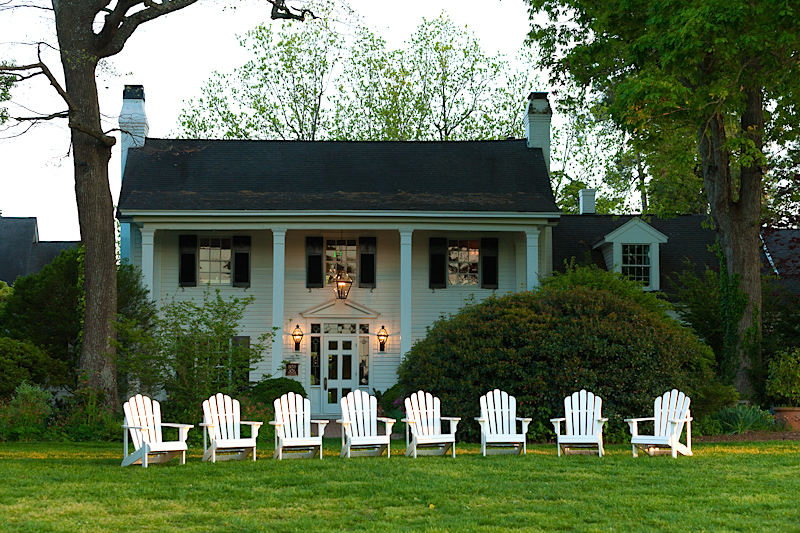
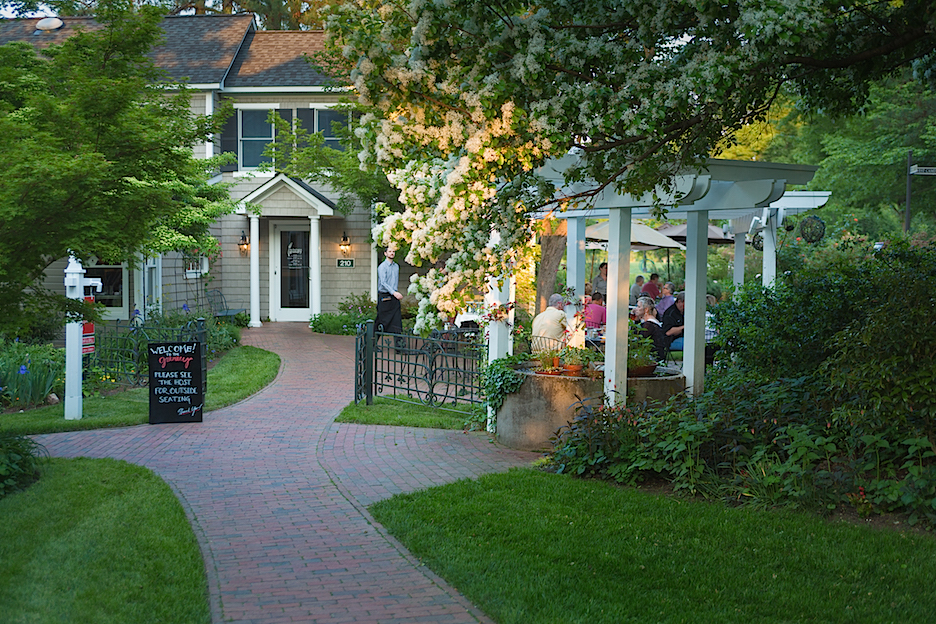
2015-06-08-1433770622-1732772-FEARRINGTONINNRestaurantExterior.jpg

It may someday occur to certain Southern politicians that the greatest boost for a state’s economy and ability to attract top talent in every field is higher education and world-class medical centers. And where those institutions are strong, so, too, are tourism and good restaurants.

Nowhere is this clearer than North Carolina’s great Research Triangle–Raleigh, Durham and Chapel Hill–whose schools (NC State, Duke and UNC) are among the most respected in the nation, with a spill-over factor in the hospitality industry that caters to doctors, professors, lawyers, artists and the tourists who visit these booming cities and partake of their genteel form of Southern hospitality. (The state itself is the sixth most visited in the U.S.)

One of the loveliest and most evocative places at which to experience North Carolina culture is the Fearrington House Inn within Fearrington Village, a planned community of 2,000 residents in a quiet, kempt neighborhood within the town of Pittsboro, near Chapel Hill and about a 20-minute drive from Raleigh/Durham Airport. The whole enterprise, now 40 years old, was built by developer R.B. Fitch and his late wife, Jenny, who modeled Fearrington Village after the quaint villages of England.

2015-06-08-1433770742-6240737-ficows.jpg

The land was for two centuries a working farm, as it is today. The farm’s animals include a rare breed of 30 Scottish black-and-white Belted Galloway cows (introduced to the U.S. in the 1950s), as well as a recent arrival–a newborn donkey.

Over time the Fitches added the Roost beer garden, boutiques, a deli, McIntyre’s bookstore (below),whose Cooks Books series has visiting authors speak and sign their work, a casual restaurant called The Granary, and an award-winning restaurant next to the Inn in the Village Center. There is also a farmers’ market featuring artisanal local foods and a brand new pizzeria on premises.

2015-06-08-1433770935-6834926-FEARRINGTONINNMcIntyresBooksInterior.jpg

I had the pleasure to stay at the luxurious 32-room inn last month, visit some of the spacious homes on the property and dine at the restaurants. I had expected my stay to be relaxing, quiet, and removed from any urban intrusions, yet I never felt “out in the boondocks” as at the reclusive Greystone Inn on Lake Toxaway in the western part of the state. I entered my suite (there are four room categories) through a courtyard garden of roses, whence come the room’s fresh flowers. The well lighted, tiled bathroom was as large as the bedroom, which was fitted out in a blend of contemporary and 19th century motifs. The living room, with a working fireplace (below), antiques, potted plants, and array of art books and style magazines, portends a high probability that you’ll slump into a long afternoon nap on the couch.

2015-06-08-1433770905-7641100-frroomwithfireplace.jpg

There is free WiFi, complimentary breakfast, afternoon tea, and at turn-down they bring a bottle of Rozès Port and housemade chocolate truffles. The Spa is first-rate–my long nap followed a dream-inducing massage–while the Duke Center For Living in Durham is an off-premises option. There are bucolic walking trails that pass the animal enclosures, slatted white wooden chairs dotting the lawns, and a very rustic, large barn used for parties and wedding receptions.

2015-06-08-1433770780-6307567-figranary.jpg

The Granary (above), which was in fact where grain had been stored, has a good bar, a casual but very loud ambiance, and a far more ambitious menu than you might think, thanks to British-born chef Colin Bedford, who serves up everything from sweet tea chicken wings ($6) and smoked barbecue ribs ($11) to very good seasonal soups ($5-$8) and a twice-baked goat’s cheese soufflé with beets, spinach, watercress and pecans ($10). On the pasta section, the unorthodox linguine chicken carbonara with crispy egg, bacon jam, oyster mushrooms and Parmesan supreme sauce ($23) is an overwrought mess, but the fried chicken with ranch dressing, baked macaroni, broccolini and garlic butter ($22) raises that Southern staple to a new level of complementary flavors and texture. Best of all items I tasted was grilled meatloaf with fingerling potatoes, red cabbage, and red wine sauce ($20), another sensible elevation of downhome cooking that shows off Bedford’s way with tradition teased by bright new ideas.

The Granary’s wine list, put together by sommelier Max Kast, is remarkable for a place this casual, as is the beer collection–with brews from Winston-Salem, Durham and Mills River–and the bourbon and Single Malt categories. Kast’s real prowess, however, is shown on the award-winning wine list of 1,500 labels and 6,000 bottles at the fine dining Fearrington House Restaurant, which has added a great deal of luster to the Inn’s prestige.

The Fearrington House Restaurant (below) is set in a series of small dining rooms, each done in a style of an affluent landowner whose family goes back a long ways. Neither ornate nor colorful, except for gorgeous profusions of flowers, the rooms are tasteful, impeccably set with fine linens and glassware, and very graciously overseen by general manager Theresa Chiettini and maître d’ Joris Haarhis. I wasn’t trying to be churlish when I asked if the room’s somber, low lighting could be turned up just a hair, with the result that the diners in the room all became livelier and more engaged in the evening.

2015-06-08-1433770812-1847467-FEARRINGTONINNDR.jpg

There is a great deal of color on Bedford’s plates. He’s a big, strapping Brit, but he has a very delicate hand in his cuisine, and he knows well the value of acidic counterpoint to brighten every element of a dish, best appreciated in his $150 tasting menu or $125 vegetarian menu. (Otherwise three courses are $95, four $105.) To begin, Bedford sends out beautifully composed canapés and amuses that might include a tiny potato with hasselback roe, sherry and mustard gels, chive crème, cheddar, marinated pork rind, and pickled okra, or perhaps a salad of white asparagus and flounder in a pastry next to candied lemon jelly, smoked brown butter and arugula.

2015-06-08-1433770856-2686952-FEARRNGTONINNrabbit.jpg

Bedford’s is a complex cuisine with many elements on every plate that sometimes hint at Modernism, like the ash that accompanies pressed foie gras and chicken with carrots, pickled ramps, truffle, Muscat and fava beans. However, the less contrived, the better the food is, like a lovely Parmesan custard with marinated asparagus, purple sweet potato dashed with Sherry, spring onions, sweet peas, and mustard seeds that lend aroma to the dish. Hamachi is cured in lemon and takes on wonderful nuance from tea, with rhubarb avocado, fennel and, unnecessarily, nasturtiums.

Among the second courses that impressed me was fat quail wrapped in prosciutto with peas and morel mushrooms, seasoned with more mustard seeds and accompanied by sorrel, a roast chicken cream and tang of lemon. A delicious vegetable dish was truffled polenta–down here called grits–with a “62-degree egg” that softens and oozes over the cornmeal, with wild mushrooms, sherry vinegar for spark, crushed porcini and asparagus. The excellence of Bedford’s products is obvious in his loin of lamb with garlic, caramelized fennel, a touch of honey to sweeten it, goat’s cheese to provide a creamy note, cauliflower and baby onions.

These were middle courses, for still to come was dry-aged beef bavette with morels and melted onions with radish, ramps and a dash of vermouth; bacon-wrapped rabbit (above) with Mediterranean spices and hummus; and seared halibut with whipped potatoes and smoked avocado, malt vinegar–that welcome acid element–and yellow split peas.

There are pre-desserts like “de-constructed Key lime pie,” as well as a pre-cheese item, that night an espuma of Brie with beets and onion. Desserts are as lavish as everything else, including a bittersweet chocolate ganache with Mandarin orange, almond and mint, and a delightfully updated, very moist carrot spice cake with brown sugar, meringue and poppy seed.

To say that Fearrington House Inn and Restaurant is a special place is merely to lump it with many other charming inns in America. And the term “planned community” connotes sterile, cookie-cutter developments like Water Color in South Walton, FL. Fearrington House Inn is a rarer breed of refined resorts that has given it entry into the prestigious, worldwide Relais Chateaux collection.

Fearrington’s location close to the Research Triangle gives guests easy access to the area’s attractions, and there is certainly nothing sterile about its custom-built homes or the working farm or the darling Village Center, which all achieve a convenient balance of Southern tradition and evolving contemporaneity. Both in and out of the restaurant, there is very good taste exhibited in every corner, every garden, the silo and barn and bookstore, which keeps Fearrington firmly anchored in one of the most attractive, historic and appealing states in the South or anywhere else in the Union.

Tagged with:

ETB Goes Non-GMO


–>
and imageUrl: http://visit-nc.com/wp-content/plugins/RSSPoster_PRO/cache/4a177_222037LOGO –>


–>
and imageUrl: http://visit-nc.com/wp-content/plugins/RSSPoster_PRO/cache/a3749_222036-INFO –>


TripAdvisor Logo. (PRNewsFoto/TripAdvisor)

www.etbfit.com
Facebook
Twitter
Pinterest


www.etbfit.com
Facebook
Twitter
Pinterest


  • left
    0
    www.etbfit.com
    https://photos.prnewswire.com/prnfull/20150610/222037LOGO
    https://photos.prnewswire.com/prn/20150610/222037LOGO
    https://photos.prnewswire.com/prnthumb/20150610/222037LOGO
    http://visit-nc.com/wp-content/plugins/RSSPoster_PRO/cache/4a177_222037LOGO
    http://visit-nc.com/wp-content/plugins/RSSPoster_PRO/cache/4a177_222037LOGO

    and http://visit-nc.com/wp-content/plugins/RSSPoster_PRO/cache/4a177_222037LOGO –>

    left
    0
    www.etbfit.com
    https://photos.prnewswire.com/prnfull/20150610/222037LOGO
    https://photos.prnewswire.com/prn/20150610/222037LOGO
    https://photos.prnewswire.com/prnthumb/20150610/222037LOGO
    http://visit-nc.com/wp-content/plugins/RSSPoster_PRO/cache/4a177_222037LOGO
    http://visit-nc.com/wp-content/plugins/RSSPoster_PRO/cache/4a177_222037LOGO

    and http://visit-nc.com/wp-content/plugins/RSSPoster_PRO/cache/4a177_222037LOGO –>
    www.etbfit.com


  • left
    0
    www.etbfit.com
    http://visit-nc.com/wp-content/plugins/RSSPoster_PRO/cache/88263_222036-INFO
    https://photos.prnewswire.com/prn/20150610/222036-INFO
    https://photos.prnewswire.com/prnthumb/20150610/222036-INFO
    http://visit-nc.com/wp-content/plugins/RSSPoster_PRO/cache/a3749_222036-INFO
    http://visit-nc.com/wp-content/plugins/RSSPoster_PRO/cache/a3749_222036-INFO

    and http://visit-nc.com/wp-content/plugins/RSSPoster_PRO/cache/a3749_222036-INFO –>View full size

    left
    0
    www.etbfit.com
    http://visit-nc.com/wp-content/plugins/RSSPoster_PRO/cache/88263_222036-INFO
    https://photos.prnewswire.com/prn/20150610/222036-INFO
    https://photos.prnewswire.com/prnthumb/20150610/222036-INFO
    http://visit-nc.com/wp-content/plugins/RSSPoster_PRO/cache/a3749_222036-INFO
    http://visit-nc.com/wp-content/plugins/RSSPoster_PRO/cache/a3749_222036-INFO

    and http://visit-nc.com/wp-content/plugins/RSSPoster_PRO/cache/88263_222036-INFO –>

    www.etbfit.com


CHARLOTTE, N.C., June 10, 2015 /PRNewswire/ — ETB North America, LLC (www.etbfit.com), one of the fastest growing sports nutrition companies in the United States and the makers of Eat The Bear protein, announced today that it has reformulated its flagship whey protein isolate using non-GMO isolate creating the pre-eminent pure whey protein on the market.  As a leading provider of premium protein products in the sports nutrition category, ETB’s brands align with consumers’ focus on clean and lean sports nutrition while further diversifying its portfolio and broadening the appeal to younger consumers. The reformulation to include non-GMO whey protein isolate, in addition to the company’s burgeoning product portfolio, enhances the resources and capabilities for ETB to further develop as an industry leader in innovation, consumer experience and retailer and distribution relationships.

ETB, founded in 2011 and operating from its headquarters in Charlotte, N.C., has remained a privately owned and operated business from its inception.  The company produces a complete line of sports nutrition products, including powders, capsules, and will soon be pioneering liquids and bars under the Eat The Bear brand.  The owner and closely guarded team remain committed to the company’s growth and continue to be involved in all aspects of the day-to-day operations despite the incredible growth in under five years.

“We are excited for the future of the company and are fully confident that aligning our team’s knowledge and experience in the sports nutrition world on balance with an increasingly astute and demanding consumer will help the company establish an even stronger portfolio of brands and products,” said ETB Chief Operating Officer Drew Gehringer.  “Over the last 5 years we’ve developed one of the most genuine product portfolios in the industry to offer consumers a clean and lean alternative in the category.  This next step in the company’s growth story will enable ETB to continue its leadership role in the industry and be a part of a growing company along with strategic partners for greater resources.  The ETB family is extremely proud of where the company sits today and grateful to the passionate people who support our Eat The Bear lifestyle predicated on overcoming obstacles and pushing through life’s challenges.”  

“We view this new opportunity to meet our customers’ requirements and as a tremendous way to expand the ETB brand presence on the domestic, and forthcoming global scale aligning the company with our partners, team members and consumers,” said Vice President of Sales, Casey Cittadino who recently joined the company. ETB is confident in the direction of the brands and looks forward to sharing the brand’s experiences with consumers around the country and eventually around the world.”  Although no deal has been reached there are ongoing dialogues with investors to enhance the firm’s growth story.

About ETB North America, LLC
ETB North America, LLC, is one of the fastest growing sports nutrition companies in the United States and provides consumers with a clean and lean alternative to help health and wellness, active lifestyle, and diet enthusiasts achieve pure performance.  The company was founded in 2011, and operates at its headquarters in Charlotte, NC. The ETB team is dedicated to working with customers, athletes, trainers and nutritional experts to pioneer sports nutrition.  ETB helps customers of all ages and fitness levels and was named as a finalist in the Men’s Health Top 10 list for the flagship pure whey isolate protein within only the first three years of operations.  For more information please visit www.etbfit.com or call 1-888-847-1272.

Logo – http://photos.prnewswire.com/prnh/20150610/222037LOGO

Photo – http://photos.prnewswire.com/prnh/20150610/222036-INFO

SOURCE ETB North America, LLC

RELATED LINKS
http://www.etbfit.com

Tagged with:

Officials make test run of passenger ferry; may help tourism

OCRACOKE, N.C. (AP) — Officials in North Carolina have tested a 91-foot passenger ferry from Boston that they hope will help reverse a trend of declining tourism on the Outer Banks.

The Virginian-Pilot of Norfolk reports (http://bit.ly/1PdNKIq ) the Provincetown III was used for trips between Hatteras and Ocracoke last week, which were part of a study conducted by a Raleigh company to determine how to cut down on long lines and improve tourism on Ocracoke Island.

Volkert Inc. plans to complete its study by the end of the year.

The N.C. Department of Transportation signed an agreement with Bay State Cruise Co. to charter the Provincetown III for test runs between Hatteras and Ocracoke. It’s a catamaran-style ferry that is 98 feet long and carries 149 passengers. It services the Boston to Provincetown route in the summer and works in the Caribbean in the winter. The ship was on its return voyage north when it stopped in North Carolina.

Ferry Division statistics show the number of vehicles using the six Hatteras ferries last summer dropped to 115,000, compared to an average of 139,000 over the previous three summers.

Hyde County Manager Bill Rich also says tourists visiting Ocracoke fell by 450 people a day.

In 2013, the traditional Hatteras-Ocracoke route shoaled badly, forcing the U.S. Coast Guard to designate a longer 8-mile path. Travel time to Ocracoke’s east docks doubled to about an hour.

The extended route has meant fewer trips and caused longer car lines. Tourists are skipping Ocracoke, where a community of about 1,000 depends on visitor spending in downtown shops.

In test runs last week, the passenger ferry reached the west docks near downtown in the same time. Hatteras ferries typically land at the northeast end where passengers still have a 15-minute drive to the village.

“I am very excited about this passenger ferry,” said Carol Pahl, owner of Annie’s Treasures and Ocracoke Restoration. “We will be within walking distance.”

Hyde County and Ocracoke plan to run a tram from the ferry dock to downtown, according to Rich. Golf cart and bike rentals would increase on the island.

___

Information from: The Virginian-Pilot, http://pilotonline.com

Tagged with:

Affordable housing big winner at City Council meeting – Asheville Citizen

Raising property taxes, increasing funding to affordable housing and boosting the allocation to the local chamber of commerce dominated the discussion city council members had Tuesday after a public hearing on Asheville’s proposed fiscal year 2015-16 budget.

City Council won’t vote to adopt a budget until its regular meeting June 23.

In a separate vote, City Council approved a seven-year plan to address Asheville’s affordable housing crisis.

Council members considered not imposing the 1.5-cent property tax increase that would add $30 to the annual tax bill for the owner of a home valued at $200,000.

In the end, only Councilman Chris Pelly opposed the tax-rate increase to 47.5 cents per $100 valuation.

Mayor Esther Manheimer said the tax increase would “help fund things that don’t go away,” including increases in city employee salaries and a commitment to providing a living wage for part-time and seasonal workers.

“If we’re going to ask the city manager not to do a tax increase, we’re looking at a different budget,” Manheimer said.

A lengthy discussion on increasing funding for affordable housing resulted in keeping the level of the Asheville Housing Trust Fund at $500,000.

That amount could be raised later this year, however, through a budget amendment if city officials receive applications for large projects that would require more money, the mayor and City Council members said.

A majority of council members expressed disappointment in their Asheville Area Chamber of Commerce colleagues for not being better partners.

They specifically referred to commerce officials not supporting a move to allocate some of a proposed occupancy-tax increase to city coffers. If that were to happen, city officials could use that extra money to pay for infrastructure and police and fire service expenses, for example.

But a bill in the North Carolina General Assembly to raise the room tax to 6 percent from 4 percent would continue to fund the Asheville area’s tourism marketing efforts.

Council members considered rejecting an increase to $100,000 from $60,000 for the chamber.

But a majority chose to keep the $40,000 raise intact.

“We shouldn’t punish the (Asheville Buncombe County Economic Development Coalition) when we’re really mad about the (occupancy tax) funding situation,” Manheimer said.

The affordable housing plan would create 2,800 new rental units by the end of 2022.

Financial resources such as the Asheville Housing Trust Fund and regulatory tools such as zoning changes would help officials attain the total of 2,800 units.

“This gets us halfway there,” Councilman Gordon Smith said. “This is a bold and important step we’re taking tonight.”

A report late last year showed the Asheville Metro area — consisting of Buncombe, Haywood, Henderson and Madison counties — having a roughly 1 percent rental vacancy rate.

That report also projected a gap of 5,575 units for households earning 120 percent or less of median income.

The Asheville and Buncombe County need for households earning 80 percent of median income or less is 4,175 units.

“I’m not one to be shackled by what’s possible right now,” Smith said. “I know there’s a way to get another 2,800 units. We’re going to need more partners. We invite more people to join with us.”

Total spending for the general fund, which accounts for most city functions not primarily paid for by fees and other charges, would increase from $99.5 million budgeted in the current fiscal year to $103.1 million in the next.

City workers would get a 1 percent pay raise.

Tagged with:

Morrisville, NC DOT jointly funding McCrimmon Parkway extension

The state has saved Morrisville officials from the hard choice of going over budget or dramatically scaling back plans for the anticipated McCrimmon Parkway extension.

But the decision could come at the expense of the $14 million Western Wake Competition Center, which needs the road to be completed to become a reality.

The state Department of Transportation decided in May to contribute $10.9 million to help the town complete the road. With the town contributing an additional $14.3 million, the road likely would be finished by 2020 or 2021, which is several years past the original timeframe of December 2017.

In accepting the state’s help and the longer timeline, the town could put the Western Wake Competition Center project in jeopardy. The privately owned center, which will have hockey, volleyball and gymnastics facilities, needs to have the road completed near the property for construction crews and visitors. And it needs to be built by 2018 to receive $3 million in county funding.

The Town Council decided to take that risk after hearing a solution might be found for building the center.

“We don’t think that this should be something that holds us back on choosing the partnership with the DOT,” Assistant Town Manager Tony Chiotakis said at a recent meeting.

Jeff Ammons, whose Raleigh-based Ammons Building Corp. is behind the athletics center, said he also is optimistic about opening within the next several years.

Ammons received a $3 million pro-tourism grant from Wake County to build his center. It’s expected to host tournaments, camps and training events.

“Everything’s still kind of up in the air,” Ammons said. “We’ll just have to wait and see.”

A necessary project

In 2012, Morrisville residents passed a bond referendum that included $14.3 million to extend McCrimmon Parkway.

The new parts of the road will go northeast from the intersection with N.C. 54, parallel with Perimeter Park Drive, then connect to an existing, unconnected part of McCrimmon that crosses Perimeter Park Drive. It would then swing back south to connect with Aviation Parkway at Evans Road.

It’s intended as a bypass for the congested N.C. 54, which is only two lanes throughout much of Morrisville, despite being one of the busiest roads in town.

But after going through some initial design phases, town staff realized the extension would be several million dollars over budget.

“We were looking at $17.3 million,” public works director Blake Mills said. “And we knew, ‘This is not gonna fly, we have to come up with a new plan.’”

The DOT heard about the town’s plans and, since it had its own plans scheduled for the same area, offered to partner up.

Now with the state’s help, the town has the option to deliver an even better road than initially planned, with more lanes and other road features.

The tradeoff is more time lost to additional paperwork, planning and contract negotiations.

Both Ammons and Morrisville town staff, however, said they think they’ll be able to come up with some way to accommodate the competition center while still pushing forward with the larger plan for McCrimmon Parkway.

Chiotakis told the town council he is “optimistic we are going to get it worked out” and that he and Ammons have been discussing options for interim access before the bigger road comes past the property.

“There’s a couple other options floating around out there, but I don’t want to get into any of those details just yet,” Ammons said.

The new plan will be broken up into phases. The northern part is now scheduled for completion in March 2018.

The southern part – the part whose completion is connected to the Western Wake Competition Center – wouldn’t be done for another two or three years after that, said Joe Hopkins, a DOT engineer who will be working on the project.

Despite the wait, Hopkins recently told the Morrisville town council that the project will be good for residents because Morrisville already has many congested roads that need help.

“And this will be the first step in that,” he said.

Doran: 919-460-2604; Twitter: @will_doran

Tagged with:
Top