St. Pete Preservation supporters packed the St. Pete Museum of History’s ballroom Monday night to hear from a national expert on local historic designations. The group is embroiled in an effort to make the process of designating neighborhoods as local historic districts easier and is fighting back fierce opposition.
Donovan Rypkema is a writer and preservation expert. He’s in town to present recent findings of a Main Street study. Main Street districts overlap a great deal with local historic designation. Rypkema’s niche, he said, is finding the intersection of historic preservation and economic development.
Rypkema highlighted four areas in which historic designation benefits communities – downtown revitalization, heritage tourism, property values and jobs.
A North Carolina study of Main Streets looking at economic development using historic resources found there was an additional $2 billion investment and a 4,500 net growth in businesses. For every $1 the state contributed, $145 of investment went in to the average Main Street.
“There is no economic development program that’s more cost effective than Main Street,” Rypkema said.
And Rypkema found that in Philadelphia, heritage tourism represented a $3 billion industry creating 45,000 jobs. Obviously Philadelphia’s heritage tourism industry is going to be among the most robust in the nation based on its historical ties to the birth of our nation, but Rypkema’s findings were relevant in other places as well.
“Let’s look at Arkansas,” Rypkema said to a chorus of laughter.
People traveling to Arkansas for heritage tourism spend 30 percent more than those traveling for other reasons. The industry represents more than 20,000 jobs and $74 million in tax revenue.
While Florida’s main tourism draw is its beaches, Rypkema reported 46.7 percent of tourists reported visiting a historic site. And a survey of international tourists indicated that 470,000 more tourists go to a historic site while on vacation than go to an amusement park.
The data he provided builds a case for preservationists as they face a major City Council decision Thursday. Council will vote whether or not to lower the threshold for neighborhoods to submit applications to receive local historic designation. The current threshold is 2/3 of all homeowners must vote in favor. Preservationists say that bar is too high because many homeowners are absentee and a non-vote is the same as a no-vote under the current model.
Supporters of an ordinance change want the city to instead require a majority of only those who vote to affirm the application process.
Opponents have cited a number of reasons why the ordinance change is a bad idea. Among those are that local historic designation, and the additional regulations it comes with, would devalue properties.
Rypkema argues the opposite is true. When looking at property values in Philadelphia over a 30-year period, homes in locally designated historic districts appreciated by 22.5 percent. Homes located in districts with only national historic designation, a largely symbolic classification, only rose 14 percent.
In San Antonio the average property value of neighborhoods with no historical designation at all was just 22 percent. Homes in nationally registered neighborhoods appreciated by 28 percent and those in local historic districts rose 32 percent.
“Nobody is paying the premium to go before a commission,” Rypkema said referring to the process by which homes in local historic districts must go through to make major changes to their home. “They’re paying a premium for protection against the loon across the street.”
That reference was to homeowners who buy up property only to demolish the old structure and replace it with a new one. That is the fear among preservationists who worry about the historic charm of neighborhoods like Old Northeast or Historic Kenwood being knocked out one wrecking ball at a time.
Opponents also arguehistoric designation would require homes to sacrifice energy efficiency. The most specific example to that is window replacement. Supporters have debunked claims that homeowners would not be allowed to replace original windows with more efficient ones.
And Rypkema made the argument that restoration of existing structures is more sustainable than building new ones – even if the proposed construction is green. He referenced a study launched by New York City former Mayor Mike Bloomberg that looked at energy efficiency in hundreds of buildings.
The study found the buildings using the least amount of energy were those that were constructed before 1930. Further, the newer the building was, the more energy is used.
Rypkema also looked at a number of other components of historic designation. He pointed out that locally designated historic districts had foreclosure rates far lower than those not designated.
“I think the reason is, when I get in financial trouble I can get that property sold,” Rypkema said.
Locally designated historic neighborhoods felt the effects of the Great Recession later and recovered sooner.
Rypkema also said businesses in historically designated neighborhoods had a closure rate far lower than the national average.
St. Pete Preservation handed out post cards at the presentation with a photo of the Soreno Hotel on Beach Drive that was demolished in 1992 with the words “Preserve the ‘Burg” at the bottom. Supporters were asked to fill the post card out and mail it to St. Pete City Council.
So far, correspondence to City Council through emails has weighed in favor of opponents. However, those numbers do not take into consideration personal correspondence like post cards, letters and phone calls.
Saylors Crossroads could be described as being in the middle of nowhere.
Or it could be called the center of the universe.
It depends on your point of view.
On a map, it is equidistant between Anderson and Due West and slightly south and west of the towns of Honea Path and Belton.
“It’s a good location for day-trippers going to concerts or shows in Abbeville and Newberry and, within a couple of hours, we can be in Asheville, Atlanta or Columbia,” according to resident Heidi Trull.
And for those who love food, Saylors Crossroads is a destination in itself.
Trull and her husband, Joe, are chefs/owners/operators of Grits Groceries, a restaurant on the southwest corner of Saylors Crossroads, at S.C. 185 and S.C. 284.
The couple moved to South Carolina when Heidi, a Pinewood native, was expecting their first child. They first looked to purchase land around Manning, with the idea of starting their own restaurant, but that deal fell through. While traveling the state to look at other property, the Trulls kept passing through Saylors Crossroads.
They ended up purchasing two acres of land containing two buildings – a store that was “four walls with a single light fixture,” said Heidi, along with a house where they now live. The store was perfect for Heidi’s plan to open a restaurant and soon, with a few modifications, Grits Groceries came into being.
“We’re happy here,” said Heidi. “I can walk across the yard to work, take my son to school, pick him up in the afternoon and we can have dinner together at night.”
The Trulls brought a rich history of work experience in opening Grits Groceries. Heidi graduated from Johnson Wales, then went on to work with Chef Elizabeth Terry at Elizabeth’s in Savannah, the Ritz-Carlton in St. Louis and then with Chef Emeril Lagasse at NOLA in New Orleans. After a few years with Lagasse, she opened Elizabeth’s Restaurant in New Orleans.
Joe began his career in his grandfather’s bakery in Winston-Salem, N.C. He then did stints as the pastry chef at La Chaudiere in Winston-Salem, the Glendale Springs Inn Restaurant (where he met Heidi in 1990 during her apprenticeship there), The Market Place in Asheville and Blue Moon Bakery and NOLA in New Orleans.
With Grits Groceries, the Trulls wanted to create a fun and casual atmosphere, something just a little removed from their fine dining background.
The restaurant serves “eclectic soul food,” according to Heidi. “It’s using the best ingredients, cooked the way your grandmother would cook.
“We’re not trying to re-invent the wheel. … I just want to ride the hell out of it.”
She likes to “keep the tax dollars in the ZIP code,” and so her first choice is produce sourced from within a 100-mile radius of the restaurant.
In the beginning it was difficult to get across to growers and producers the amount of fresh, local produce that is needed to sustain the Grits and Groceries menu.
Now, Heidi works with small local farmers as well as growers like Penny Parisi in Abbeville and Hurricane Creek Farms in Pelzer to grow larger amounts of vegetables specifically for the restaurant.
Heidi tells of a local forager who brings in fresh chanterelle mushrooms when in season, and the rancher just up the road who raises cattle, from whom the Trulls purchase one cow a month for fresh beef.
Typically, Heidi will get an email from her suppliers on Sunday letting her know what will be available in the coming week. From that list, she and Joe will create the week’s menu for Grits Groceries. A recent weekly menu included grilled chicken with fresh peas and beans, a tomato sandwich salad and Greek meatloaf with roasted potatoes and marinated cucumbers and onions.
Trull’s customers include locals, day trippers from the Midlands and other parts of the Upstate, and folks who purposely seek out Grits Groceries based on profiles that have appeared in national media, including The New York Times, GardenGun magazine and CNN.
One of those who seeks out the restaurant is Teresa Hutchinson, who has been making the drive from Spartanburg to tiny Saylors Crossroads “since the place opened.”
“My favorite is the Palmetto burger,” she said on a recent visit. (That hamburger is made from local beef and topped with a big scoop of homemade pimento cheese; $9.50, with fries.)
That’s not to say that everything has been rosy for the Trulls or the restaurant.
During the most recent economic downturn, breakfast service was temporarily discontinued. Being the sole source of income for seven area families – the cooks, waitresses and other restaurant staff – the couple tried everything they could to stay afloat.
They started marketing homemade jams, jellies and relishes on the restaurant’s website, selling pre-made meals at the Greenwood and Anderson farmers markets, and putting together Heidi’s second cookbook (due out in time for the holidays). Their son has gotten into the act by maintaining a feed station for the neighbor’s goats. Customers (adults and children) can buy feed at Grits and Groceries and hand feed the small herd across the street.
“We made a conscious decision to be a part of this community and to make a difference,” Heidi said.
Things eventually turned around, and Grits Groceries is back serving breakfast and lunch Tuesday through Saturday and dinner on Thursday. The restaurant is reasonably priced – sandwiches range from $6.50 for homemade chicken salad or pimento cheese to $10.50 for a New Orleans shrimp po’ boy. Thursday’s dinner service gives the Trulls a chance to show off their culinary skills (prices range from $8 burgers to $18 pork or beef steaks with seasonal vegetables).
Most customers save room for dessert. Joe’s signatures include peanut butter banana cream pie, vanilla root beer malted pound cake and seasonal ice creams (buttermilk-lemon, cinnamon, and fig were some of the flavors listed on a recent Grits Groceries menu board).
Heidi recently was named one of four Chef Ambassadors for the state by the S.C. Department of Agriculture. The selection recognizes her commitment to sourcing foods locally through the Certified SC Grown program and for striving to make Grits Grocery a destination. As a Chef Ambassador, Heidi has done cooking demonstrations at area farmers markets and participated in the Atlanta Food Wine Festival and the Southeastern Wildlife Exposition in Charleston.
“I’ve seen what happiness is,” Heidi said of her restaurant and life in Saylors Crossroads, “and I’d like to keep on cooking.”
Savory Catfish Cakes
Makes 6 cakes
1 pound catfish fillets
salt and pepper to taste
3 tablespoons olive oil
1/2 cup chopped onion
2 teaspoons chopped garlic
2 teaspoons creole seasoning (recipe below)
2 tablespoons chopped fresh parsley
2 teaspoons chopped fresh thyme
2 tablespoons flour
1 egg
2 cups breadcrumbs
1/4 cup vegetable oil for frying
Remoulade sauce (recipe below)
Season catfish with salt and pepper, to taste.
Heat 2 tablespoons of olive oil in a large skillet over medium-high heat. Add catfish and cook until just opaque in the center, about 4 minutes per side. Transfer catfish to a plate to cool.
Heat remaining tablespoon of olive oil in skillet and saute the onion until soft, about 5 minutes. Add the garlic and creole seasoning and cook another 30 seconds. Remove from heat and let cool.
Flake catfish fillets into a large bowl. Add onion-garlic mixture, parsley, thyme and flour. Season with salt and pepper to taste. Mix in egg. Shape mixture into six 3-inch diameter cakes. Coat the cakes with breadcrumbs. Heat vegetable oil in skillet over medium-high heat. Add fish cakes and cook until brown and crisp, about 6 minutes per side. Serve with remoulade sauce.
Heidi Trull, “Grits and Groceries: Real Food Done Real Good”
Creole Seasoning
Makes about 3/4 cup
2 tablespoons paprika
2 tablespoons kosher salt
2 tablespoons garlic powder
1 1/2 tablespoons black pepper
1 tablespoon onion powder
1 tablespoon cayenne
1 teaspoon celery salt
1 teaspoon oregano
1 teaspoon thyme
Combine all ingredients in a medium bowl and mix thoroughly. Store in an airtight container.
Heidi Trull, “Grits Groceries: Real Food Done Real Good”
Remoulade Sauce
About 6 cups
4 cups mayonnaise
1/2 cup dill pickle relish
1/2 cup diced green bell pepper
1/2 cup diced onion
1/4 cup finely chopped tarragon
2 tablespoons creole mustard
1 hard-boiled egg
1/4 teaspoon creole seasoning (recipe above)
1 1/2 teaspoons black pepper
1 1/2 teaspoons chili garlic sauce
Combine all ingredients in a blender. Process on high until relatively smooth.
Heidi Trull, Grits Groceries: Real Food Done Real Good
If you go
Grits Groceries
Location: 2440 Due West Highway, Saylors Crossroads, Belton (about a two-hour drive from Columbia); (864) 296-3316, www.gritsandgroceries.com
Hours: Open Tuesday through Thursday, 10 a.m.-2 p.m.; Friday and Saturday, 9 a.m.-2 p.m.; Thursday dinner, 5-9 p.m.
CHARLOTTE, N.C., Aug. 18, 2015 /PRNewswire/ — FairPoint Communications, Inc. (Nasdaq: FRP) (“FairPoint” or the “Company”), a leading communications provider, today announced it has accepted $37.4 million in annual support from the Federal Communications Commission’s (FCC) Phase II of the Connect America Fund (CAF). By accepting these funds, the Company is committing to construct and operate network infrastructure and offer broadband service speeds of at least 10 Mbps download and 1 Mbps upload to approximately 105,000 locations in 14 states. The support program and the FairPoint commitment run over six years.
“FairPoint enthusiastically supports the positive intent of CAF Phase II to bring broadband to underserved areas of the United States, and we are excited to participate in this FCC-administered program,” said Chief Executive Officer Paul H. Sunu. “We are committing hundreds-of-millions of dollars in capital to build and upgrade infrastructure in our service territories to extend affordable broadband services to remote areas which will help businesses and residents alike stay connected to the world.”
The FCC developed CAF as a part of its mandate to shift federal support from voice service in high cost service areas to broadband build out and operation in high cost service areas. Under Phase I of CAF, over the last three years, FairPoint has successfully delivered upgraded broadband service to over 7,400 locations in unserved and underserved areas utilizing $4.9 million of incremental federal support and the Company’s own capital. CAF Phase II will accelerate the FCC’s mandate by explicitly supporting the development and operation of broadband in high cost service areas.
Qualifying locations eligible for service as a part of the six-year build are determined by the FCC. The Company’s election to accept CAF II funding is required on a state by state basis, and while some locations will prove to be uneconomical to serve, the Company made its acceptance decisions based on many factors including the totality of the business and regulatory model for each state. Following thorough evaluation, FairPoint has accepted support for 14 states and declined the offers for its service areas in Colorado and Kansas. FairPoint remains committed to all of its customers and will continue to make investments in its network as well as evaluate the competitive bidding process in Colorado and Kansas as prescribed by the FCC.
2015 Guidance
For fiscal 2015, the Company expects that it will no longer be eligible to receive its current high cost voice support of $39.3 million (“CAF frozen support”), subject to certain transition rules. The net impact of no longer receiving this revenue while accepting $37.4 million in CAF II funding as well as $7.4 million in transitional support will be offset by incremental spending associated with CAF Phase II in 2015. As a result, the Company is maintaining its guidance for Unlevered Free Cash Flow of $115 million to $125 million for the year, adjusted for Estimated Avoided Costs in the first quarter, and, despite a higher capital plan following acceptance of CAF II funding, continues to expect its annual capital expenditures to be less than $120 million in 2015. Unlevered Free Cash Flow refers to Adjusted EBITDA minus capital expenditures, pension contributions and cash payments for other post-employment benefits.
Consistent with others in our industry, FairPoint expects to recognize both the CAF II and transitional support as revenue, similar to historical treatment of CAF frozen support.
Use of Non-GAAP Financial Measures
This press release includes certain non-GAAP financial measures, including but not limited to Adjusted EBITDA, Adjusted EBITDA minus Estimated Avoided Costs, Unlevered Free Cash Flow and Unlevered Free Cash Flow minus Estimated Avoided Costs, and the adjustments to the most directly comparable GAAP measure used to determine the non-GAAP measures. Management believes Adjusted EBITDA provides a useful measure of covenant compliance and Unlevered Free Cash Flow may be useful to investors in assessing the Company’s ability to generate cash and meet its debt service requirements. The maintenance covenants contained in the Company’s credit facility are based on Consolidated EBITDA, which is consistent with the calculation of Adjusted EBITDA.
For purposes of calculating Adjusted EBITDA (in accordance with the definition of Consolidated EBITDA in our credit agreement), costs, expenses and charges related to the renegotiation of labor contracts including, but not limited to, expenses for third-party vendors and losses related to disruption of operations (including any associated penalties under service level agreements and regulatory performance plans) are permitted to be excluded from the calculation. We believe this includes, among others, the costs paid to third-parties for the contingent workforce and service quality penalties due to the disruption of operations. On October 17, 2014, two of our labor unions in northern New England initiated a work stoppage and returned to work on February 25, 2015. As a result, significant union employee and vehicle and other related expenses related to northern New England were not incurred between October 17, 2014 and February 24, 2015 (the “work stoppage period”). Therefore, to assist in the evaluation of the Company’s operating performance without the impact of the work stoppage, we estimated the union employee and vehicle and other related expenses using historical data for the work stoppage period by quarter that we believe would have been incurred absent the work stoppage (“Estimated Avoided Costs”). Estimated Avoided Costs is a pro forma estimate only. Actual costs absent the strike may have been different. In the fourth quarter of 2014 and first quarter of 2015, had our incumbent workforce been in place, actual labor costs during the work stoppage period may have been higher than the $33 million and $27 million, respectively, recorded as Estimated Avoided Costs due to significant winter storm activity that increased our service demands; however, those incremental storm-related costs would have been an allowed add back to Adjusted EBITDA under the credit agreement. Estimated employee expenses avoided during the work stoppage period include salaries and wages, bonus, overtime, capitalized labor, benefits, payroll taxes, travel expenses and other employee related costs based on a trailing 12-month average calculated per striking employee per day during the work stoppage period less any actual expense incurred. Estimated vehicle, fuel and maintenance expense savings, which resulted from the contingent workforce utilizing their own vehicles, for the work stoppage period were estimated based on a trailing 12-month average of historical costs less actual expense incurred. “Adjusted EBITDA minus Estimated Avoided Costs” and “Unlevered Free Cash Flow minus Estimated Avoided Costs” may be useful to investors in understanding our operating performance without the impact of the two unions’ work stoppage.
The Company believes that the non-GAAP measures may be useful to investors in understanding period-to-period operating performance and in identifying historical and prospective trends that may not otherwise be apparent when relying solely on GAAP financial measures. In addition, the non-GAAP measures are useful for investors because they enable them to view performance in a manner similar to the method used by the Company’s management.
However, the non-GAAP financial measures, as used herein, are not necessarily comparable to similarly titled measures of other companies. Furthermore, these non-GAAP measures have limitations as analytical tools and should not be considered in isolation from, or as an alternative to, net income or loss, operating income, cash flow or other combined income or cash flow data prepared in accordance with GAAP. Because of these limitations, Adjusted EBITDA, Adjusted EBITDA minus Estimated Avoided Costs, Unlevered Free Cash Flow, Unlevered Free Cash Flow minus Estimated Avoided Costs and related ratios should not be considered as measures of discretionary cash available to invest in business growth or reduce indebtedness. The Company compensates for these limitations by relying primarily on its GAAP results and using the non-GAAP measures only supplementally.
About FairPoint Communications, Inc.
FairPoint Communications, Inc. (Nasdaq: FRP) provides advanced data, voice and video technologies to single and multi-site businesses, public and private institutions, consumers, wireless companies and wholesale re-sellers in 17 states. Leveraging an owned, fiber-core Ethernet network — with more than 20,000 route miles of fiber, including approximately 17,000 route miles of fiber in northern New England — FairPoint has the network coverage, scalable bandwidth and transport capacity to support enhanced applications, including the next generation of mobile and cloud-based communications, such as small cell wireless backhaul technology, voice over IP, data center colocation services, managed services and disaster recovery. For more information, visit www.FairPoint.com.
Some statements herein are known as “forward-looking statements” within the meaning of Section 27A of the Securities Act of 1933, as amended, and Section 21E of the Securities Exchange Act of 1934, as amended. These forward-looking statements include, but are not limited to, statements about the Company’s plans, objectives, expectations and intentions and other statements contained herein that are not historical facts. When used herein, the words “expects,” “anticipates,” “intends,” “plans,” “believes,” “seeks,” “estimates”, “should”, “could”, “will” and similar expressions are generally intended to identify forward-looking statements. Because these forward-looking statements involve known and unknown risks and uncertainties, there are important factors that could cause actual results, events or developments to differ materially from those expressed or implied by these forward-looking statements, including the Company’s plans, objectives, expectations and intentions and other factors, including the risk factors discussed in our Annual Report on Form 10-K for the fiscal year ended December 31, 2014 and the factors discussed in our Quarterly Report on Form 10-Q for the period ended June 30, 2015. You should not place undue reliance on such forward-looking statements, which are based on the information currently available to us and speak only as of the date hereof. Except as required by law, the Company does not undertake any obligation to publicly update or revise any forward-looking statements, whether as a result of new information, future events, changes in expectations or otherwise. However, your attention is directed to any further disclosures made on related subjects in the Company’s subsequent reports filed with the SEC.
Certain information contained herein may constitute guidance as to projected financial results and the Company’s future performance that represent management’s estimates as of the date hereof. This guidance, which consists of forward-looking statements, is prepared by the Company’s management and is qualified by, and subject to, certain assumptions. Guidance is not prepared with a view toward compliance with published guidelines of the American Institute of Certified Public Accountants, and neither the Company’s independent registered public accounting firm nor any other independent expert or outside party compiles or examines the guidance and, accordingly, no such person expresses any opinion or any other form of assurance with respect thereto. Guidance is based upon a number of assumptions and estimates that, while presented with numerical specificity, are inherently subject to significant business, economic and competitive uncertainties and contingencies, many of which are beyond the Company’s control and are based upon specific assumptions with respect to future business decisions, some of which will change. Management generally states possible outcomes as high and low ranges which are intended to provide a sensitivity analysis as variables are changed but are not intended to represent actual results, which could fall outside of the suggested ranges. The principal reason that the Company releases this data is to provide a basis for management to discuss the Company’s business outlook with analysts and investors. The Company does not accept any responsibility for any projections or reports published by any such outside analysts or investors. Guidance is necessarily speculative in nature and it can be expected that some or all of the assumptions of the guidance furnished by us will not materialize or will vary significantly from actual results. Accordingly, the Company’s guidance is only an estimate of what management believes is realizable as of the date hereof. Actual results will vary from the guidance and the variations may be material. Investors should also recognize that the reliability of any forecasted financial data diminishes the farther in the future that the data is forecast. In light of the foregoing, investors are urged to put the guidance in context and not to place undue reliance on it.
The Columbia Museum of Art, Historic Columbia Foundation and EdVenture Children’s Museum are among the big-ticket winners in Columbia City Council’s annual awarding of hospitality tax funds.
Council also voted to give $25,000 to help keep the S.C. Book Festival alive as One Columbia, a local arts and culture organization, is now apparently taking charge of a new version of the event. The South Carolina Humanities Council recently announced it would no longer host the statewide annual literary gathering.
A number of small organizations, though, are likely to receive less of the money that goes toward tourism-related events and organizations than they did in the past year.
Council on Tuesday voted to allocate some $5.6 million in funds from the 2 percent tax collected on prepared meals and beverages. Council members distributed about $5 million of the $11.3 million in hospitality taxes, or H-taxes, expected to be collected this year along with the $600,000 that remained in the H-tax fund balance from previous years.
Of this year’s projected revenues, $3 million will be transferred to the city’s general fund and another $2.5 million will go toward paying debts. All of that money must go toward tourism-related expenditures.
Last year, council gave $6.6 million to community organizations, including the Columbia International Festival, the Congaree Riverkeeper, the Five Points Association and the Jam Room Foundation. Those commitments included some generous mid-year additions made by council to funds already approved based on a committee’s recommendations.
This year, with the H-tax fund balance now dissipated, those mid-year bump-ups are only likely to happen if H-tax revenues exceed their predicted value, said Missy Caughman, the city’s budget director.
That means the International Festival, for instance, is not likely to see the $70,000 it received from the city in the past year. Council approved the $25,000 allocation recommended by the H-tax committee, the same amount the festival was given at this time last year.
“I hope you understand that this year’s budget is kind of tight,” Councilman Moe Baddourah said to a number of organization representatives who attended Tuesday’s vote.
A few organizations received the benefit of some additional funding from council added to the committee’s recommended allocations. The Black Expo and the Palmetto Opera each received $12,500 in addition to the $25,000 and $4,000 recommended, respectively, by the committee.
The Eau Claire Community Council was given an additional $35,000 for a total of $45,000, and the North Columbia Business Association was given an additional $40,000 for a total of $50,000 – both exceeding the amounts granted to them last year, including council’s mid-year bump-ups.
The Congaree Vista Guild and City Center Partnership received $250,000 and $300,000, respectively, to go toward the continuation of their Yellow Shirts downtown ambassadors program.
Council unanimously approved allocations to 79 organizations and events. A vote was divided on the $47,500 given to the South Carolina Pride Movement, with Councilman Cameron Runyan dissenting. Last year, Runyan voted against all H-tax allocations, including for the South Carolina Pride movement. Two years ago, he voted in favor of all of Council’s H-tax distributions, including for Pride.
Reach Ellis at (803) 771-8307.
THE LARGEST AWARDS
Columbia’s largest H-tax allocations are going to …
Columbia Museum of Art — $716,107
Historic Columbia Foundation — $686,500
EdVenture children’s museum — $509,850
City Center Partnership — $300,000
Congaree Vista Guild — $250,000
Five Points Association — $225,000
Other council action
Other things of note:
$1 FIRE FEE HIKE. Council voted to increase the monthly fire protection fee charged to city water customers who live outside the city in unincorporated Richland County by $1 per month. The cost per household will increase to $2 per month.
The increase came at the request of Richland County Council to help pay for the fire suppression budget. Councilman Cameron Runyan was the sole dissenting vote, saying this was taxation without representation and there were other alternatives to pay for the fire service.
POLICE CITIZEN ADVISORY PANEL. Ten people were appointed to serve on the new citizens’ advisory council for the Columbia Police Department. Thirty-four people applied. Chosen were: Michael Baker, Demetria Capone, William Diekman, Catherine Fant, Edward Grimsley, Colie Lorick Jr., Jason Reynolds, Seth Stoughton, Andrew Waldo and Bob Wynn.
LMC Women’s Basketball Signs Four for 2015-16 Season: BANNER ELK, N.C. — Taylor Fluette, Martha Mastin, Markia Stacey and Tori Wright have signed a National Letter of Intent to attend Lees-McRae and play women’s basketball in the 2015-16 season, announced head coach Michele Williams Tuesday morning.
Fluette is a 5-foot, 6-inch shooting guard from Graham, N.C.
The incoming freshman excelled in her senior season while averaging 14 points, seven rebounds and five assists per game. She was an all-state and all-conference selection while earning honorable mention for all-region and gained a spot on the all-tournament team during the conference tournament while playing for The Burlington School, under the direction of Tavores Vanhook.
“She has the ability to shoot the ball well beyond the three-point line. Taylor works extremely hard on the floor. She is constantly sacrificing her body for the good of the team,” praised Williams. “She understands what it means to buy into the ‘we before me’ concept. I look forward to watching her grow this season both on and off the court.”
As a junior, Fluette pestered defenses with 12 points and eight rebounds per game while earning the team’s ‘Most Valuable Player’ and a spot on the all-conference team.
She is a two-time Christmas Classic all-tournament team representative.
Fluette played for the Midstate Magic for Rod Cousin.
She is the daughter of Scott and Crystal Fluette and the sister to Jessica (15).
Fluette intends on majoring in psychology and minoring in English.
Mastin is a 5-foot, 10-inch guard from Wilkesboro, N.C. and is transferring from the University of Mount Olive.
Last season for the Trojans, she knocked down 43.5% of her shots and hit an impressive 40% of her three-pointers.
“Martha brings a lot of playing experience to our basketball program. Even though she will have to redshirt this season due to the conference transfer policy; I know that she will lead our team on and off the court,” said Williams. “I believe it will benefit Martha to use this season to fine tune her basketball skills and learn our system. I look forward to watching Martha grow as a basketball player and mentor our underclassmen this year.”
She is a four-time all-county representative while earning all-conference merits, twice.
In 2013, Mastin was named the Athlete of the Year for Scott Waugh’s team at Wilkes Central High School. She was tabbed the Western Regional MVP in 2012 while earning a spot on the all-district and all-tournament team in 2013.
She is the daughter of Dane and Ellen Mastin and sister to William Pearson (30) and Clark Mastin (23) and plans on majoring in nursing.
Her father played football at East Carolina University and LMC.
Stacey is a 5-foot, 4-inch point guard from Marion, N.C. and graduated from McDowell High School.
She is a four-time all-conference member under the direction of Jennifer Brooks and was tabbed team MVP in her senior season.
“Stacey is a special point guard that we recruited all year. I knew that I wanted Markia to be a part of our basketball program the first time I watched her play. She has great court vision and has the ability to deliver a pass exactly where it needs to be for a player to score,” praised Williams. “Markia may be small in stature, but she makes up for it with her toughness on the court.”
Stacey has been tabbed offensive MVP on multiple occasions and was named Coaches vs. Cancer Player of the Year in 2013.
She is the daughter of Marcus Stacey and Sally Logan and the sister to Creon (29), Zavia (17), Marcus (8) and Lauren (1).
Stacey intends on majoring in business administration.
Wright is a fifth-year senior at LMC and played two years of softball for the Bobcats.
She is a 6-foot center from nearby Blowing Rock and a graduate of Watauga High School.
“Tori brings a lot of maturity to our basketball program. She is one of two seniors on the team this year. Tori will be a nice addition to our post game this season,” said Williams. “She will be expected to work hard and rebound while she is on the floor. Tori is a great person with a great work ethic. I look forward in working with her this season.”
Wright won the Watauga Wendy’s High School in Heisman in 2011.
She is the daughter of Kenneth and Cyndee Wright and sister to Lanny Wilson (38) and Lauren Greene (35).
Lees-McRae College, a four-year, co-educational liberal arts college affiliated with the Presbyterian Church, USA, is located in the scenic Blue Ridge Mountains of northwestern North Carolina. Being a year-round tourist destination, the area provides the best of a vibrant college community coupled with natural beauty and a rich history. Please see www.lmc.edu for more information.
LMC Women’s Soccer Tabbed Sixth in Coaches Preseason Poll
HIGH POINT, N.C. — The Lees-McRae women’s soccer team was picked to finish sixth in the Conference Carolinas Coaches’ Preseason Poll, announced the league office Tuesday afternoon.
The Bobcats look to bounce back from a 7-11-1, 5-5-1 CC 2014 season and look to do so under the direction of first-year coach Kiko Magaña.
LMC’s roster boasts six seniors, including Sarah Mahar (Jacksonville, Fla.), Mallory Overholt (Grand Bend, Ontario, Canada) and Molly Ames (Greensboro, N.C.). Mahar amassed 12 points and 68 shots last season while Overholt sent LMC to the CC semifinals after an overtime golden goal at No. 2 Limestone.
Magaña’s defense will be spearheaded by senior Mikaela Renfro (Orlando, Fla.), juniors Cheyenne Warrick (Pikeville, N.C.) and Ashley Ritter (Vero Beach, Fla.).
Belmont Abbey was selected as the CC favorites after receiving four first-place votes and earning 74 points.
Pfeiffer and Converse tied for second with 65 points while Limestone was close behind with 63 points.
King (Tenn.) rounded out the top five with 53 points.
The Bobcats edged Barton, 38-37, for sixth and seventh, respectively.
Mount Olive (29), North Greenville (16) and Erskine (10) round out the poll.
LMC opens its season at Lenoir-Rhyne Sept. 3. The Bobcats begin conference play Sept. 19 when they host Southern Wesleyan on Tate Field.
When it comes to tourism dollars in North Carolina, Stanly County is running in the middle of the pack.
According to the N.C. Department of Commerce, visitors spent a total of about $74 million in the county during 2014, making it 49th in the state in total tourism expenditures.
That number represents a 4.7 percent, or $3.3 million, increase in visitor spending since 2013, making Stanly 41st in percentage growth since last year.
“We’re very excited about the numbers,” said Chris Lambert, director of the Stanly County Convention and Visitors Bureau. “Anytime you have an increase in that kind of income it makes a difference for everyone economically.”
Along with bringing in much-needed income to local businesses, visitor expenditures directly impact local paychecks as well, he pointed out.
About 480 jobs in Stanly County are directly supported by tourism, which resulted in about $9.6 million in payroll income across the county during 2014.
County governments saw a total of about $2.2 million in tax receipts from visitor spending in 2014, and the state generated about $4.1 million in taxes from Stanly alone during that time period as well.
Those tax receipts saved each county resident an estimated $104 last year.
“The more money you have coming in brand new, the less taxes your governments need you to pay,” Lambert explained.
However, while Stanly may be doing well when compared with counties across the state, regionally it’s a lightweight in a room full of heavyweights.
Mecklenburg County garnered nearly 25 percent of all visitor expenditures across the state in 2014.
The state saw a total of about $21.3 billion in visitor spending in 2014, averaging a 5.5 percent increase across counties and resulting in $4.9 billion in payroll income for nearly 205,000 people.
Mecklenburg saw nearly $5 billion in visitor spending, a 6 percent ($282 million) increase over 2013, resulting in $1.6 billion in payroll income for more than 48,000 people.
Cabarrus, Gaston and Iredell also ranked in the top 20 for total visitor expenditures ($4 million, $2.34 million and $2.26 million respectively). Cabarrus, Union and Iredell counties ranked in the top 10 for percentage growth during 2014 with 7.6, 6.9, and 6.5 percent increases respectively.
“Charlotte is our largest visitor base,” Lambert said. “So we do cater to that market.
“With the natural beauty and the proximity to Charlotte, we, in a way, serve as Charlotte’s park.”
Overall, this was the highest that visitor expenditures have been in the county’s history. The numbers have been steadily climbing since 2009, when Stanly saw its largest percent decrease in visitor spending, a nearly 12 percent dip (from $65.7 million to $60.6 million).
The largest percent increase occurred from 1997 to 1998, when visitor spending increased by 12 percent (from $37.5 million to $42 million).
However, the number of tourism-supported employees in the county still has not caught up with pre-recession levels.
In 2007 Stanly had about 520 employees working directly with visitors; today it has about 480.
But despite that, Lambert said the county is doing well.
“We have a lot going for us,” Lambert said. “Natural amenities are abundant in Stanly County and we continue to promote those attractions to all of North Carolina.
“I’m very pleased with where we’re at. We can build on numbers like that.”
Shannon Beamon is a staff writer for The Stanly News Press. Contact her at (704) 982-2121 ext. 24, shannon@stanlynewspress.com or PO Box 488, Albemarle, NC 28002.
We have sent a confirmation email to {* emailAddressData *}. Please check your email and click on the link to activate your account.
We’ve sent an email with instructions to create a new password. Your existing password has not been changed.
Print
Posted in
News,
Local news,
State news,
Gallery,
Featured,
News
UPDATE: Earlier Tuesday morning, the local nonprofit organization MountainTrue announced it has cancelled its upcoming Mountain Brew Fest, scheduled for this Saturday (Aug. 22) in Hendersonville, due to an inability to secure the proper permits for participating breweries from the Alcohol Beverage Control and Alcohol Law Enforcement agencies. For more information about MountainTrue’s decision to cancel and official statements from the nonprofit, see Xpress’s preview of Mountain Brew Fest here and their official cancellation announcement here.
North Carolina has always had a complicated relationship with alcohol. The Tar Heel State was one of the first to enact Prohibition in 1909 and one of the last states to repeal it. However, alcohol has consistently been an economic driver in North Carolina, as it still is, with 130 craft breweries as of 2014 – the most of any Southern state. Craft breweries often use local products, benefiting agricultural businesses and bringing in tourists from across the country for a variety of festivals throughout the year.
What’s often lost amid the discussion is the evolving landscape and culture of the brewing industry and how it relates to state alcohol provisions. Many of the laws regulating the industry are complex, according to members of the craft brewing community, and as the craft brewing industry in the region grows into a multimillion-dollar business, the desire to review the statutes and improve communication with state officials has come to the forefront.
To that end, state regulatory officials say they are working in cooperation with the local brewing industry to facilitate a responsible relationship that aids the future expansion of craft brewing in the mountains.
Business a-brewin’
The origins of craft beer in the mountains can be traced to the basement of Barley’s Taproom and Pizzeria in downtown Asheville. It was there that Oscar Wong and John McDermott founded Highland Brewing Co. in 1994, which they say was the first craft brewery in the region since the end of Prohibition.
Since that time, Western North Carolina has seen a veritable explosion in the craft brewing industry. “We were playing catch-up for a while,” says Erik Myers, head brewer at Mystery Brewing Co. in Hillsborough, North Carolina, and president of the North Carolina Craft Brewers Guild. He notes that North Carolina now has one of the fastest rates of new brewery openings in the country.
WNC’s craft brewing industry has since ballooned to more than 20 independent brewers of all sizes and specialties, facilitated by the “Pop the Cap” law, which in 2005 raised the maximum alcohol-by-volume allowed in beer from 6 percent to 15 percent, and Asheville’s revitalization as a tourist mecca.
“We bring thousands of people to [Black Mountain],” says Dave Quinn, co-founder of Pisgah Brewing Co. “When we have a sold-out show, we increase the population of Black Mountain by 20 percent. Every hotel in Black Mountain is sold out, all the places to eat are full.”
Quinn adds that a significant amount of their concert attendees come from outside Buncombe County, and about 5 percent travel from out of state.
The success of Highland, Pisgah and others has led to Asheville being dubbed “Beer City, USA” from 2009-12 by Charlie Papazian’s popular national poll and caught the attention of nationally known brewers like Sierra Nevada, Oskar Blues and New Belgium, which have all built East Coast facilities in the region.
In 2014 alone, the North Carolina craft brewing industry produced 372,473 barrels of beer and brought about $800 million into the state, according to statistics provided by the N.C. Brewers Guild. And more than 45 additional breweries across the state are expected to open in the next several years.
Law and order
However, with increased exposure and revenue comes increased regulatory attention, as has been demonstrated over the past few months.
“The number of brewers in North Carolina has grown at an incredibly rapid pace over the last several years,” says Stacy Cox, special agent in charge of the Western District of N.C. Alcohol Law Enforcement. Along with seven other ALE agents, Cox oversees more than 1,100 outlets spanning 16 counties in the Western North Carolina. She says that the recent ALE activity can be attributed to the “numerous laws and rules that need to be adhered to,” which often “takes time to learn and understand.”
“I think a lot of brewers get into the business of making beer because they love beer and they want to share their recipes with the public,” says Hayley Wells, whose law firm represents brewing interests across the country. “Then all of the sudden, they’re running a manufacturing business and they may not learn all of those rules before they open the door.”
One recent instance of this misunderstanding of the rules came in May during Asheville’s Beer City Festival, where ALE agents cited several brewers for violations, including allegations of brewery employees drinking while serving at the event (a prohibition the Cox says ensures workers can determine the age and sobriety of customers) and servers exceeding the sample size limits allowed under state law, which stands at 2 ounces per free sample.
The Race to the Taps series, hosted by several local breweries and businesses over the course of the spring and summer, also ran into legal complications surrounding cooperative advertising regulations. North Carolina civil statutes set parameters for “sponsorships of festivals, concerts, fundraisers or special events” involving brewers, nonalcohol-related businesses and retailers.
“Essentially, when a retailer and a brewery sponsor an event, the brewery must get approval for the promotion of the event from the North Carolina ABC Commission,” says Attorney Derek Allen, who represents a host of brewing interests across the country. “Race to the Taps had retail sponsors and brewery sponsors, [and] until industry approval was obtained, promotion of the event ran afoul of the regulations.”
In the case of Race to the Taps, none of the breweries involved were officially cited, after discussions between brewers and ALE agents clarified marketing discrepancies, a legal area that Allen, who works alongside Wells at the law firm Ward and Smith, calls “not terribly intuitive. One tiny fact-changing can make something go from illegal to legal.”
Allen adds the increased profile of state regulators around the craft brewing industry is simply a byproduct of its success. “The industry has grown to the point where it can no longer be looked at as a rogue, upstart business,” he notes. “You can’t have multimillion-dollar companies producing 600,000 barrels a year and still be the underdog.”
CLEAR CHANNELS: Attorney Derek Allen, who represents many breweries across the country, says that craft brewing’s popularity and success in recent years has shone the spotlight on the industry. “You can’t have multimillion-dollar companies producing 600,000 barrels a year and still be the underdog,” he says. Photo by Cindy Kunst.
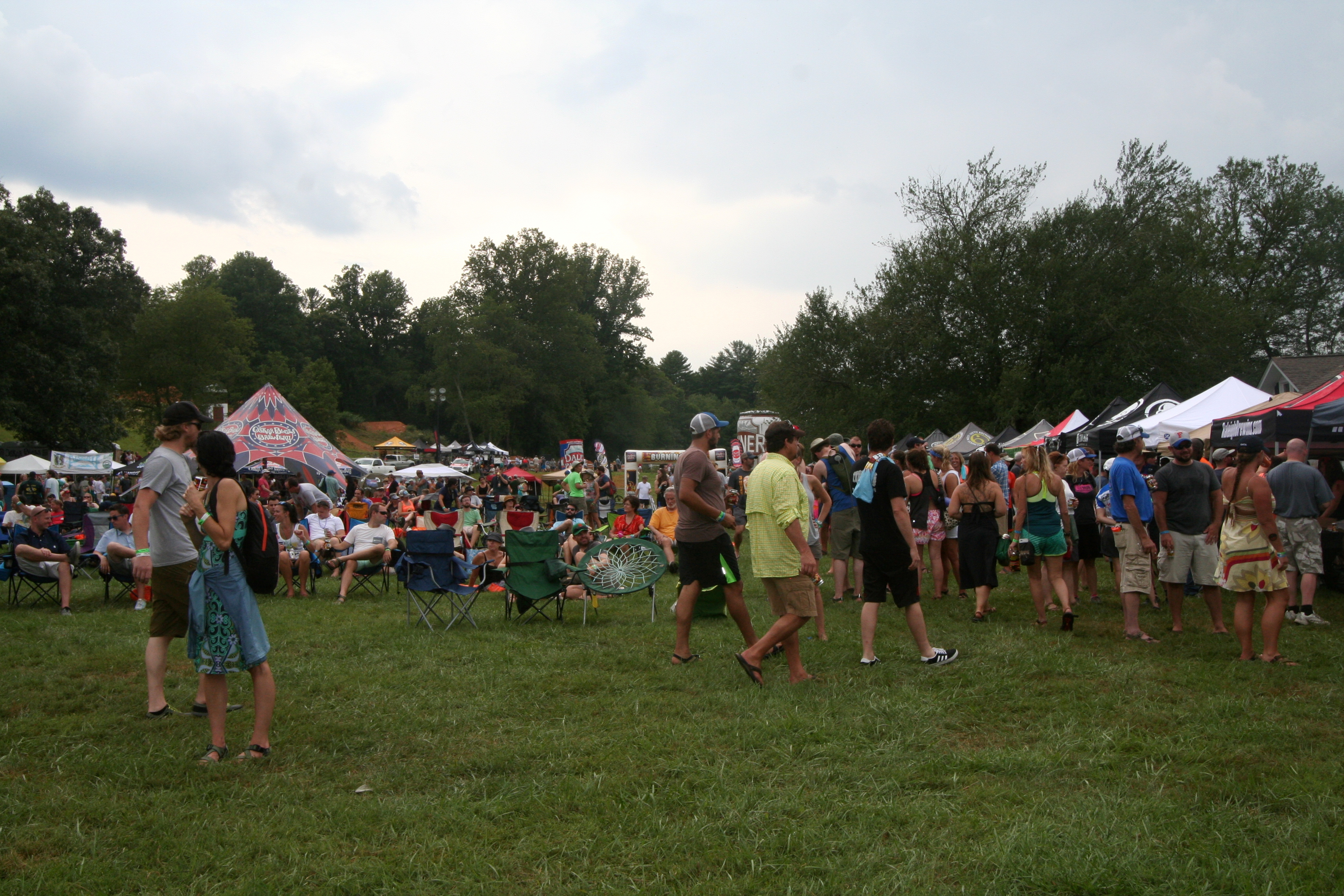
Perhaps the highest-profile case of miscommunication came at Oskar Blues’ Burning Can Festival on the weekend of July 17-18, when several out-of-state and local brewers were informed by ALE agents that they had not received the proper permits to allow them to pour beer at the event.
“I personally learned about the event Wednesday evening [before the festival],” Cox says of the incident, adding that ALE was acting under guidance from the N.C. ABC Commission Legal Division. “We tried to come up with solutions, but with such short notice, we were limited.”
While Oskar Blues has taken full responsibility for the miscommunication, other brewers present at the event have expressed reservations about the way ALE agents approached the issue. Quinn suggests that ALE could have helped expedite permits instead of threatening citations. “It’s not like [the state] was missing taxes, because this was all donated product anyway,” Quinn says.
Corey Reid, sales manager for Sly Fox Brewing Co. in Pottstown, Pennsylvania., has a similar impression of ALE’s involvement. “We were told that we would be in violation of North Carolina law giving away free samples and could be fined,” he says, adding that ALE’s message also stated that the citation “would jeopardize our ability to register our beer for sale in North Carolina when we decide we are prepared to open that market.”
This varied from last year’s Burning Can event, says Reid, when “the topic wasn’t ever discussed.” He adds that “creating a financial burden to such a respectable company and limiting the funds that a few nonprofit foundations desperately need made me question the motivation of the ALE.”
Cox asserts there was no malicious intent to harm charities. “Please understand, we did not criminally charge anyone or submit any violation reports to NCABCC in reference to Burning Can,” she states. “If we had learned about it sooner, we could have possibly remedied some of the problems ahead of time.”
She explains that the festival was covered by a “Special One Time (SOT) permit” issued to Can’d Aid, a charitable foundation operated by Oskar Blues. In addition to the SOT permit, each brewer was required to obtain a malt beverage special-event permit. Those traveling from out of state also needed a nonresident malt beverage vendor permit.
There are some exceptions. Out-of-state breweries whose products have been approved for sale in North Carolina, but do not have a nonresident malt beverage vendor permit, are allowed on-site at such events on the condition that their products are served by volunteers not on a company’s payroll, according to Cox. The same goes for those who obtained a permit but whose products are not approved for sale in the state.
And where is the line that distinguishes a homebrewer trying out his latest batch from entities that fall under state regulations? ABC’s retail guide states anyone possessing more than 80 liters of a malt beverage (about nine 24-packs and some change) must have a proper ABC permit (the rules are slightly different for beer contained in kegs). In regard to samples given out at festival events, vendors must obtain a special-event permit from their local ABC board in order to provide free tastings, according to the ABC retail guide.
BURNING QUESTIONS: An incident at Oskar Blues Burning Can Festival this past July concerning permitting issues for out-of-state brewers in attendance threatened to shut down the festivities and may have cost charity organizations millions, despite last minute heroics from Oskar Blues officials. Photo by Max Hunt.
Allen explains that the specific issues involved with Burning Can are indicative of a broader misunderstanding of what the law requires at festival-type events, especially when there are multiple breweries with different levels of legal standing involved.
“There’s definitely a disconnect between the ABC’s interpretation of the regulations, how the ALE may enforce it, how the industry may interpret it,” he says, noting that many of the recently enforced statutes “have been on the books forever” even if they come across as new. “It’s really just the enforcement of something that’s been there for a long time.”
Others involved in the industry are more ambivalent. Most breweries contacted for this article chose not to comment publicly on the recent enforcement actions, a reluctance that Pisgah’s Quinn attributes to a “culture where people want to try and keep their heads down, and if you don’t get noticed, you won’t get in trouble.”
He says that Pisgah is in compliance with the laws, has a good relationship with local police and has had many pleasant interactions with ALE officers in the past, but several recent run-ins with new agents have left a bad taste in his mouth.
“They show up in the middle of some of our events, [during] commerce hours, throwing around their weight and citations, and spooking the customers,” he says.“We’re not criminals, and I feel like sometimes we get treated that way.”
In response, Cox says her department was alerted to some safety concerns at a recent show at Pisgah, but no citations or violations were issued. “Wherever alcohol is sold, there are going to be issues from time to time,” she notes. “Pisgah is a good business and brings a lot of money and tourism into the area.”
Cox adds that “[her department] doesn’t want this to become an ‘us versus them’ situation” and that her office is working to build “good relationships with the brewing industry” while “ensuring the safety of the public.”
Working together
In an effort to address confusion over the law, state officials sat down with the Asheville Brewers Alliance and head brewers in July for an unprecedented meeting.
“That is the first time I’ve ever heard of in this state where you have the ABC, ALE and the local industry members all sit down in the same room and talk about it,” says Allen, who attended the meeting.
Cox is optimistic about the results of the meeting. “It was an open question-and-answer forum and was quite productive,” she said, adding that both the ALE and ABC Commission offer free training on North Carolina rules and regulations for new breweries and “will help any permitted business to achieve compliance.”
Despite the initial complications at Burning Can, the outcome of the altercation – turning the festival into a “private party,” which legally satisfied state regulations and allowed the event to proceed at no expense to the attendee – suggest that communication can lead to clarity among the various groups involved.
YESTERDAY AND TODAY: Corey Reid, sales representative with Sly Fox Brewing in Pottstown, PA, was confused by the legal issues that arose at this year’s Burning Can Festival, when “the topic wasn’t ever discussed” at last year’s festival. Photo by Max Hunt.
Allen makes sure to credit the state ABC Commission and ALE for working with brewers to resolve the issues. “They were available at 8:30 in the morning on Saturday at the highest levels, and they worked with us to come up with something that made some sense for everyone.”
A similar event held on the same weekend as Burning Can, meanwhile, displayed the potential of the brewing industry and state officials to learn from past incidents. Wicked Weed’s Funk Asheville Beer Festival featured some of the same out-of-state breweries that were on hand at the Oskar Blues event.
Despite initial suspicions of favorable treatment, Cox says that Wicked Weed and its legal representation made sure that each brewer in attendance was in compliance with the law. Wells confirms this, saying that Wicked Weed obtained the proper permits before the event.
Allen adds, “The ALE and the ABC have both made it clear to us that their piece is not so much doing the ‘gotcha’ thing’ than it is educating this industry so people get it right.”
New rules for new realities
Among the issues to emerge from the meeting between regulators and brewers was how laws may change moving forward as craft brewing continues to become an economic focal point in the region.
In an effort to update the regulations to reflect the changes in this industry, the NCABCC is launching a review of the current North Carolina statutes governing everything from alcohol content of particular beers to the amount of beer served in a flight, marketing collaborations, permitting for beer coming from other states, quality assurances, and the way breweries and state officials communicate and interact.
Agnes Stevens, spokesperson for the state ABC Commission, says the ABC statutes are regularly reviewed and updated. Cox agrees, adding that the commission solicits the brewing industry’s input on revisions and works on updating the laws with tourism and the craft beer industry specifically in mind.
But with hundreds of pages of legalese to peruse and discuss, providing a sensible and comprehensive revision of alcohol regulations will take time.
N.C. Craft Brewers Guild President Myers declines to comment specifically on the laws the guild is working to update and change but says that it is interested in “modernization” and would like to see future laws reflect existing industry, rather than “the industry of 30 to 100 years ago.”
Can’t we all just get along?
In the meantime, the hope is that continued open communication between the industry and state regulatory bodies will go a long way toward reducing future legal problems.
“Breweries don’t make their money or their living on the corners in the seedy part of town,” says Allen. “They want to do the right thing, [and] getting consistency in application is very important to them. That’s where we’re headed.”
“We’re all learning about [the laws],” says Quinn. “And I hope that once they have enough interactions with us, where we’re friendly and open, they’ll back off.”
Cox says she is pleased with how her department’s relationship with brewers has evolved over the summer. “Communication and collaboration has increased, and our relationships are growing every day,” she notes, adding that the amount of inquiries her office receives has tripled since March. “I look forward to continuing the cultivation of our relationships.”
And any trepidations felt by brewers currently will not make much of an impact on the future growth of the industry, according to pretty much everyone spoken to. “We’re still growing in leaps and bounds, and I don’t see us slowing down anytime soon,” says Myers. “The North Carolina Craft Brewers Guild, the Asheville Brewers Alliance and many others will be heavily involved in the public review process to make sure that we all have responsible and sensible laws for this incredible and growing industry in the state, so that we’re all successful, responsible and prosperous.”
ASHEVILLE – Three City Council candidates have taken an early fundraising lead that could propel them to victory, a Citizen-Times analysis shows.
The top money raisers were Vice Mayor Marc Hunt, the only incumbent in a field of 15; environmental nonprofit director Julie Mayfield; and defense attorney Corey Atkins, according to midyear campaign finance reports filed recently with Buncombe County Elections Services. The three raised a combined total of more than $50,000 by June 30.
Top donors included a Democratic state senator, developers and current council members.
While still more than a month away from the Oct. 6 primary, money may already be an important determiner, based on an analysis of the past two elections. Since 2011, the top fundraisers at this point in the race, with one exception, went on to win.
The role of money in elections is complicated. Several local politicians decried the need for campaign cash while recognizing its importance. One candidate, Lavonda Nicole Payne, bluntly called it “winning through greed.” Others said it can serve as a legitimate barometer of public support.
State Sen. Terry Van Duyn is the top donor so far with $2,500 spread among four candidates: Hunt, Mayfield and Lindsey Simerly each got $500 donations; Keith Young received $1,000. The Buncombe County Democrat said she doesn’t like money’s influence, but also knows candidates need it to get their names in front of voters through advertising and other means.
“It’s frustrating to me how many people I think would make excellent candidates who aren’t willing to do it because they see how much it would cost,” she said.
CITIZEN TIMES
City Council 2015: Links to all candidate profiles
Top fundraisers
Hunt’s campaign committee had raised $22,289 — though $4,000 of it was from a personal loan to his own campaign. The committee later repaid him through donations. A retired program officer at the land conservation nonprofit Open Space Institute, Hunt is running for his second term.
His donations came from a broad range of people, many in the $100 range. Donors included neighborhood activists, those involved with the development industry and Sheriff Van Duncan. His biggest single donation was $1,000 from Mack Pearsall, president of Pearsall Operating Co.
Mayfield’s campaign had raised $17,741. She is a co-director of the MountainTrue nonprofit that has advocated for the end of burning coal for power. Her biggest donations were $1,000 each from Pearsall and Atlanta retiree Annette Mayfield
Atkins, a Mount Airy native and former Mecklenburg County assistant district attorney, had raised $10,567. His biggest single donation was $1,200 from Chicago psychologist Angela Castellani. He also got $1,000 from Mount Airy retiree Bobby Atkins and another $1,000 from attorney Bill Brazil. Atkins recently joined Brazil’s law firm.
Money-winner link
The 2011 race featured nine candidates. By late summer and early fall, the three top fundraisers were Hunt, who was running for his first term and had $13,521; Lael Gray with $6,744; and Chris Pelly with $5,552.
Incumbent Jan Davis had $3,592.
Mark Cates had $10,054, though most of that came from personal loans to his campaign rather than from donors.
Hunt and Pelly went on to win. Davis, meanwhile, edged by Gray with 35 votes.
In 2013, the pattern repeated. Of the eight candidates, the top early fundraisers were Cecil Bothwell with $17,937, Gordon Smith with $15,192, Gwen Wisler with $6,837 and mayoral candidate Esther Manheimer with $24,790.
All won their races.
A necessary endeavor?
Few candidates said they were enthused about raising money.
Hunt said he would prefer a system of publicly financed elections to “level the playing field.”
“But I don’t expect it to change soon, so candidates that want to compete effectively simply must raise money to get their messages out. I wish it were not that way,” he said.
Still, he said the problem is not so bad in city elections. In races for the state House or Senate, candidates now sometimes raise hundreds of thousands of dollars or even $1 million.
Atkins agreed with the idea of public financing at the state and federal level. But not in local elections. He said that money in council elections, for example, can serve as a barometer of public support. Donations of $50 or lower are common, he noted.
“On the local level, I think it’s more of a support system and gives people a sense of viability,” he said. “I think the number of donations is probably every bit as important as the amount.”
Mayfield could not be reached for comment Tuesday afternoon.
Left out?
Three candidates at this point have said they plan to raise no more than $1,000: Grant Millin, Payne and Richard Liston. That means by law they don’t have to file detailed campaign finance documents.
Payne, a 23-year-old truck driver who said she has spent some time homeless, was the strongest fundraising critic. She said she’s gotten letters from groups and individuals offering donations, but she’s thrown them out. Payne said she could not remember who sent them.
“Honestly, with the power that these people do have — they have resources, they know people in the community. They ultimately could get that money flipped and turned into something. Why not open a youth center?”
Her campaigning has consisted primarily of approaching people, often at the gas station, and telling them she’s a candidate, Payne said.
Liston, a former computer science professor and software engineer, said he felt technology could erase any monetary advantage. Computer science and computer networking are the real keys now to campaigning, he said.
“I’m not worried in the least about spending almost no money on a campaign. I don’t think it’s necessary. I think I’m going to be demonstrating how to apply knowledge to running an efficient campaign,” he said.
Millin said he might eventually change his designation and raise more than $1,000. But in general, he said a focus on fundraising does not help the political process.
The management consulting business owner said he’s not impressed by the types of messages he hears from well-funded campaigns, and more money spent doesn’t seem to cause a surge in voter turnout.
Also, he said, those without much personal wealth face a barrier. They tend not to have wealthy friends or attract wealthy donors and don’t have enough money to give their own campaigns a boost, Millin said.
“Few people with significant net worth are excited about people they can’t identify with getting more power. That’s why there are few if any renters getting elected to office at any level.”
Corey Atkins
Total raised: $10,567 Notable contributors • $1,200: Chicago psychologist Angela Castellani • $100: Attorney and former Marion City Councilman Michael Edwards • $100: All Souls Cathedral minister Thomas Murphy • $200: Attorney and former mayor Lou Bissette • $1,000: Attorney Bill Brazil • $100: Attorney and former vice mayor Eugene Ellison • $100: Asheville public defender’s office investigator Josh Millsaps • $1,000: Retiree Bobby Atkins of Mount Airy (Spent $3,064: includes: $1,041 to Juliana Grassia for folders and envelopes and other undisclosed costs; and $15 to the Buncombe County Bar Association for a membership list.)
Marc Hunt
Total raised: $22,289 (Includes $4,000 Hunt loaned to his campaign. He was repaid the full amount in campaign contributions.) Notable contributors: • $250: Attorney and former mayor Lou Bissette • $100: Brooks Engineering President and former Planning and Zoning Commission chairman Mark Brooks • $150: Charlotte Street neighborhood activist Grace Curry • $250: City Councilman Jan Davis • $100: Mountain Housing Opportunities Director Scott Dedman • $250: Buncombe County Attorney Bob Deutsch • $100: Asheville Tourists President Brian DeWine • $100: Buncombe County Sheriff Van Duncan • $100: Asheville Design Center member Bruce Emory • $200: Community Lifestyle Mosaic Realty owner Mike Figura • $250: Pink Dog Creative co-owner Hedy Fischer • $308: Marc Hunt • $250: Former Buncombe County commissioner David King • $250: Retired Asheville Area Chamber of Commerce president Rick Lutovsky • $200: Retiree Ron Manheimer, father of Mayor Esther Manheimer • $100: Buncombe County Commissioner Brownie Newman • $100: Buncombe County Tourism Development Authority Chairman Bhagwanji Patel • $1,000: Mack Pearsall, president of Pearsall Operating Co. • $400: UNC Asheville Vice Chancellor for Finance John Pierce • $500: Delphi Development owner Harry Pilos • $100: Asheville Buncombe Youth Soccer Association Executive Director Mike Rottjakob • $100: Asheville Adventure Rentals owner Derek Turno • $500: State Sen. Terry Van Duyn • $100: Unitarian Universalist Congregation of Asheville minister Mark Ward • $100: Hotel owner John Winkenwerder • $250: City Councilwoman Gwen Wisler • $100: French Broad River Academy Director Will Yeiser • $100: Chris Pelly for City Council committee • $100: Committee to Elect Gordon Smith (Spent $10,272. Includes: $4,000 in loan repayments to Marc Hunt; $1,514 to Paul Choi and the Choi Group for design, photography, poster, website design and implementation; and $1,899 to Mail Management Services for invitations)
Rich Lee
Total raised: $9,091 Notable contributors: • $1,250: Charlotte retiree Sandra D. Lee • $300: Bonfire Barbecue owner Jeffrey Barcelona • $316: Teacher Kylie Birdsong • $925: Consultant Lynn Brailsford • $917: Rich Lee • $250: Seniors Helping Seniors owner Robert Patterson • $1,000: Retiree Laura Thomas • $600: Bothwell for Council committee (Spent $7,202. Includes: $1,000 to Josh Fernandez of Waynesville for undisclosed reasons; $1,000 to Hayley Lampkin for campaign management; $158 to the North Carolina Democratic Party for database access; and $1,000 to Lauren Noto for campaign management)
Julie Mayfield
Total raised: $17,741 Notable contributors: • $500: Astronomy Club of Asheville President Bernard Arghiere • $261: Green Sage Cafe co-owner Roger Derrough • $250: Biltmore Oil Vice President Martha Jane Eblen • $250: Asheville Design Center member Bruce Emory • $500: Community Lifestyle Mosaic Realty owner Mike Figura • $250: Southern Environmental Law Center attorney D.J. Gerken • $250: Former Buncombe County commissioner David King • $100: Retiree Ron Manheimer, father of Mayor Esther Manheimer • $1,000: Atlanta retiree Annette Mayfield • $1,000: Mack Pearsall, president of Pearsall Operating Co. • $100: Architect Jim Samsel • $500: State Sen. Terry Van Duyn • $250: Former state representative Jane Whilden • $550: Retiree S. Miller Williams • $250: Cindy for Schools committee (Spent $8,764. Includes: $100 to Brian Turner for N.C. House committee; $580 to Allison O. Adams of Decatur, Georgia, for website design; $1,076 to Graphics Four Inc. for kickoff party invitations and campaign cards; $1,018 to Green Sage Cafe for a kickoff event; $982 to Lightning Bolt Inc. for T-shirts; $150 to North Carolina Democratic Party database access; $500 to The Choi Group for logo design; $1,100 to Sue Wasserman for campaign work and communications support
Carl Mumpower
Total raised: $1,600 (Includes a $500 Mumpower loaned his campaign) Notable contributors: • $1,000: Architect Danie Johnson (Spent $91)
Lindsey Simerly
Total raised: $5,449 Notable contributors: • $430: FLS Energy Business Development Associate Veronika Gunter • $500: ABB engineer David Macy • $300: Freedom to Marry Deputy Digital Director Adam Polaski of Astoria, New York • $1,500: Pisgah Legal Services Medical Legal Partnership Liaison Parker Sloan • $500: State Sen. Terry Van Duyn • $664: Committee to Elect Gordon Smith • $100: Chris Pelly for City Council committee (Spent $936. Includes $886 of in-kind contributions)
Keith Young
Total raised: $1,150 Notable contributors: •$1,000: State Sen. Terry Van Duyn (Spent $679)
Will not spend over $1,000 Candidates Richard Liston, Grant Millin, Lavonda Nicole Payne certified that they will not raise or spend more than $1,000 and therefore won’t by law have to give detailed campaign finance information.
No recent financial information Candidates Joe Grady, Brian Haynes, John Miall, Ken Michalove, Holly Shriner and Dee Williams were not required to submit midyear finance reports because they didn’t have campaign committees before June 30. Shriner has since dropped out of the race.