In Case You Missed It: News of Interest from Around North Carolina (week …

Scotland County Is Motivated to Recruit Industry – News Observer
“Saddled with one of the highest unemployment rates in the state, businesses in Scotland County have adopted an unorthodox plan to help recruit new industry and boost the local economy. Instead of simply pledging money to support economic development, more than 60 businesses in the county are offering one-of-a-kind incentive packages for any employer that commits to creating at least 50 new jobs. Convenience store Nic’s Pic Kwik donated $1,000 in gas and merchandise plus a free car wash each week for 52 weeks. Others have offered everything from free haircuts to a one-year membership at the local country club.

In Raleigh, Gov. Pat McCrory is pushing for adoption of his ‘N.C. Competes’ jobs incentive plan as a way to boost economic development incentives for poorer regions such as Scotland County. But business and government officials here are well aware that there are limits to what the state can do, especially since the county sometimes competes against its counterparts across the state with access to the same incentives.”

How N.C. Banks Rank on a Nationwide Top Performers List—Triad Business Journal
“Several North Carolina banks rank competitively when stacked against other publicly traded banks across the country, with Winston-Salem-based BBT Corp. earning a top-10 ranking. That’s according to the 2015 Bank Performance Scorecard, a ranking of the 300 largest publicly traded banks put out by Bank Director magazine. The scorecard evaluates banks on everything from core return on average equity to capital strength and credit quality. Bank Director editor Jack Milligan says the rankings identify banks with strong fundamentals primarily across three areas — profitability, capitalization, and asset quality. ‘To me, these are strong, well balanced banks that are built to last,’ he says. Several North Carolina banks made the rankings in the community banking category, such as Bank of North Carolina and NewBridge Bank. The overall winners in the rankings were McLean, Virginia-based Capital One Financial Corp (in the $50 billion plus category), Little Rock, Arkansas-based Bank of the Ozarks (in the mid-sized banks category), which is expanding within North Carolina with its pending purchase of Bank of the Carolinas, and Los Angeles-based Preferred Bank (in the community bank category).”

—The top North Carolina banks in the $50 billion and above category: BBT Corp. (Ranked No. 7), Bank of America (Ranked No. 20)

Lower Inventory Fuels Charlotte’s Hot Housing Market, Says Zillow Study—Charlotte Business Journal
“Roughly 40 percent fewer homes are for sale in Charlotte compared with a year ago, and that’s helping fuel the area’s red-hot housing market. That’s according to a new report by online real estate company Zillow, which notes the Queen City had the largest drop in inventory year over year. Supply is even tighter in the lower-priced tier of the local market, Zillow reports. There are nearly 49.7 perent fewer homes for sale in Charlotte in that bracket than at this time last year, while the number of mid-priced homes for sale here is down 44.8 percent from a year ago. Among the city’s highest-priced homes, inventory is down 25 percent over the year. Nationally, inventory is down just 6.5 percent from a year earlier, according to the report. Zillow analyzed the 35 largest markets it covers to come up with the figures.”

PNC: These Are the Hiccups to More Robust Triangle Economic Growth—Triangle Business Journal
“On the whole, Raleigh continues to outperform the national economy, but a new PNC (NYSE: PNC) economic forecast points out that the ‘aggregate region’s strong performance masks the bifurcation within the market.’ In Raleigh, payroll employment is 5 percent higher than the peak in early 2008, whereas payroll employment for the entire nation is about 2.5 percent ahead of its peak. Gains have been concentrated in urban areas, however. Raleigh and Durham, both high-tech oriented economies, boast comparatively low unemployment rates. On the other hand, the smaller, manufacturing reliant areas of Rocky Mount and Goldsboro are struggling to stay afloat, according to the PNC report. In June 2015, their unemployment rates were 8.4 percent and 6.2 percent, respectively. Despite relatively slow economic growth in the first half of 2015, PNC economists expect a brighter future, though not without risk. Goldsboro, for example, relies heavily on spending generated by Seymour Johnson Air Force Base and without large increases in personnel or spending, the base’s ability to drive new growth is limited, PNC economists warn. While Rocky Mount has a more diverse factory sector, it is in the middle of a long-term shift toward services, a trend similar to many areas in the United States.”

NC Wine and Grape Industry Has $1.71B Impact on State’s Economy—Caldwell Journal
“Wine lovers may raise a glass to a new report that shows the North Carolina wine and grape industry contributes $1.71 billion to the state’s economy. ‘It is encouraging to see continued growth in the wine and grape industry, not only for our wineries, but also for our grape growers,’ said Agriculture Commissioner Steve Troxler. ‘More than 77 percent of all wine produced in North Carolina comes from North Carolina grapes.’ The study was commissioned by the N.C. Wine and Grape Council and conducted by Frank, Rimerman + Co. using data from 2013. The firm also conducted the council’s 2009 economic impact study. The economic impact of the industry grew 33.6 percent from 2009 to 2013. Tourism accounted for the most significant increase in the study. Between 2009 and 2013, tourism expenditures increased 65 percent, to $257 million. The number of tourists visiting North Carolina wineries increased by nearly a half-million people from 2009 to 2013. ‘Many of our wineries are opening up their vineyards to wine-related events, private parties, weddings, and other special occasions to attract more visitors and diversify their income,’ said Whit Winslow, executive director of the Wine and Grape Council. ‘The new numbers reflect an increase in consumer demand for experiences beyond the tasting room.’ According to the report, North Carolina is home to 130 wineries and 525 commercial grape growers. Winslow said that because of substantial growth over the past two years, North Carolina now has 159 wineries.”

  • 7 August 2015
  • Author: Laurie Green
  • Number of views: 48
  • Comments: 0
  • –>

Tagged with:

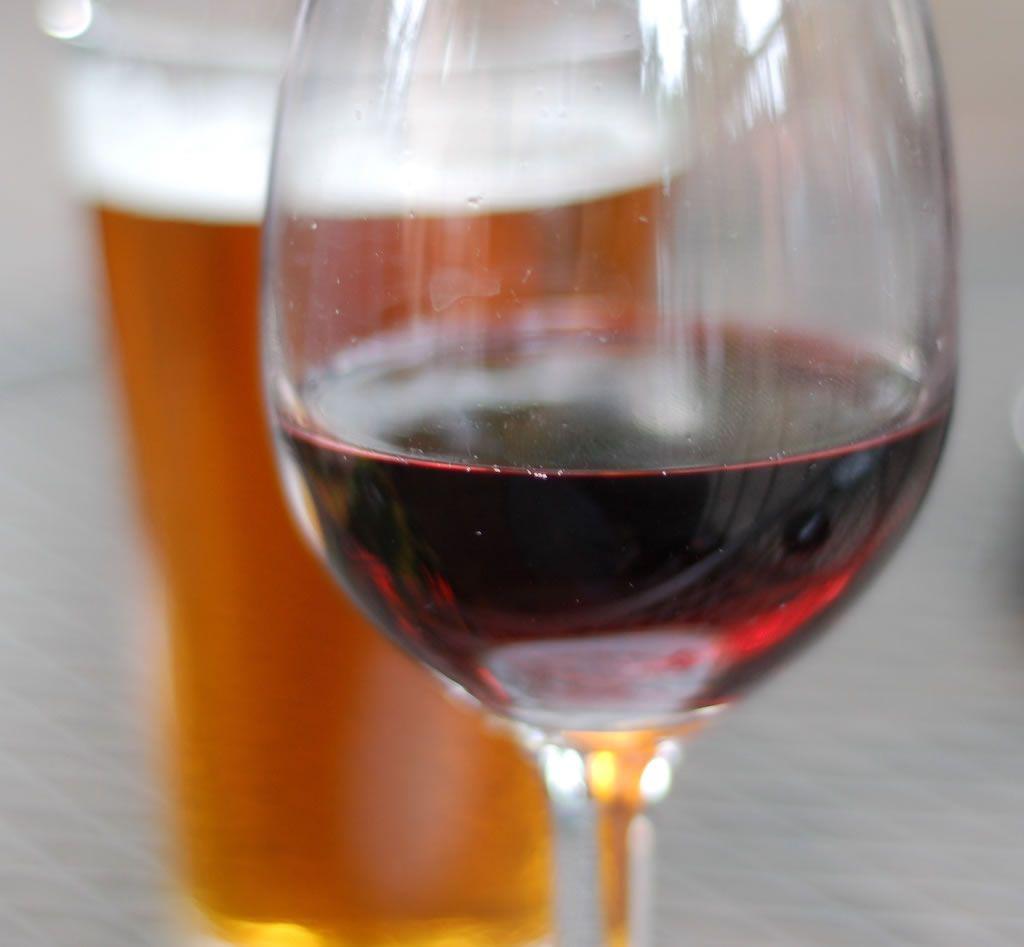
Wine Versus Beer, Can North Carolina Have Both?

If you’re looking for a luxury libation, come to North Carolina. The craft beer business is thriving in the state, adding new breweries and brewpubs every year, as North Carolina’s wine industry continues to grow.

The state’s wine and grape industry contributes $1.71 billion to the state’s economy, according to a recent report. The study shows the economic impact of the industry grew 33 percent from 2009 to 2013. It was commissioned by the N.C. Wine and Grape Council and used data from 2013.

“It is encouraging to see continued growth in the wine and grape industry, not only for our wineries, but also for our grape growers,” said Agriculture Commissioner Steve Troxler in a statement. “More than 77 percent of all wine produced in North Carolina comes from North Carolina grapes.”

On the other side of the bar is craft beer. This week marks the 10th anniversary of the “Pop the Cap” legislation in North Carolina. Passed by Governor Mike Easley in 2005, “Pop the Cap” raised the alcohol limit from 6 percent to 15 percent on beer sold in the state, allowing brewers to expand their craft.


Since “Pop the Cap,” the craft beer industry has boomed in North Carolina. The state has more than 130 breweries and brewpubs, brings in an estimated economic impact of $791 million annually and supports more than 10,000 jobs, according to the North Carolina Craft Brewers Guild. Wine, on the other hand, has been a part of North Carolina since colonial settlers first began cultivating the state’s grapes in the 16th century. Today, the state’s wine industry supplies about 7,700 full-time jobs.

But with each industry on the rise, will wine and beer battle one another for North Carolina’s alcoholic throne, or can each maintain their own niche market?

Much of wine’s impact comes from tourism. The number of tourists at N.C. wineries increased by nearly a half-million between 2009 and 2013, totaling $257 million in expenditures, according to the report.


Most wineries are located in rural areas and visiting them is more of an event than just a “passing through” for tourists. In other words, once you’re there, you stay and soak in the vines, landscape and everything else the winery offers.

“Many of our wineries are opening up their vineyards to wine-related events, private parties, weddings and other special occasions to attract more visitors and diversify their income,” said Whit Winslow, executive director of the Wine and Grape Council. “The new numbers reflect an increase in consumer demand for experiences beyond the tasting room.”

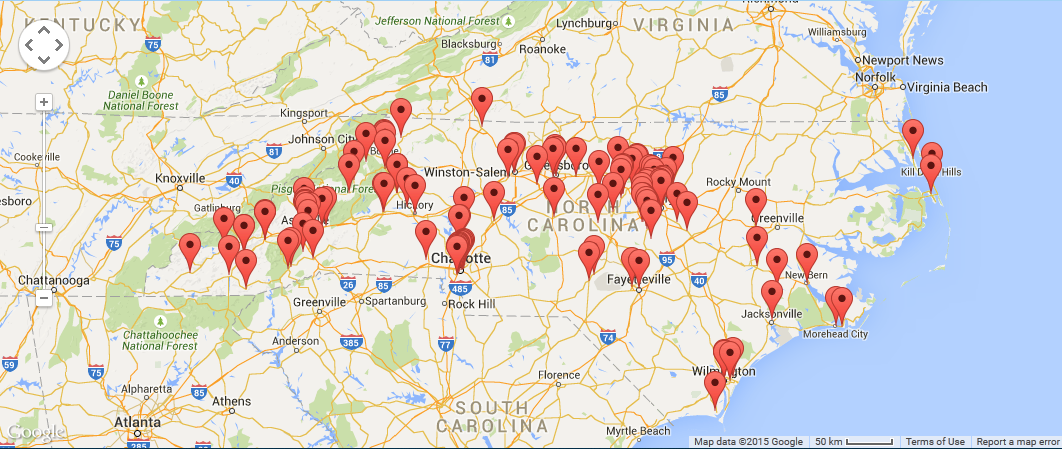
North Carolina has 159 wineries, according to Winslow. They are categorized by region: Haw River Valley, Swan Creek, Yadkin Valley and Upper Hiwassee Highlands. Check out an interactive map of North Carolina’s wineries here


Wineries dominate the rolling hills and countryside, but craft beer has the ability to bring the beer closer to enthusiasts’ doorstep. Breweries and brewpubs are mostly located in urban areas across the state.


But Erik Lars Myers, president of the N.C. Craft Brewers Guild, said choosing between the wine and beer industries does not have to be an “either/or” decision for consumers.


“We are complimentary. People who like good wine should also like good beer and vice versa,” he said. “The wine industry has flourished for a while but we are catching up right now.”


In terms of location, Myers said it is easier for breweries to sell craft beer by the pint in urban areas, but there is no need for only wine to be in the country and beer in the city.


“There are wineries that aren’t attached to a grape field. They are in a strip mall aging it and making great products,” Myers said. “Pop culture tells you that wineries have to be on those hills, so people are looking for them out there, but there is no reason why they couldn’t exist in urban areas and for breweries to be in the country.”


Whether it’s in the country or the city, North Carolina has breweries everywhere. Asheville is a leader in the state with big-name breweries like Sierra Nevada and New Belgium Brewing, while more than 20 breweries and brewpubs are located in the Triangle. However, Fortune recently showcased Charlotte as the new spot for craft beer in the Southeast. This shows all across the state, beer is in business.


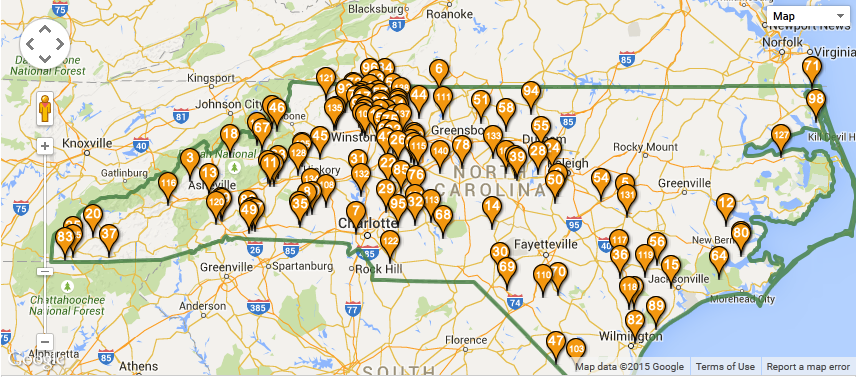
Check out an interactive map and timeline of all the breweries in North Carolina, and those planned for the near future, from the N.C. Craft Brewers Guild. Below is an image of the map.

Tagged with:

Bigfoot near Asheville

Tourist captures Bigfoot near Asheville!

Well… on video, that is.

The latest video “evidence” of Bigfoot…  just strolling around a rental cabin near Asheville.

The tiny dog allegedly broke loose from its leash in front of the cabin and scared the sasquatch off.

Which is odd, given that the dog runs in the opposite direction of the legendary creature…


Do I spot a budding tourism campaign? An entire Bigfoot Tourism industry!


Beer and bodily functions


Meanwhile, Charlotte now rivals Asheville as the top North Carolina city for craft breweries, according the News Observer:

Two years ago, Mecklenburg County was grabbing attention with seven independently owned breweries. Today, there are 18. With estimates that at least 15 more are in the works, Fortune.com recently declared that Charlotte now contends with Asheville as the hub of craft brewing in North Carolina.

But the Queen City better be careful. Beer City, USA (a/k/a: Asheville) is experiencing one of the downsides of all those brew pubs: Namely, people whizzing everywhere:

Complaints about people doing their business in public have largely followed a similar pattern as downtown’s growth. When the city center was largely abandoned in the 1970s and 1980s, concerns about public urination weren’t at the top of most people’s minds.

When downtown began to hit its stride in recent decades and people packed in, complaints went up.

Although… come to think of it… if Charlotte is already rivaling Asheville with the breweries, why doesn’t that city see the public urination problem that Asheville does?


Tagged with:

NC craft beer industry now tops in the South

Want to make people in North Carolina’s craft-beer world laugh? Tell them this:

In 2005, when the North Carolina legislature was considering a bill that would raise the limit on alcohol in beer, one of the sponsors said a microbrewing industry could potentially create 300 jobs.

That was off by 2,700 jobs. And that’s just the number working in North Carolina’s 132 craft breweries. If you add related jobs, including servers, delivery truck drivers, beer shop cashiers and hop and barley growers, Erik Lars Myers, president of the N.C. Craft Brewers Guild, says the number is closer to 10,000.

Two years ago, Mecklenburg County was grabbing attention with seven independently owned breweries. Today, there are 18. With estimates that at least 15 more are in the works, Fortune.com recently declared that Charlotte now contends with Asheville as the hub of craft brewing in North Carolina.

For the state’s exploding craft-brew industry, a special day is approaching. Thursday is the 10th anniversary of the date then-Gov. Mike Easley signed the legislation known as Pop the Cap, raising the alcohol limit on beer sold in the state from 6 percent to 15 percent and allowing the sale and creation of a full range of beer styles. That change, along with several adjustments to the distribution laws that let small breweries flourish, allowed North Carolina to join a fast-growing national trend toward artisan-style beers.

What has happened since then has stunned everyone. As a state senator, Charlotte Mayor Dan Clodfelter was one of the people who helped shepherd the bill to passage.

“I didn’t anticipate the absolute explosion of the industry,” he says. “You look back on stuff you’ve done over the years and the effect it had. I really didn’t expect what happened with craft beer.”

Grassroots lobbying

Sean Lilly Wilson owns Durham’s Fullsteam Brewery. In 2005, he was the spokesperson for the small group behind Pop the Cap, a grass-roots lobbying effort to change the beer law. It took 21/2 years to work through the resistance, from beer distributors who feared the competition, from public health organizations who feared underage access to higher-alcohol beverages, and from legislators who feared backlash from non-drinking constituents.

“Our part was navigating all that,” Wilson says. “It was fascinating politics. …We just wanted six words stricken from the General Statutes: ‘and not more than 6 percent.’”

He knew they were making headway, Wilson says, when he overheard a conversation in the statehouse in Raleigh one day.

“I heard one of the good ol’ boy legislators say to another one, ‘What do you think about Pop the Cap?’ I heard that and I was like, ‘we got ‘em. They’re talking about us. We’re going to figure this out.’”

If it weren’t for this, I wouldn’t be a professional brewer. I wouldn’t have taken the leap.

NoDa Brewing owner Todd Ford

If Pop the Cap hadn’t passed, Todd Ford, the owner of Charlotte’s NoDa Brewing Co., says he wouldn’t even be in the beer business.

“Every time I see Sean, I thank him for doing this,” he says. “If it weren’t for this, I wouldn’t be a professional brewer. I wouldn’t have taken the leap.” After using their retirement money to start their small brewery on North Davidson Street, Ford and his wife, Suzie, have found wide acclaim and are now moving to a bigger location on North Tryon Street with more space for brewing and a new canning line.

Forcing out imports

Just after 7 a.m. on Aug. 15, 2005, Mike Brawley of Brawley’s Beverage sold the first legal higher-alcohol beer in North Carolina. He kept a bottle from that case, Samuel Smith’s Imperial Stout, and wrote the date on it. It’s still in his shop, in a former gas station on Park Road.

What Brawley wanted to stock in those days were imports, all those German, English and Belgian beers. What he got were two things he didn’t expect: First, an American beer selection that he says is now unrivaled in the world. And a statewide beer culture that is attracting national attention as the best in the South.

“What we have now is trying to whittle down the chase,” he says. “There’s just so much available to us. Back then, you could bring in every single thing available and not fill half my store.”

Before Pop the Cap, there were a few state brewers, like Weeping Radish in Manteo. In Charlotte, several breweries had tried, including Johnson Beer, Dilworth Brewing and The Mill, but they had all closed by 2001, leaving a few brewpubs that made beer they sold on the premises with food, like Southend Brewery, Rock Bottom and Hops.

132 N.C. craft breweries

18 Charlotte breweries

15 New breweries planned in Charlotte

Ford says that a lower alcohol level limited what breweries could make to the same American-lager styles made by the mainstream beer companies like Budweiser. Since the big companies could do it cheaper and afford the equipment that allowed them to do it consistently, local breweries couldn’t compete.

When the beer floodgates opened, what rushed in was a generation of young brewers who couldn’t wait to get creative. And the drinking public loved it. Today, supermarkets and bottle shops are crammed with choices, from the fresh, German-style Olde Mecklenburg to the tall cans of NoDa’s Hop Drop ’N Roll and Coco Loco. Craft styles from sour beers to goses, even mead, have bubbled up all over.

Even the N.C. Craft Brewers Guild has trouble keeping up with it all. They’re working on a new economic impact study, but Erik Lars Myers says craft brewing in North Carolina now brings in about $791 million a year.

“It’s just bananas,” he says. When Myers wrote his book, “North Carolina Craft Beer and Breweries” in 2012, there were under 50 breweries. He’s now working on the second edition and expects to add almost 100. At least 12 have opened in 2015 – “that’s 10 percent growth in a year,” he says.

There are several reasons why brewers have succeeded. One is state distribution laws that have been adjusted several times, both before and since Pop the Cap, by both brewers and wholesalers to make them more advantageous. Currently, as long as they make less than 25,000 barrels a year (a barrel holds 31 gallons), North Carolina allows small breweries to distribute their own beer to retailers. That means they don’t have to share profits with a wholesaler while they’re growing.

Georgia raised its alcohol limit for beer in 2004, a year earlier than North Carolina, but it hasn’t seen anywhere near the same growth. One reason is Georgia connects beer sales to food: You can’t sell on site unless you also sell food, so most Georgia breweries have to be beer pubs.

Sean Wilson thinks a big part is a population distribution that’s specific to North Carolina.

“When you think of Georgia, you think of Atlanta, Athens, maybe Macon. But after that, there’s a drop-off in the dense population centers. It doesn’t have the network of midsize cities connected by the good roads of North Carolina.”

That’s also brought an unexpected boon to smaller towns. From Fonta Flora Brewery in Morganton to Mother Earth Brewing in Kinston, even small towns have breweries, often in what had been unused old buildings.

Breweries are often located in former industrial buildings close to neighborhoods. So North Carolina breweries are community centers, places where you go to hang out.

In Charlotte, most weekend afternoons or weekday evenings finds breweries from NoDa to South End crammed with people, even families with kids and dogs. Free Range Brewing on North Davidson Street built in a kids play area, with shelves of books and games.

Who’s drinking?

One of the biggest concerns about Pop the Cap was that higher alcohol limits would allow easier access for underage drinkers. The higher alcohol limit has also allowed sale of new products, like the sweet malt beverages nicknamed “alcopops” for their appeal to younger drinkers, and the state is launching a public-service campaign focusing on the dangers of underage drinking.

Craft beer, however, isn’t singled out as a target, and brewery owners say the craft products they make aren’t an issue because their beers aren’t attractive to young drinkers. They cost more, for one, but they also have big flavors that can challenge even mature drinkers.

The Rev. Mark Creech of the Christian Action League in Raleigh was one of the most vocal opponents of Pop the Cap. He’s still opposed to anything that involves drinking as a public health issue.

“There’s no way to determine every way that Pop the Cap had a negative effect on the state’s health,” he says. “When there’s a drunk driver, no one checks to see if they’re drinking a craft beer.”

Ford points out the people sometimes misunderstand the aim in raising alcohol limits. The idea wasn’t to make beers that get you drunk faster. The point is that to brew a full range of styles, some will be higher in alcohol.

Very high-alcohol styles, like Imperial Stouts, are difficult to drink in large quantities. And many of the craft beers are still close to 6 percent or lower. NoDa’s award-winning American IPA, Hop Drop ’N Roll, is 7.2 percent alcohol by volume compared with 5 percent for Budweiser.

“Obviously, underage drinking is a problem we take seriously, whether it’s a 4 percent beer or higher,” says Ford. “But the majority of people drinking our beers aren’t going to be underage. If you’re binge drinking, you’re going to do something that’s more available and is easier to drink.”

Beer cities

With a craft-brewing industry entrenched statewide, cities are developing bragging rights after their breweries, and the tourism dollars that accompany them. Asheville, with a population of 87,000, is a mecca, with 16 breweries and two more expected. Raleigh, with just over half of Charlotte’s city population of 792,000, has 18 breweries, with seven more expected. Charlotte has 18 with 15 more predicted by the Charlotte Chamber.

However, with a metropolitan population of 2.4 million, including Concord and Gastonia, Charlotte is similar in size to Denver, one of the nation’s major beer cities, with a metropolitan population of 2.9 million. Denver has 50 breweries, the national Beer Association says. If Charlotte does grow to 33 breweries, as predicted, that could raise the state’s ranking in a beer world still dominated by California, Washington State and Colorado. North Carolina brewers now dream of being the center of beer on the East Coast.

As mayor of a large city in North Carolina – and a craft-beer fan since he went to school in England – Clodfelter is enjoying those bragging rights.

He likes to call North Carolina’s brewing scene a “Craft Beer Alley” that runs from Asheville, through Charlotte to the Triangle.

“We’ll see more activity here, with large producers looking at us seriously as an East Coast hub.”

What’s next for brewers?

What will it take to keep North Carolina’s beer industry growing?

▪ Excise tax reform. Erik Lars Myers, president of the N.C. Craft Brewers Guild, says high excise taxes, which are worked into the cost of certain items, mean brewers get taxed at both the federal and state level. If brewers paid lower taxes, he says, they could buy more equipment and do more marketing, creating more sales that would come back to the state as sales taxes.

▪ Higher distribution limits. While brewers can self-distribute if they remain under 25,000 barrels, once they get bigger, they have to go through a wholesaler, which can add to their costs. Under North Carolina law enforced by the Alcohol Beverage Commission, those distribution deals are long-term contracts, designed to keep big companies, like Coors, from moving their business and sinking a wholesaler, who distributes to retailers. Small breweries would prefer more flexibility on both the gallons they can distribute and the contracts with distributors.

Tagged with:

Editorial: A black theatre museum: Keeping the magic on between festivals – Winston

hamlin

hamlin

Hamlin


Posted: Sunday, August 9, 2015 8:30 pm

Editorial: A black theatre museum: Keeping the magic on between festivals

Journal editorial board

Winston-Salem Journal

Another fine National Black Theatre Festival has come and gone, but an associated effort promises to keep the magic alive between festivals.

Three prominent arts organizations in Winston-Salem have come together to create a National Black Theatre Hall of Fame and Museum, the Journal’s Lynn Felder reported last week. Organizers hope to find a space downtown near the Stevens Center to hold displays and exhibits featuring the festival, black theater and theater performers. It would include memorabilia associated with many of Winston-Salem’s own shining stars, such as artistic director Mabel Robinson and the late Larry Leon Hamlin, the festival founder.

Subscription Required


An online service is needed to view this article in its entirety.


You need an online service to view this article in its entirety.

Have an online subscription?


Login Now

Need an online subscription?


Subscribe

Login

Create or log into your All Access account

To log in, enter the email and password for your Times-Dispatch All Access account.

–>

Haven’t signed up for All Access yet? Get started here…

Need more information about All Access? Get all of the details here.

If you are a current subscriber and haven’t signed up for All Access yet, get started here.

Choose an online service.

The following services are print only and offer no digital access

Get started here…

Need more information about All Access? Get all of the details here.

If you are a current subscriber and haven’t signed up for All Access yet, get started here.

Thank you for reading 20 free articles on our site. You can come back at the end of your 30-day period for another 20 free articles, or you can purchase a subscription and continue to enjoy valuable local news and information. If you need help, please contact our office at 336-727-7211.


You need an online service to view this article in its entirety.

Have an online subscription?


Login Now

Need an online subscription?


Subscribe

Login

Create or log into your All Access account

To log in, enter the email and password for your Times-Dispatch All Access account.

–>

Haven’t signed up for All Access yet? Get started here…

Need more information about All Access? Get all of the details here.

If you are a current subscriber and haven’t signed up for All Access yet, get started here.

Choose an online service.

The following services are print only and offer no digital access

on

Sunday, August 9, 2015 8:30 pm.

Tagged with:

Visitors’ Center serves as gateway to Wareham and Cape Cod


Posted Aug. 9, 2015 at 5:49 PM


Tagged with:

Shark attacks don’t bite business on Atlantic Beach shores

Baiting hooks with pieces of shrimp and casting them out into the wind and waves, Ashlie Scott Newbie and Payton Lane knew a shark could nibble their lines at any time. But they weren’t too concerned. After all, they had seen them before.

“There were a bunch of them last night by the cleaning station,” Newby said Thursday. “There were some that were 8 feet long.”

Though the cleaning station at the Oceanana Pier in Atlantic Beach is high above the waves, the sharks were easy to see, the girls said. Newby, 11, said the pair caught their own small shark off the pier the night before. Other fishermen helped them get it off the line, but their close encounter didn’t discourage them from coming back to fish the next day.

“It was about three feet long,” Lane, 15, said, gesturing with her hands. Both girls are from Goldsboro and come to the coast frequently to fish. The self-taught fisherwomen pulled in mostly smaller bait fish like pinfish to hand off to friends who fish for larger catches — including sharks.

News of eight shark attacks in North Carolina — more than in any year in recent memory — has done little to keep beachgoers like Lane and Newby from the shores of Atlantic Beach and nearby destinations popular with Greenville-area residents. In fact, folks who make their living at the beach said business is bustling this year, from the fishing pier to hotel and house rentals, to shops that offer surf gear and the state aquarium, which last week hauled in crowds with its Shark Week exhibits.

“Every day I have people come in who ask about sharks out there,” said Mike Gurrera, 45, owner of AB Watersport Adventures in Atlantic Beach. “There are always sharks in the ocean, but you just want to use common sense and be aware of your surroundings.”

Gurrera, who rents kayaks, paddle boards, jet skis and other equipment tells his customers to avoid swimming in the evening or at dawn, when sharks tend to be more active.

Experts also tell swimmers to avoid piers and areas where people have been fishing, prime spots for sharks as small fish they like to eat are attracted to bait and fish scraps. Flashy jewelry and swimming with open wounds also are bad ideas.

Despite the questions and curiosity, Gurrera said customers are enjoying the beach.

“We haven’t seen it deter business,” he said. “We’ve actually seen an increase in business.”

Don Carpenter, 58, owner of Island Water Sports Rentals on the sound side of the island in Indian Beach, said a majority of his guests come in asking about sharks, but he tells them not to worry.

“There are sharks in the ocean, but you just have to use common sense,” he said. “And I’ve been out here for 26 years and haven’t seen any in the sound.”

Carpenter guessed that some people may be avoiding the water, but maintained that his business isn’t suffering. “We’re pretty much neck and neck with last season.”

No attacks have been reported from Atlantic Beach to Emerald isle. The closest were at Surf City to the south near Jacksonville, and at Ocracoke, well to the north. No attacks have been reported since July 4 anywhere in the state.

Atlantic Beach Mayor Trace Cooper, who also runs the Oceanana Family Motel and Pier in Atlantic Beach, said the town has not issued any formal recommendations to visitors regarding sharks.

“We regret that attacks have happened, but these were terrible accidents and most people understand this is a very, very rare occurrence among the thousands of visitors North Carolina’s coasts see every year.”

Cooper also is chairman of the Crystal Coast Tourism Development Authority and communicates regularly with other business people on the coast.

“Everyone I’ve talked to said they’re having record years,” Cooper said. “Our county occupancy tax revenue and numbers for June were 6 percent over last June.”

After the first North Carolina shark attacks, Cooper said officials called around and polled properties to see if they had seen an increase in cancellations.

“No one said they were seeing cancellations,” he said. The only effect Cooper said he saw was on the Junior Life Guard Program, which typically hosts 100-160 children 7-17 years old each year for a weeklong program.

“We had two kids pull out,” Cooper said. “But out of 160, that’s negligible.”

Carol Lohr, executive director of the Tourism Development Authority, said things are going swimmingly for the Crystal Coast this year.

“We have had an awesome year and we are so blessed,” Lohr said. “It’s been a really great season for us at this point.”

Lohr said it is hard to tell how many people have visited so far this year, but if all attractions are full she said she believed that the population increases from about 72,000 to 175,000 during the peak season.

“This is definitely one of our top years in recent memory,” Lohr said. “We’ve all been on shark alert, but we’ve definitely tried to calm any fears out there by encouraging people to use common sense. We want to continue this success through into the fall when we have our best fishing season.”

Fishing at Oceanana is good year round, people said on Thursday, even if they need to walk down the beach a bit before jumping in the ocean.

“We’re not going swimming around the pier,” Newby said. “But we’ll still fish.”

Thomasenia Harris, 57, of Newport, said she has been coming to the pier for about 11 years.

“They’re out there,” Harris said. “But they’re not interested in an itty-bitty bite of shrimp.”

Local fishermen are more concerned with the limitations recent shark attacks have placed on them.

“You’re limited in where you can fish, and now they’re starting to blame fishermen for drawing in the sharks,” Harris said.

“But people should know better than to swim near the pier. Swimmers can go anywhere, we only have two piers.”

Tagged with:

N.C. craft beer industry now tops in the South

Want to make people in North Carolina’s craft-beer world laugh? Tell them this:

In 2005, when the North Carolina legislature was considering a bill that would raise the limit on alcohol in beer, one of the sponsors said a microbrewing industry could potentially create 300 jobs.

That was off by 2,700 jobs. And that’s just the number working in North Carolina’s 132 craft breweries. If you add related jobs, including servers, delivery truck drivers, beer shop cashiers and hop and barley growers, Erik Lars Myers, president of the N.C. Craft Brewers Guild, says the number is closer to 10,000.

Two years ago, Mecklenburg County was grabbing attention with seven independently owned breweries. Today, there are 18. With estimates that at least 15 more are in the works, Fortune.com recently declared that Charlotte now contends with Asheville as the hub of craft brewing in North Carolina.

For the state’s exploding craft-brew industry, a special day is approaching. Thursday is the 10th anniversary of the date then-Gov. Mike Easley signed the legislation known as Pop the Cap, raising the alcohol limit on beer sold in the state from 6 percent to 15 percent and allowing the sale and creation of a full range of beer styles. That change, along with several adjustments to the distribution laws that let small breweries flourish, allowed North Carolina to join a fast-growing national trend toward artisan-style beers.

What has happened since then has stunned everyone. As a state senator, Charlotte Mayor Dan Clodfelter was one of the people who helped shepherd the bill to passage.

“I didn’t anticipate the absolute explosion of the industry,” he says. “You look back on stuff you’ve done over the years and the effect it had. I really didn’t expect what happened with craft beer.”

Grassroots lobbying

Sean Lilly Wilson owns Durham’s Fullsteam Brewery. In 2005, he was the spokesperson for the small group behind Pop the Cap, a grass-roots lobbying effort to change the beer law. It took 21/2 years to work through the resistance, from beer distributors who feared the competition, from public health organizations who feared underage access to higher-alcohol beverages, and from legislators who feared backlash from non-drinking constituents.

“Our part was navigating all that,” Wilson says. “It was fascinating politics. …We just wanted six words stricken from the General Statutes: ‘and not more than 6 percent.’”

He knew they were making headway, Wilson says, when he overheard a conversation in the statehouse in Raleigh one day.

“I heard one of the good ol’ boy legislators say to another one, ‘What do you think about Pop the Cap?’ I heard that and I was like, ‘we got ‘em. They’re talking about us. We’re going to figure this out.’”

If it weren’t for this, I wouldn’t be a professional brewer. I wouldn’t have taken the leap.

NoDa Brewing owner Todd Ford

If Pop the Cap hadn’t passed, Todd Ford, the owner of Charlotte’s NoDa Brewing Co., says he wouldn’t even be in the beer business.

“Every time I see Sean, I thank him for doing this,” he says. “If it weren’t for this, I wouldn’t be a professional brewer. I wouldn’t have taken the leap.” After using their retirement money to start their small brewery on North Davidson Street, Ford and his wife, Suzie, have found wide acclaim and are now moving to a bigger location on North Tryon Street with more space for brewing and a new canning line.

Forcing out imports

Just after 7 a.m. on Aug. 15, 2005, Mike Brawley of Brawley’s Beverage sold the first legal higher-alcohol beer in North Carolina. He kept a bottle from that case, Samuel Smith’s Imperial Stout, and wrote the date on it. It’s still in his shop, in a former gas station on Park Road.

What Brawley wanted to stock in those days were imports, all those German, English and Belgian beers. What he got were two things he didn’t expect: First, an American beer selection that he says is now unrivaled in the world. And a statewide beer culture that is attracting national attention as the best in the South.

“What we have now is trying to whittle down the chase,” he says. “There’s just so much available to us. Back then, you could bring in every single thing available and not fill half my store.”

Before Pop the Cap, there were a few state brewers, like Weeping Radish in Manteo. In Charlotte, several breweries had tried, including Johnson Beer, Dilworth Brewing and The Mill, but they had all closed by 2001, leaving a few brewpubs that made beer they sold on the premises with food, like Southend Brewery, Rock Bottom and Hops.

132 N.C. craft breweries

18 Charlotte breweries

15 New breweries planned in Charlotte

Ford says that a lower alcohol level limited what breweries could make to the same American-lager styles made by the mainstream beer companies like Budweiser. Since the big companies could do it cheaper and afford the equipment that allowed them to do it consistently, local breweries couldn’t compete.

When the beer floodgates opened, what rushed in was a generation of young brewers who couldn’t wait to get creative. And the drinking public loved it. Today, supermarkets and bottle shops are crammed with choices, from the fresh, German-style Olde Mecklenburg to the tall cans of NoDa’s Hop Drop ’N Roll and Coco Loco. Craft styles from sour beers to goses, even mead, have bubbled up all over.

Even the N.C. Craft Brewers Guild has trouble keeping up with it all. They’re working on a new economic impact study, but Erik Lars Myers says craft brewing in North Carolina now brings in about $791 million a year.

“It’s just bananas,” he says. When Myers wrote his book, “North Carolina Craft Beer and Breweries” in 2012, there were under 50 breweries. He’s now working on the second edition and expects to add almost 100. At least 12 have opened in 2015 – “that’s 10 percent growth in a year,” he says.

There are several reasons why brewers have succeeded. One is state distribution laws that have been adjusted several times, both before and since Pop the Cap, by both brewers and wholesalers to make them more advantageous. Currently, as long as they make less than 25,000 barrels a year (a barrel holds 31 gallons), North Carolina allows small breweries to distribute their own beer to retailers. That means they don’t have to share profits with a wholesaler while they’re growing.

Georgia raised its alcohol limit for beer in 2004, a year earlier than North Carolina, but it hasn’t seen anywhere near the same growth. One reason is Georgia connects beer sales to food: You can’t sell on site unless you also sell food, so most Georgia breweries have to be beer pubs.

Sean Wilson thinks a big part is a population distribution that’s specific to North Carolina.

“When you think of Georgia, you think of Atlanta, Athens, maybe Macon. But after that, there’s a drop-off in the dense population centers. It doesn’t have the network of midsize cities connected by the good roads of North Carolina.”

That’s also brought an unexpected boon to smaller towns. From Fonta Flora Brewery in Morganton to Mother Earth Brewing in Kinston, even small towns have breweries, often in what had been unused old buildings.

Breweries are often located in former industrial buildings close to neighborhoods. So North Carolina breweries are community centers, places where you go to hang out.

In Charlotte, most weekend afternoons or weekday evenings finds breweries from NoDa to South End crammed with people, even families with kids and dogs. Free Range Brewing on North Davidson Street built in a kids play area, with shelves of books and games.

Who’s drinking?

One of the biggest concerns about Pop the Cap was that higher alcohol limits would allow easier access for underage drinkers. The higher alcohol limit has also allowed sale of new products, like the sweet malt beverages nicknamed “alcopops” for their appeal to younger drinkers, and the state is launching a public-service campaign focusing on the dangers of underage drinking.

Craft beer, however, isn’t singled out as a target, and brewery owners say the craft products they make aren’t an issue because their beers aren’t attractive to young drinkers. They cost more, for one, but they also have big flavors that can challenge even mature drinkers.

The Rev. Mark Creech of the Christian Action League in Raleigh was one of the most vocal opponents of Pop the Cap. He’s still opposed to anything that involves drinking as a public health issue.

“There’s no way to determine every way that Pop the Cap had a negative effect on the state’s health,” he says. “When there’s a drunk driver, no one checks to see if they’re drinking a craft beer.”

Ford points out the people sometimes misunderstand the aim in raising alcohol limits. The idea wasn’t to make beers that get you drunk faster. The point is that to brew a full range of styles, some will be higher in alcohol.

Very high-alcohol styles, like Imperial Stouts, are difficult to drink in large quantities. And many of the craft beers are still close to 6 percent or lower. NoDa’s award-winning American IPA, Hop Drop ’N Roll, is 7.2 percent alcohol by volume compared with 5 percent for Budweiser.

“Obviously, underage drinking is a problem we take seriously, whether it’s a 4 percent beer or higher,” says Ford. “But the majority of people drinking our beers aren’t going to be underage. If you’re binge drinking, you’re going to do something that’s more available and is easier to drink.”

Beer cities

With a craft-brewing industry entrenched statewide, cities are developing bragging rights after their breweries, and the tourism dollars that accompany them. Asheville, with a population of 87,000, is a mecca, with 16 breweries and two more expected. Raleigh, with just over half of Charlotte’s city population of 792,000, has 18 breweries, with seven more expected. Charlotte has 18 with 15 more predicted by the Charlotte Chamber.

However, with a metropolitan population of 2.4 million, including Concord and Gastonia, Charlotte is similar in size to Denver, one of the nation’s major beer cities, with a metropolitan population of 2.9 million. Denver has 50 breweries, the national Beer Association says. If Charlotte does grow to 33 breweries, as predicted, that could raise the state’s ranking in a beer world still dominated by California, Washington State and Colorado. North Carolina brewers now dream of being the center of beer on the East Coast.

As mayor of a large city in North Carolina – and a craft-beer fan since he went to school in England – Clodfelter is enjoying those bragging rights.

He likes to call North Carolina’s brewing scene a “Craft Beer Alley” that runs from Asheville, through Charlotte to the Triangle.

“We’ll see more activity here, with large producers looking at us seriously as an East Coast hub.”

What’s next for brewers?

What will it take to keep North Carolina’s beer industry growing?

▪ Excise tax reform. Erik Lars Myers, president of the N.C. Craft Brewers Guild, says high excise taxes, which are worked into the cost of certain items, mean brewers get taxed at both the federal and state level. If brewers paid lower taxes, he says, they could buy more equipment and do more marketing, creating more sales that would come back to the state as sales taxes.

▪ Higher distribution limits. While brewers can self-distribute if they remain under 25,000 barrels, once they get bigger, they have to go through a wholesaler, which can add to their costs. Under North Carolina law enforced by the Alcohol Beverage Commission, those distribution deals are long-term contracts, designed to keep big companies, like Coors, from moving their business and sinking a wholesaler, who distributes to retailers. Small breweries would prefer more flexibility on both the gallons they can distribute and the contracts with distributors.

Tagged with:

N.C. wine industry still growing and strong

For North Carolina’s wine industry, watching what happened to craft beer must be like watching your kid brother become a rock star.

Still, while the state’s 159 wineries don’t command the shelf space in stores that local beers are enjoying, they’re pulling in plenty of sales and attention as major players in state tourism.

Whit Winslow, executive director of the N.C. Wine Grape Council, a 10-member commission that’s part of the N.C. Department of Agriculture, says that wineries bring in enough money to make it a thriving business.

It’s actually bringing more to the state economy than beer, he says. The last economic impact statement, in 2009, showed wine was a $1.28 billion industry. They’re preparing the next statement now, based on 2013 figures, and he says it’s now $1.7 billion, compared to an estimated $791 million for beer.

“North Carolina has a lot of great players in the wine industry that contribute regionally as well as nationally,” he says. “A lot of wineries are smaller, boutique wineries that focus on smaller production and focus on their home regions.”

Ten years ago, before beer broke into the stratosphere, the growth of the state’s wine industry was grabbing headlines. With a history that dates to the earliest explorations of North America, sweet wine from native muscadines was a thriving business here until Prohibition. Then, starting in the 1980s, it took off again with the vinefera grapes that create dry wines.

N.C. wine still shows healthy growth, according to Winslow. The state now has four of the agriculture regions defined as American Viticultural Areas – Haw River Valley, Swan Creek, Upper Hiwassee Highlands and Yadkin Valley.

The state has always treated wine as both agriculture and tourism – you go to the wineries when you want to go to the country. Visiting is a big part of their business, but it’s also one reason it hasn’t gotten the retail support of beer, says Margo Knight Metzger. Now the executive director of the N.C. Craft Brewers Guild, she used to have the same job at the wine commission, and she still works with wineries at events.

“Breweries have the benefit of operating in urban areas,” she says. “It’s a whole lot easier to attract an audience when you’re on Main Street than when you’re growing grapes on a hillside 20 miles from the nearest post office.”

Still, she says, while there is plenty of growth potential for wine, “it doesn’t mirror the growth potential for beer.”

Part of the issue with the attention for wine has been uneven quality. With just a few ingredients and batches that are finished quickly, beer makers can hit their stride a lot faster than wine makers who have to spend a year, at least, growing and creating a vintage.

Even though craft beers can be pricey, they’re also more affordable than wine, so consumers are more willing to try them, Metzger admits.

“A North Carolina wine is expensive to produce – they don’t have the economy of scale.” A bottle of N.C. wine in a store might be $15 or higher while a similar bottle of California wine at $12.

The best way N.C. wineries find audience is at the winery, among the vines, says Metzger.

“That’s where the magic happens,” she says. “That personal transaction is so important.”

Tagged with:

GUEST COMMENTARY: Pay farmers now, not doctors later

If you’re interested in submitting a Letter to the Editor, click here.

Tagged with:
Top