

If you’ve lived in the Asheville area for any length of time, you know there are certain city roads that you simply avoid at key times of day. Prone to congestion, near misses and traffic accidents, thoroughfares such as Merrimon Avenue, Hendersonville Road, Patton Avenue and Tunnel Road can even be life-threatening for pedestrians, bicyclists and drivers alike.
And with tourism booming and more people looking to move here every day, traffic concerns on already crowded city streets loom large in the minds of many residents, as well as city and state officials.

Xpress took a walk last week along the stretch of Merrimon between Interstate 240 and the crosswalk at the new light in front of Harris Teeter. We were joined by Don Kostelec of Asheville-based consultants Kostelec Planning, which specializes in implementing safe, efficient alternatives for pedestrians and cyclists.
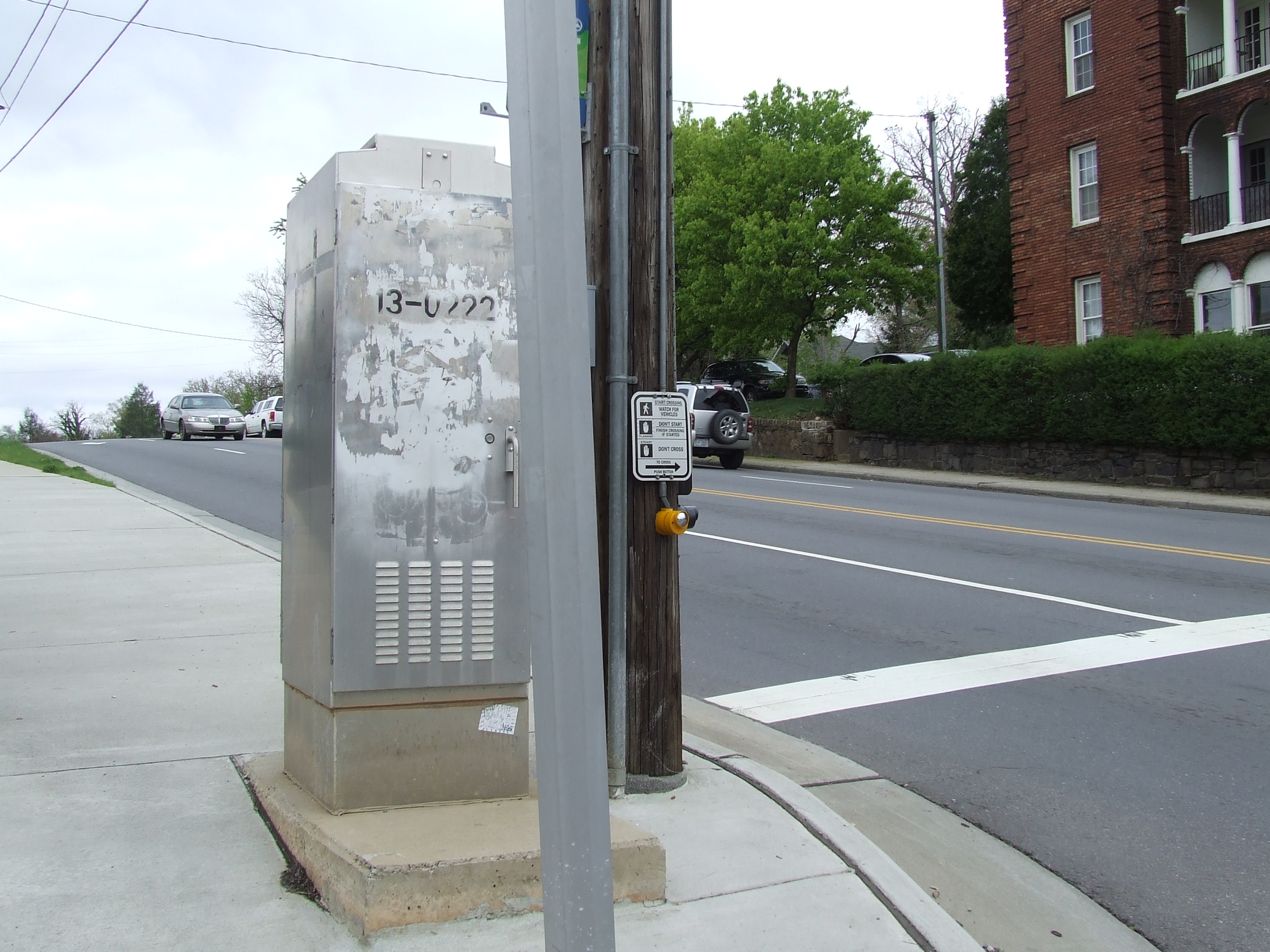
During our walk, he pointed out a series of problems, including crosswalk-signal buttons placed in strange, nearly inaccessible places, and crosswalks featuring a handicapped-access curb cut on one side of the street but not on the other. We watched a man try to ride his bicycle south into the city, mere inches to spare between him and the cars speeding past trying to make the next light. We saw two pedestrians sprint across Merrimon at the entrance to Greenlife Grocery to get to the bus stop, rather than walk some 50 yards downhill to the nearest stoplight-controlled crosswalk.
“In theory, yes, those guys should have walked the 150 feet to the crosswalk, but many people just don’t think that way. We wouldn’t ask drivers to go out of their way; why should we expect pedestrians to do it?” says Kostelec. “People are going to follow their natural inclination to take the most direct route to the bus stop.”
No refuge
Indeed, human nature plays a role in many of the incidents along Merrimon and other major roads, particularly when those thoroughfares’ carrying capacity has been reached or exceeded. “Merrimon Avenue serves approximately 20,000 motorists a day on a four-lane road through concentrated residential and commercial areas,” notes Anna Henderson, traffic engineer with the N.C. Department of Transportation’s Division 13, which oversees state roads running into and out of Asheville. “Four-lane highways like Merrimon, with no median strip or designated turn lanes, are particularly dangerous because they offer pedestrians no refuge area to pause in,” she explains.

Like many public agencies in Buncombe County, the DOT has had to try to accommodate both a rapidly growing population and changing patterns of commerce, as new grocery stores like Harris Teeter and Trader Joe’s on Merrimon have drawn increased vehicle and pedestrian traffic to the already crowded road.
The developers of both stores were responsible for submitting traffic-flow plans and traffic-control improvements to the city and state for approval. According to Jeff Moore, a traffic engineer for the city, the developers of Trader Joe’s were required to incorporate Harris Teeter’s traffic study — which was conducted first — into their own study prior to construction.
“We have seen an increase in vehicle traffic and pedestrian accidents over the last few years,” says Henderson, adding that the DOT plans to re-evaluate several intersections along Merrimon later this year.
East Asheville resident Nick Neubauer drives Merrimon Avenue daily on his way to work. “A turning lane would solve a lot of the traffic problems, but there isn’t any room for one,” he muses, mentioning several sections along the stretch between Beaver Lake and downtown. “The traffic light timing could be adjusted, but travel speed [varies] between 10-35 mph depending on time of day, so there’s no good approach there either.”
The busy road’s shortcomings came to a head this past January, when 67-year-old Yvonne Lewis of Arden was struck and killed by a motorist while trying to cross Merrimon at the Coleman Avenue intersection. The fatality sparked demands that state and city officials address trouble spots along the busy road.
Asheville City Council member Chris Pelly, whose concern for pedestrian safety helped fuel his entry into public life, blames increased population and business density, coupled with inadequate pedestrian infrastructure.
“Merrimon is a four-lane road, which makes left turns difficult,” says Pelly. “It also has numerous driveway cuts, which increase accident rates.”
He compares Merrimon’s evolution with the intense development along Hendersonville Road (including several large apartment complexes) and Patton Avenue (the main link between Asheville and Leicester). But while both those roadways have been widened, the lack of room for expansion along Merrimon poses a unique challenge for engineers and planners.
NC’s most dangerous city
The city and DOT coordinate their planning through the French Broad River Metropolitan Planning Organization, whose goals include increasing options for pedestrians and cyclists, Pelly points out. Recent improvements initiated by the agency, he notes, include sidewalks along Tunnel Road in Oteen and along Patton Avenue at Bowen Bridge.

Last year, residents lobbied for sidewalks on Hazel Mill Road (see West Asheville Apartment Plan Highlights Pedestrian Safety, Dec. 1, 2014, Xpress). City Council recently allocated $15,000 for those sidewalks.
And in the wake of Lewis’s death, the DOT has placed a high-visibility crosswalk at the intersection of Coleman and Merrimon and plans to install a new traffic signal and crosswalk there this summer. Other projects are scheduled for the fall.
The city also gets input from its Neighborhood Advisory Committee, consisting of residents, Police Department representatives and city engineers, who are charged with identifying traffic problems and advising residents on ways to deal with them.
But with the upcoming tourist season promising to be bigger than ever, Kostelec, Pelly and others fear that Asheville’s glaring traffic problems are likely to get worse before they get better. “Tourism will certainly increase the amount of traffic, especially downtown,” Pelly predicts.
Jim Grode, who chairs the city’s Multimodal Transportation Commission, goes further, noting that “In terms of pedestrian traffic accidents, Asheville is statistically the most dangerous city in North Carolina.” The commission educates and advises city officials and the public on transportation issues, including initiatives to develop efficient, safe multimodal systems.

From 2008-12, Asheville averaged 8.1 pedestrian accidents per 10,000 people — well above the average for North Carolina’s biggest metro areas, and increasing each year during that period — according to a DOT report. Such statistics, says Grode, are challenging city and state officials to change the way they think about transportation.
“No matter how you’re getting around, we want to make your trip safe, pleasant and efficient from a broader standpoint,” he continues. “Efficiency doesn’t mean moving as many cars as you can as fast as you can from one place to another … with no regard for whether the people actually need to go that fast or should be moving that fast.”
Multimodal planning
Established in 2013, the commission is supposed to work with city and DOT officials to develop a multimodal transportation plan for Asheville, though Grode says the details of that cooperation have yet to be hammered out. The city will release its plan by the end of this year, Grode reports, saying that he expects it to include short-term solutions to traffic problems while highlighting longer-term structural issues and proposing fundamental changes to the design and function of Asheville’s roadways.

“We need to get away from thinking about transportation and traffic as an end in itself,” says Grode. “That’s my biggest goal: Let’s stop thinking about transportation like it’s in this vacuum, something we’re doing purely for its own sake.”
Kostelec agrees, calling for “traffic dieting” on Merrimon — converting an existing through lane into a left-turn lane to make traffic flow more predictable — as one of several alternatives that have proven successful in other cities.
Pelly, too, supports that idea. “Traffic calming can slow vehicles and improve the safety of residents,” he says, adding, “For the first time in eight years, last year City Council funded traffic calming, which brought needed improvements to Bear Creek Road and Riverview Drive.”
But whatever plans the various agencies develop, the real challenge will be getting those projects funded, designed and completed. “These things may be feasible within the next few years or the next few months,” says Grode.
The DOT, says Henderson, recognizes the need to re-evaluate pedestrian infrastructure along many state roads in response to simultaneous population and traffic density increases. The agency, she says, is “working to find appropriate and safe crossing treatments” along the busy thoroughfares to better accommodate pedestrians.
Interim measures

In the meantime, though, there are practical measures that officials and residents alike can take to reduce the risks along Asheville’s busy roadways, notes Grode.
Things like “re-signaling, re-timing traffic lights and crosswalks” and placing temporary ramps along sidewalks until curb cuts can be installed, he says, “are easy, quick fixes.”
For its part, the DOT advises pedestrians, cyclists and drivers on or near major roads to stay vigilant, urging them not to assume that they know how others will react. Watch for Me NC, a statewide campaign administered in cooperation with UNC Chapel Hill’s Highway Safety Research Center, aims to educate residents and public agencies on safe transportation practices while advocating law-enforcement crackdowns in accident-prone areas.
But Kostelec and others maintain that government agencies tend to place the burden of safety on pedestrians without adequately considering the socio-economic realities and often inefficient infrastructure found in working-class neighborhoods. Kostelec has conducted his own analysis of pedestrian crash rates in Asheville from 1997 to 2012 based on racial background, but correlating those numbers with economic information, he says, is more challenging.
“It’s a lot easier to tell if somebody hit by a car was white or African-American than it is to tell how much money he made,” says Kostelec, who concedes that people can do more to protect themselves, such as using designated crosswalks when possible, and not texting while driving or walking. He also recommends simply slowing down when driving on Merrimon and other busy streets.
“You’re seven times more likely to be killed by somebody going 35 miles per hour as you are by somebody going 25,” says Kostelec. “Ten miles per hour makes a big difference.”

Grode, meanwhile, stresses the importance of improving local infrastructure, rather than always looking to major roads to solve traffic problems. “If you’re going 10 miles an hour for a mile, you’re still getting there faster than if you’re going 50 miles an hour for 15 miles,” he points out.
One thing just about everyone seems to agree on, however, is that fixing the inherent issues on Merrimon and Asheville’s other main arteries is a significant challenge that will take time, creative approaches and involvement at all levels, from residents on up.
“You never treat cancer by giving someone an aspirin and saying, ‘There, now your pain will go away,’” Grode observes. “But that’s kind of what we do with traffic — and that needs to change.”
For more information visit watchformenc.org or attend the Multimodal Transportation Commission’s monthly meetings (3 p.m. every fourth Wednesday in City Hall’s first floor conference room). To view maps showing daily traffic volume for Asheville and Buncombe County, go to ncdot.gov/travel/statemapping/trafficvolumemaps/
Leave a Reply